5 Tips for How Much Meat Per Person for BBQ
You’ll want to start by calculating about ½ pound of raw meat per person, adjusting for your guests’ appetites. Remember, meat loses 30-40% weight when cooked, so factor that in.
If you’re serving heavy sides, you can reduce the meat portion a bit. Plan for extra to cover seconds or leftovers—aim for about ¾ pound raw per guest.
For the best results, consider consulting experts who tailor portions precisely. Keep going to uncover all the tips you need.
Key Takeaways
- Plan for about ½ pound of raw meat per guest to ensure enough cooked portions after shrinkage.
- Keep in mind that meat loses weight when cooked—usually about 30-40%—so adjust your amounts accordingly.
- If you’re serving heavier sides, you can reduce the meat portion to around ⅓ pound cooked per person.
- It’s smart to prepare about 1.5 servings per guest, which is roughly ¾ pound raw. This way, you’ll have enough for seconds and maybe even some leftovers.
- And if you want to get really precise, don’t hesitate to consult catering experts. They can tailor estimates based on your guests and the variety of your menu.
Calculate Meat Portions Based on Guest Count and Appetite
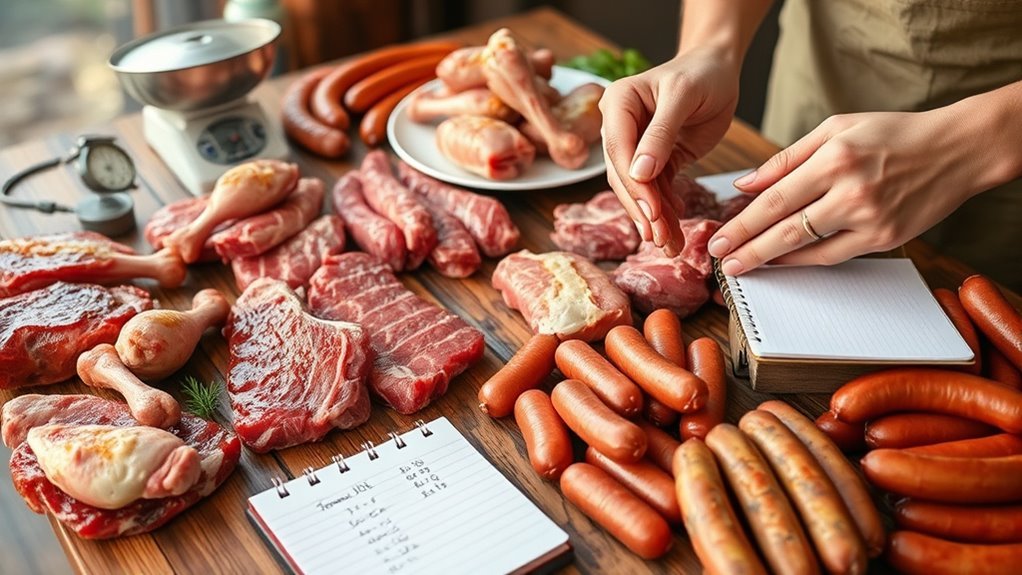
When planning your BBQ, start by calculating meat portions based on the number of guests and their appetites to avoid shortages or waste. A good rule of thumb is to allocate about ½ pound of raw meat per person.
This usually yields around ⅓ to ½ pound of cooked meat per serving per guest, considering cooking loss. For guests with bigger appetites or events with fewer sides, plan for up to ¾ pound of raw meat per person to ensure everyone is satisfied.
If you’re serving multiple meat types, estimate ¼ to ⅓ pound of each per guest to offer variety without excess. Adjusting your BBQ portions carefully guarantees you buy the right amount, keeping your event both enjoyable and efficient.
Adjust Quantities According to Meat Type and Cooking Loss
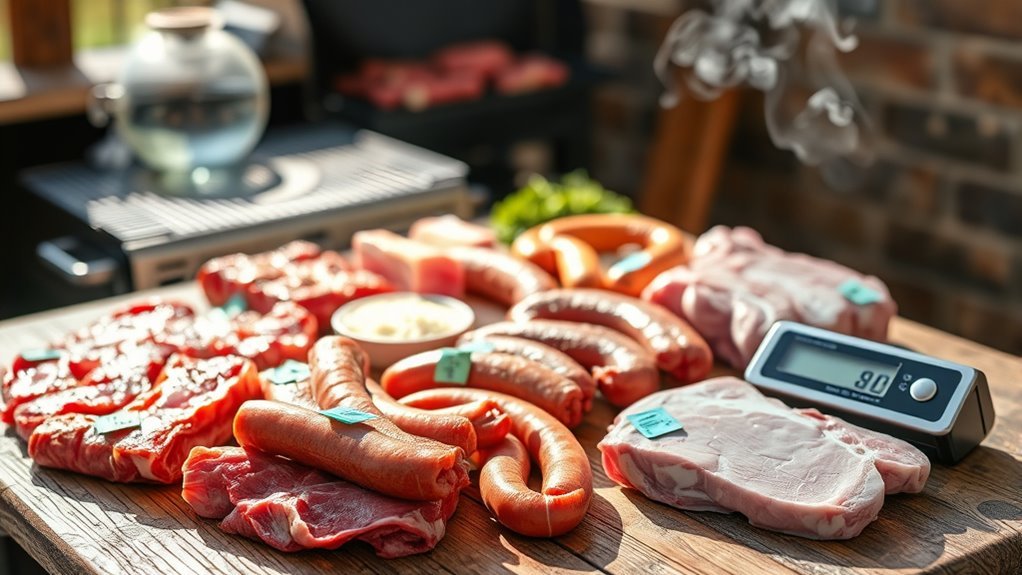
Calculating the right amount of meat per guest is a great start, but you also need to adjust based on the type of meat and how much it will shrink during cooking. Different meat types have varying cooking loss rates—pulled pork can lose up to 40% of its raw meat weight, while brisket or pork shoulder also shrink considerably.
To avoid running short, always plan using raw meat weight and factor in around 30-40% weight loss during cooking due to moisture and fat evaporation. Larger cuts especially require extra raw meat to meet portion goals.
Factor in Sides and Other Menu Items for Balanced Serving Sizes
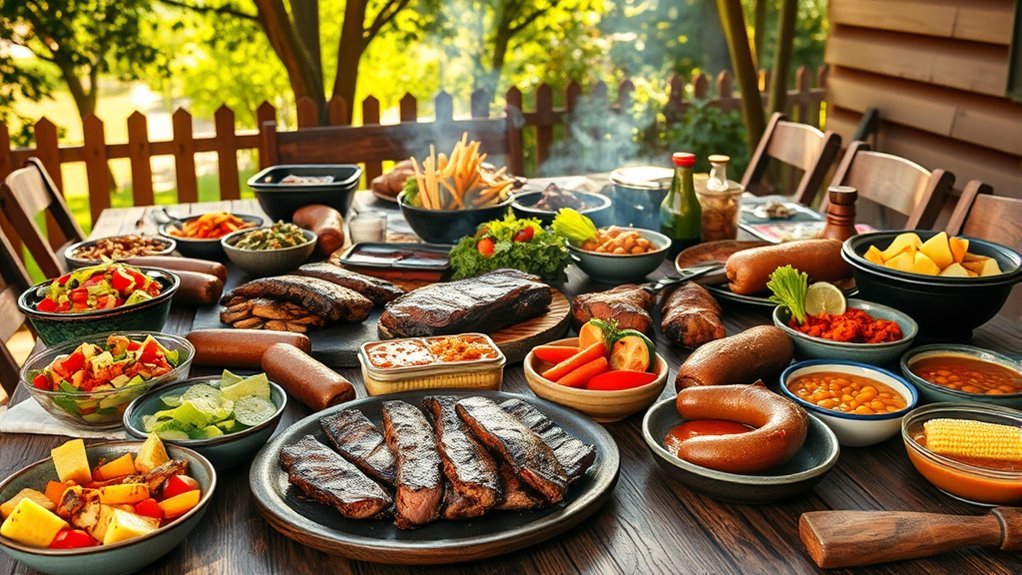
Since sides like potato salad and coleslaw add volume to the meal, you can serve slightly smaller meat portions per guest without leaving anyone hungry. When you include heavier, filling sides like mac and cheese or baked sweet potatoes, guests tend to eat less pork or other meats overall.
To balance serving sizes, plan for about 1.5 servings per guest to comfortably accommodate seconds and the variety of sides. If your menu features plentiful sides, reduce the meat portion from the usual ½ pound cooked per person to roughly ⅓ pound.
Offering lighter sides or vegetarian options also helps regulate how much meat is needed, making your BBQ both satisfying and efficient. Factoring in sides ensures balanced serving sizes and prevents overordering.
Plan for Leftovers and Seconds to Avoid Running Out
Although it’s tempting to prepare just enough meat for each guest, planning for leftovers and seconds guarantees no one leaves hungry. A good rule of thumb is to plan for 1.5 servings per person—about ¾ pound of raw meat each.
This usually yields around ½ pound cooked, allowing for bigger appetites and some shrinkage, especially with pulled pork, which can lose up to 40% during cooking. Preparing extra ensures you won’t run out, and leftovers give guests the chance for seconds or a tasty meal later.
Consult Catering Experts for Customized Meat Estimates
To make sure you have just the right amount of meat for your BBQ, consulting catering experts can be a game-changer. These professionals provide accurate meat estimates tailored to your event size and menu, helping you avoid shortages or waste.
Catering experts consider portion sizes based on your guests’ demographics, including adults, children, and special dietary needs. They also factor in expected shrinkage during cooking, so you order the right raw meat amounts.
With their guidance, you can balance meat variety with sides perfectly, ensuring everyone is satisfied. Relying on catering experts for customized meat estimates reduces stress and guarantees your BBQ runs smoothly without leftover excess or hungry guests.
Don’t hesitate to tap their expertise for a successful event. It’s worth it to get it right!
Conclusion
Think of planning your BBQ meat like filling a fuel tank—you want enough to keep everyone satisfied without overfilling and wasting. Last summer, I miscalculated and ran out halfway through, leaving guests hungry.
Since then, I always factor in appetites, sides, and leftovers, ensuring a smooth, tasty ride.
Remember, a little extra meat is like a full tank—it keeps the good times going without unexpected stops. When figuring out how much meat per person for BBQ, consider the variety of meats and the number of hearty eaters.
Adding a bit more than you think necessary helps avoid running short and makes sure everyone leaves happy and full. So, plan wisely, keep your BBQ meat calculations generous, and enjoy a feast that satisfies every appetite!