How to Do Korean BBQ at Home in 7 Steps
To do Korean BBQ at home in seven steps, start by selecting fresh, well-marbled meats. Marinate them to boost the flavor and tenderness.
Next, set up a portable grill in a well-ventilated area. Make sure your tools and side dishes are within easy reach to keep things flowing smoothly.
Preheat your grill properly, so it’s hot enough for quick cooking. Cook thin, bite-sized meat pieces fast to lock in juiciness and keep them tender.
Arrange various banchan (side dishes) and sauces for wrapping the grilled meat. This adds layers of flavor and texture to every bite.
Pair your meal with traditional Korean drinks to enhance the experience. And don’t forget to keep the atmosphere lively—it’s all about enjoying good food and company.
Keep going to explore tips for perfect grilling and serving your Korean BBQ feast at home!
Key Takeaways
- Select fresh, well-marbled meats like brisket and pork belly. Marinate them with soy sauce, garlic, and fruit to add tenderness and flavor.
- Set up a well-ventilated grilling area. Use a portable gas or electric grill centered on the table so everyone can easily reach it.
- Prepare 8-10 varieties of banchan and sauces in small plates. These are perfect for sharing alongside individual plates and utensils.
- Preheat the grill to 450-500°F for about 10-15 minutes. Then, grill thinly sliced meats quickly, flipping after 1-2 minutes on each side.
- Organize drinks, side dishes, and condiments neatly. This helps keep the meal lively and social all throughout.
Selecting and Preparing Meats for Korean BBQ
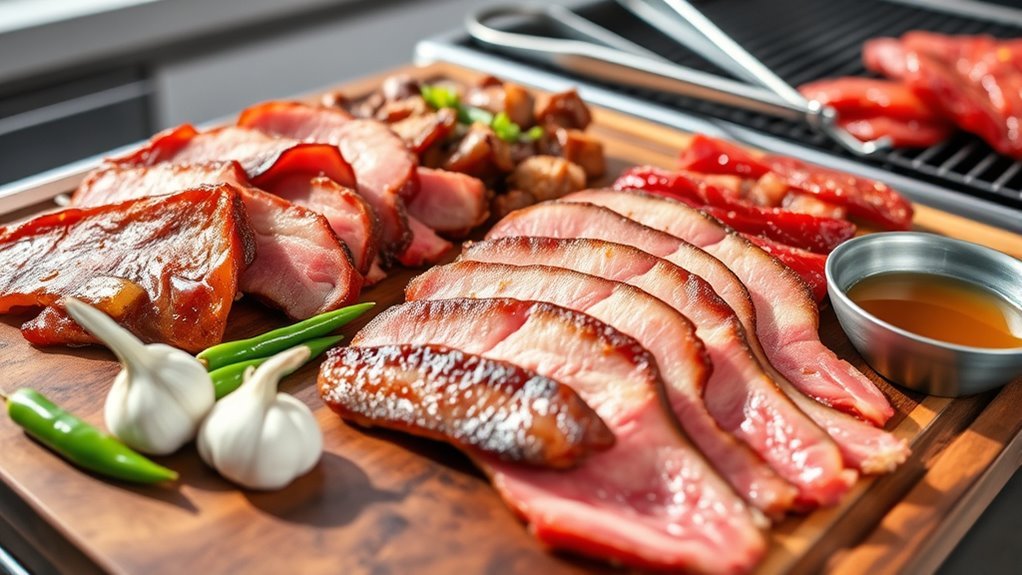
When selecting meats for Korean BBQ, choose high-quality, well-marbled cuts like brisket (chadolbaegi), pork belly (samgyeopsal), and marinated short ribs (galbi) to capture authentic flavors. Buying fresh meats from Korean grocery stores guarantees proper butchering and freshness.
Pick cuts of beef and pork belly that have good fat distribution for juiciness. Before grilling, trim excess fat to avoid flare-ups and grease fires.
Choose beef and pork belly with even fat for juiciness, trimming excess fat to prevent flare-ups when grilling.
If you’re working with marinated meats like bulgogi or galbi, mix marinade ingredients such as soy sauce, garlic, sugar, sesame oil, and fruit like pear or apple for tenderness and flavor. Use scissors to cut larger pieces into manageable, bite-sized portions, making grilling and eating easier.
This preparation step certifies a delicious and safe Korean BBQ experience at home.
Setting Up Your Grill and Cooking Area
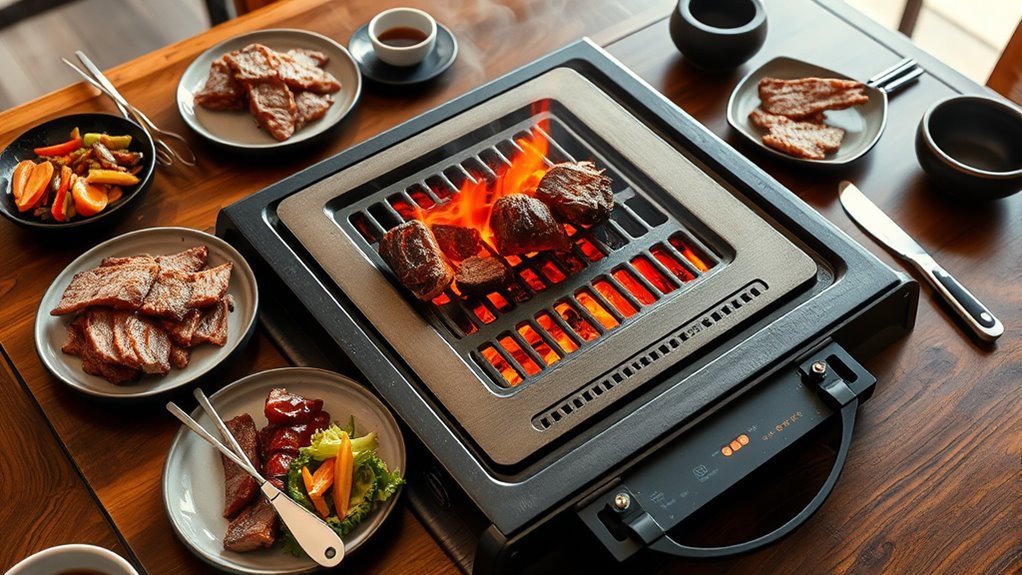
After preparing your meats with care, the next step is to arrange your grill and cooking area for a smooth Korean BBQ experience. Choose a well-ventilated space—outdoor spots or near open windows work best to prevent smoke buildup.
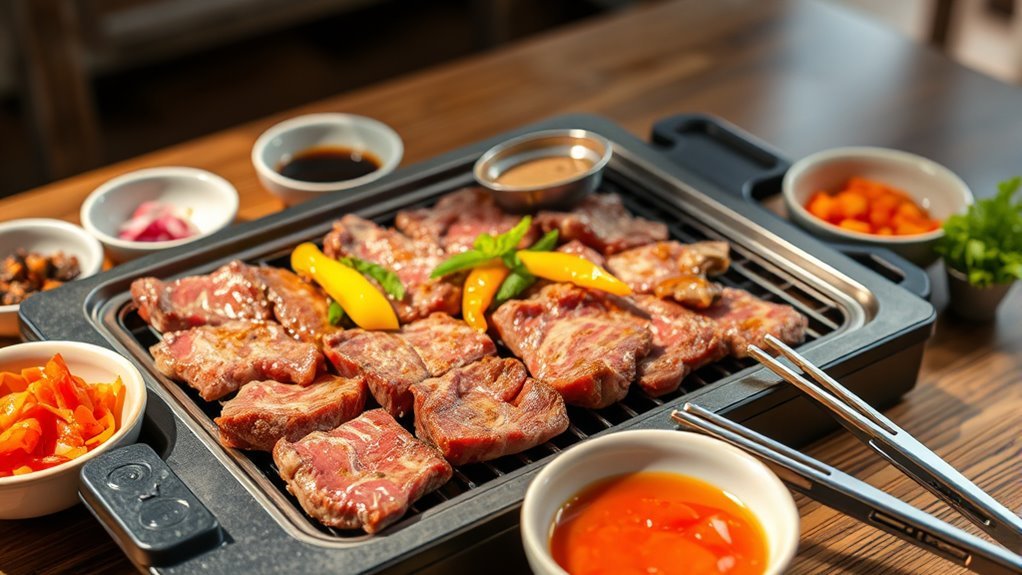
For your grill setup, position your electric grill or portable gas stove centrally on the table, ensuring stability and easy accessibility for all diners. Use appropriate heat sources like butane burners or electric grills designed for Korean BBQ to maintain consistent heat.
Gather essential grilling tools—tongs, scissors, small plates, and dipping bowls—before you start cooking. Keep side dishes and sauces within reach but organized around the grill, so everyone can enjoy a seamless and interactive meal without disrupting the cooking flow.
Arranging Essential Side Dishes and Banchan
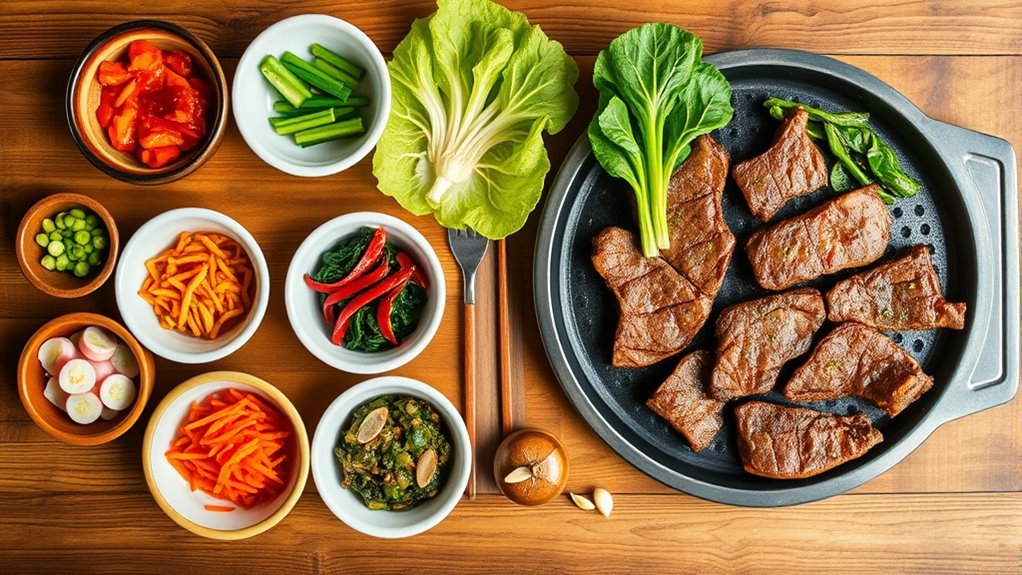
Since side dishes play a crucial role in Korean BBQ, you’ll want to prepare a variety of banchan like kimchi, seasoned vegetables, and pickles in small dishes. To create an authentic Korean table setting, focus on organizing these side dishes and condiments neatly around the grill.
Aim for 8-10 different banchan, including diverse kimchi varieties and flavorful garnishes. Here’s how to arrange them:
- Serve banchan in small plates for easy sharing and access.
- Pre-portion dipping sauces, salts, and other condiments into small bowls.
- Set individual plates and utensils within reach to streamline the dining experience.
This thoughtful arrangement ensures your guests can enjoy a seamless flow of flavors alongside the grilled meats. Easy, right? Just a little prep goes a long way!
Preheating and Managing the Grill Temperature
Before you start grilling, make sure to preheat your grill to around 450-500°F. This usually takes about 10-15 minutes.
Use a thermometer to keep an eye on the temperature, ensuring it stays steady throughout cooking. If needed, adjust the vents or burner knobs.
That way, you’ll maintain consistent heat for perfect searing every time. Easy, right?
Optimal Grill Preheating Time
When you preheat your grill for at least 10-15 minutes on high heat, you guarantee it reaches the ideal temperature of 450-500°F (232-260°C) needed for perfect Korean BBQ searing.
To confirm your grill is ready, follow these steps:
- Use a grill thermometer to check the temperature, aiming for the perfect temperature range to avoid under or overcooking.
- For charcoal grills, wait 20-30 minutes until coals are white-gray and ash-covered, signaling even heat distribution.
- With gas or electric grills, preheat with the lid closed to minimize hot spots and maintain consistent high heat.
Proper grill preheat sets the stage for perfect searing and flavorful Korean BBQ every time. So, don’t rush it — your taste buds will thank you!
Maintaining Consistent Heat Levels
Although preheating your grill is essential, maintaining consistent heat throughout cooking is what truly guarantees perfectly grilled Korean BBQ.
Start by preheating your gas grill or charcoal grill for 10-15 minutes until it reaches a consistent high temperature of 400-450°F. Use a thermometer to monitor the grill temperature closely.
For charcoal grills, spread the coals evenly and wait for them to ash over completely to ensure even cooking. With a gas grill, set the burner to medium-high and keep the lid closed during preheating for uniform heat distribution.
Throughout cooking, adjust the heat source gradually to sustain steady heat control, avoiding sudden temperature spikes or drops. This consistent heat will deliver perfectly cooked, flavorful Korean BBQ every time.
Grilling Meats: Techniques and Timing
Choose thinly sliced cuts like brisket or bulgogi for quick grilling and tender results. Keep your cooking times short—usually 1-2 minutes per side—to lock in juiciness without overcooking.
Pay attention to the meat’s thickness and adjust timing to get the perfect sear every time. It’s all about that balance!
Meat Selection Tips
Selecting the right meats is essential for a successful Korean BBQ experience at home. When it comes to meat selection, focus on cuts that grill quickly and evenly.
Choose thinly sliced meats like bulgogi, galbi, or slices of pork belly. These cuts cook fast and absorb flavors well.
Start grilling non-marinated meats first, such as plain beef short rib. This helps avoid burning the sugars found in marinated meats like those soaked in bulgogi marinade.
Opt for a balanced mix of marinated and non-marinated meats to enjoy varied textures and tastes.
Pay close attention to the cut of meat you pick, as it directly affects how easy it is to grill and the flavor. With these tips, your Korean BBQ will be delicious and perfectly cooked every time.
Optimal Cooking Times
When grilling Korean BBQ at home, timing is essential to achieve the perfect texture and flavor. You’ll want to adjust grilling times based on the type of meat and heat level.
Thin cuts of meat like brisket need just 1-2 minutes per side on high heat to stay tender. Pork belly requires 3-4 minutes per side to render fat and crisp up.
Short ribs call for 4-6 minutes per side on medium-high heat to develop caramelization. Marinated meats cook faster, usually 2-3 minutes per side, so watch for visual cues like browning and clear juices to avoid burning sugars.
| Meat Type | Heat Level | Cooking Duration (per side) |
|---|---|---|
| Thin Cuts | High Heat | 1-2 minutes |
| Pork Belly | High Heat | 3-4 minutes |
| Short Ribs | Medium-High | 4-6 minutes |
| Marinated Meats | Medium-High | 2-3 minutes |
Creating Wraps With Vegetables and Sauces
Although Korean BBQ shines on its own, creating wraps with fresh vegetables and bold sauces takes your meal to the next level.
Start by using crisp lettuce wraps or perilla leaves as your base for a traditional ssam experience. You can also try Japanese rice paper or seasoned seaweed for a modern twist.
Here’s how to build your perfect wrap:
- Layer grilled meat, rice, and fresh vegetables like sliced garlic, green chili peppers, or kimchi for bold flavors.
- Drizzle sauces such as ssamjang or sesame oil with salt to enhance savoriness.
- Fold your wrap carefully and eat it in one bite to enjoy the smoky, spicy, and fresh combination all at once.
This hands-on approach makes every bite exciting and delicious.
Enjoying Korean BBQ With Drinks and Additional Tips
Pairing your Korean BBQ wraps with the right drinks can elevate the entire dining experience. Opt for popular Korean beer like Cass or Hite, or try fruity flavored soju to boost the social experience.
Serve drinks in small glasses or shot glasses to encourage sharing and tasting among friends. Don’t forget traditional accompaniments such as kimchi and seasoned vegetables—they perfectly complement the drinks and balance flavors.
Keep your beverages chilled and maintain the proper serving temperature to keep the atmosphere lively. Also, offer non-alcoholic beverages like soda or iced water to cater to everyone and prevent dehydration.
These simple tips ensure your Korean BBQ at home is both delicious and enjoyable for all guests.
Conclusion
Just like a perfectly grilled bulgogi, Korean BBQ at home is all about balance—between heat, flavor, and company. Remember, a friend once told me, “Korean BBQ isn’t just a meal; it’s a celebration on your grill.”
By following these steps, you’ll create more than food—you’ll craft an experience that brings everyone closer, bite after bite. So fire up that grill, gather your favorite people, and savor the delicious joy you’ve made together.
Doing Korean BBQ at home is truly rewarding. It’s not just about grilling meat; it’s about sharing stories and laughter over sizzling plates. With the right preparation and a little patience, your Korean BBQ experience will be unforgettable.
So, get your grill ready, prep your favorite marinades, and enjoy the fun of cooking Korean BBQ right in your own kitchen. It’s a fantastic way to bring people together and enjoy authentic flavors without leaving home.