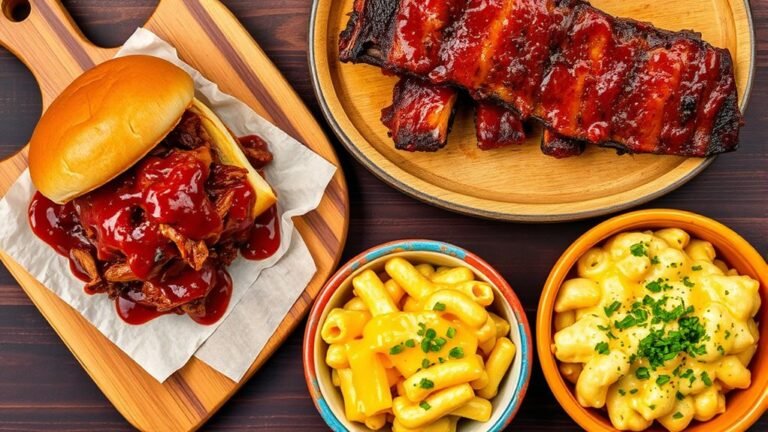
How Many Calories Are in a BBQ Sandwich: 10 Facts
A typical BBQ sandwich has between 400 and 800 calories, depending on your choices.
Pulled pork adds 200-300 calories per 3 oz, while barbecue sauce can tack on 50-100 calories.
Using whole grain or thicker buns adds more calories than white bread.
Adding cheese or coleslaw boosts calories by 100-150, but fresh veggies add almost none.
Choosing lean cuts and smaller portions helps keep calories in check.
If you want to know how to customize your sandwich for better nutrition, keep exploring these key factors.
Key Takeaways
- A typical BBQ sandwich contains between 400 and 800 calories depending on ingredients and portion sizes.
- Pulled pork provides 200-300 calories and 20-25 grams of protein per 3-ounce serving.
- Barbecue sauce adds 50-100 calories, with sweetened sauces contributing higher sugar and calorie content.
- Cheese and coleslaw toppings can add 100-150 calories each, significantly increasing total sandwich calories.
- Using lean pork cuts, smaller portions, lighter sauces, and fresh vegetables helps reduce overall calorie intake.
How Many Calories Are in a Typical BBQ Sandwich?
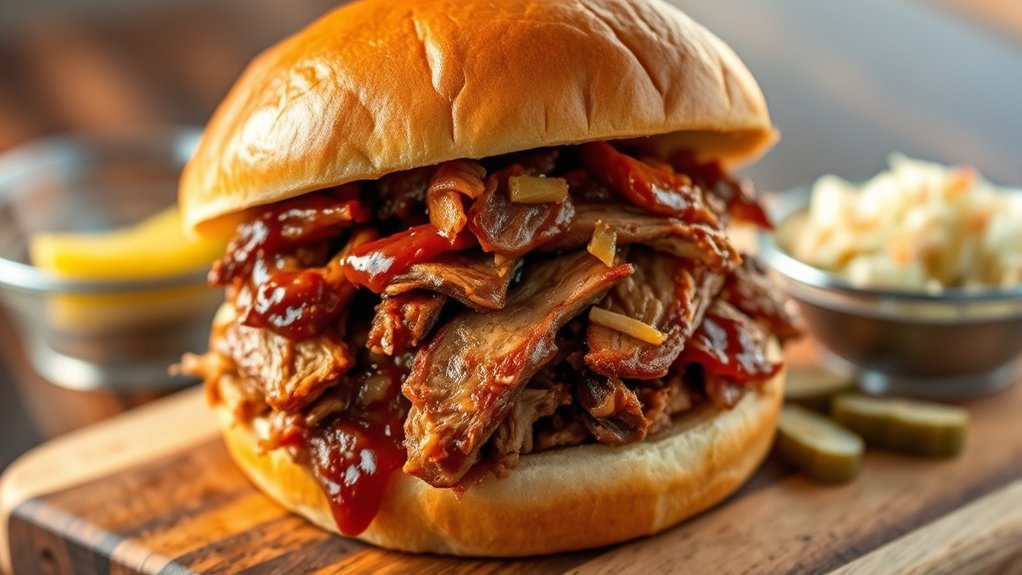
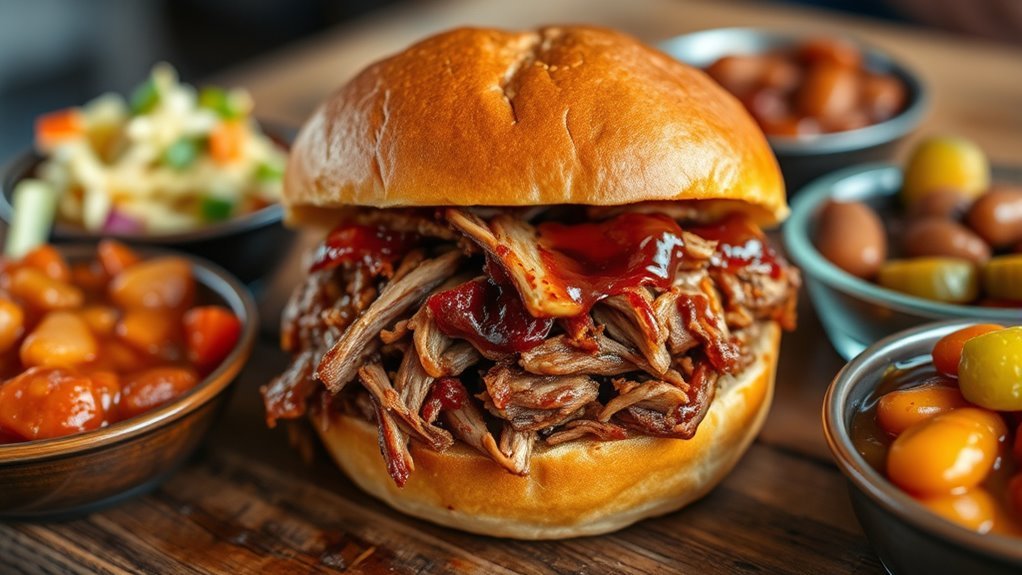
Although the calorie count varies, a typical BBQ sandwich usually packs between 400 and 800 calories. When you bite into a BBQ sandwich, much of those calories come from the pulled pork, which delivers about 200 to 300 calories per 3-ounce serving, depending on its fat content.
The barbecue sauce adds another 50 to 100 calories, especially if it’s sweetened. If you add cheese or coleslaw, expect an extra 100 to 150 calories on top of that.
Together, these ingredients build the sandwich’s calorie total, so when you’re choosing your BBQ sandwich, keep an eye on the portion size of pulled pork and toppings. This way, you can enjoy the rich flavors without accidentally overloading on calories.
How Bread Type Affects BBQ Sandwich Calories
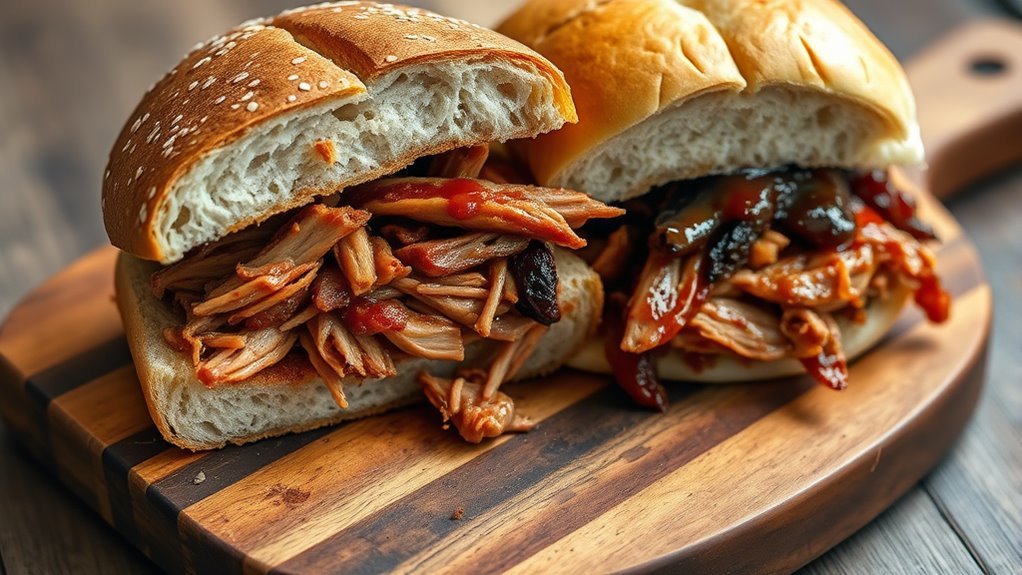
The type of bread you choose can considerably affect the calorie content of your BBQ sandwich. Whole grain or sourdough bread usually adds about 30-40 more calories than white bread due to higher carbohydrate and fiber content.
White buns tend to be lower in calories, but thicker or larger slices of any bread can increase your sandwich’s total calories. If you want to keep calories down, consider thinner or smaller bread portions.
Here’s a quick comparison:
| Bread Type | Calorie Impact |
|---|---|
| White Bread | Lower calories |
| Whole Grain | +30-40 calories |
| Sourdough | +30-40 calories |
| Thicker/Larger | Increases calories |
Choose wisely to balance taste and calorie intake. It’s all about finding what works best for you!
Pulled Pork Portions: Calories and Protein Explained
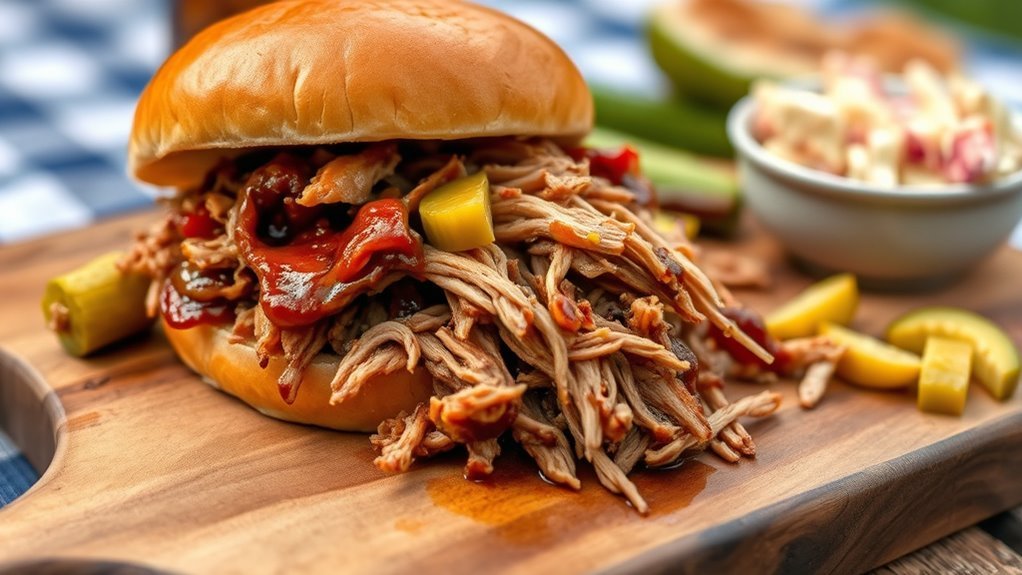
When you choose your pulled pork portion, you directly control both the calories and protein in your BBQ sandwich. A 3-ounce serving typically contains 200-300 calories and provides 20-25 grams of protein, making it a solid source of this essential nutrient.
If you increase your portion to 4 or 5 ounces, expect the calorie count to rise to about 250-400, while protein intake jumps to 25-40 grams. This means you can tailor your sandwich to fit your nutritional goals simply by adjusting the amount of pulled pork.
Keep in mind that while toppings and sauces add calories, they don’t usually affect the protein content from the pork itself. So, focus on your pork portion size to balance calories and protein effectively.
Choosing Lean Cuts to Lower Fat and Calories
If you want to cut calories and fat in your BBQ sandwich, choosing lean cuts like pork loin is a smart move. Pork loin offers fewer calories and more protein compared to fattier options, helping you keep your meal healthier.
Plus, trimming visible fat before cooking can lower fat intake even more without losing flavor. It’s an easy step that makes a big difference!
Benefits Of Lean Cuts
Choosing lean cuts like pork loin can slash the calories in your BBQ sandwich by up to 50%, making it a smarter choice for your health. Lean cuts pack more protein per ounce and contain less saturated fat, helping you manage your weight without sacrificing flavor.
By opting for lean meat, you reduce the overall fat and calorie content while still enjoying a tasty sandwich when paired with the right seasonings. Choosing lean options also supports heart health by avoiding excess unhealthy fats.
Plus, combining lean pork with fiber-rich bread and fresh vegetables helps you create a balanced meal that fuels your body. Making this simple switch can boost your nutrition and keep your BBQ sandwich both satisfying and healthier.
Pork Loin Nutrition
Pork loin stands out as one of the leanest cuts you can use for a BBQ sandwich, containing just about 3 grams of fat per 3-ounce cooked serving. This makes it a smart choice if you want to lower fat and calorie intake without sacrificing flavor.
Compared to fattier cuts like shoulder or ribs, pork loin can reduce your sandwich’s calorie content by 50 to 100 calories. It also provides a solid 20 to 25 grams of protein per serving, supporting muscle health and satiety.
When preparing pork loin, trimming any visible fat further cuts calories and saturated fat, promoting heart health. Choosing this lean cut keeps your BBQ sandwich both nutritious and delicious.
Reducing Fat Intake
While many BBQ sandwiches rely on fattier cuts of meat, selecting leaner options like pork loin can cut your fat and calorie intake considerably. Choosing pork loin instead of fattier parts can reduce your sandwich’s calories by up to 50%.
You can trim visible fat before cooking to lower fat and calories by about 30%. Opt for grilling or roasting rather than frying to keep the meat lean and avoid added calories.
Also, picking sauces with less sugar and fat, or using vinegar-based dressings, helps decrease the calorie load of your BBQ sandwich. These simple choices not only make your meal lighter but also support heart health by reducing saturated fat intake.
You’ll enjoy your BBQ sandwich without the extra guilt. It’s a win-win!
How Barbecue Sauce Adds Calories to Your Sandwich
A few tablespoons of barbecue sauce can add anywhere from 50 to 100 calories to your sandwich, depending on the type and amount you use. Sweetened sauces pack more sugar, boosting calorie counts compared to vinegar-based or lighter versions.
If you slather on thick, sugary sauces, expect an extra 20 or more calories per tablespoon. This can quickly add up, especially when combined with other calorie-dense sandwich ingredients.
To keep calories in check, you might want to choose homemade or lighter barbecue sauces with less sugar and apply them sparingly. By being mindful of the sauce’s sugar content and portion size, you can enjoy your BBQ sandwich without unintentionally piling on extra calories.
Calories From Cheese and Coleslaw in BBQ Sandwiches
Besides barbecue sauce, toppings like cheese and coleslaw can also pack a significant calorie punch in your BBQ sandwich. A single slice of cheddar cheese adds about 100 calories, while a typical serving of coleslaw ranges from 100 to 150 calories depending on the ingredients and portion size.
When combined, these toppings can increase your sandwich’s calorie count by 200 to 250 calories or more. If you’re watching your calorie intake, you might want to opt for lighter or reduced-fat cheese and coleslaw versions.
These choices help you enjoy the flavors without adding too many extra calories. Being mindful of these toppings lets you better control the overall calorie content in your BBQ sandwich and still satisfy your cravings.
Carbohydrate Breakdown by Bun and Sauce Choices
If you want to manage your carbohydrate intake in a BBQ sandwich, the choice of bun and sauce plays a vital role. A white bun typically contains 25-30 grams of carbs, while whole grain or sourdough buns pack 30-40 grams.
Though whole grain options have more carbs, they also provide extra fiber, which can aid digestion. Barbecue sauce varies widely—sweetened versions can add 15-20 grams of carbs per 2 tablespoons, while sugar-free or light sauces add as little as 5 grams.
To cut carbs, opt for these lighter sauces. Remember, toppings like coleslaw add another 10-15 grams of carbohydrates, mainly from sugars and veggies. By carefully selecting your bun and sauce, you can better control your sandwich’s carbohydrate content.
Protein Content in a BBQ Sandwich: What to Expect
When you choose a pulled pork BBQ sandwich, you’ll typically get between 20 to 40 grams of protein, depending on the portion size and toppings. A 3 oz serving of pulled pork provides about 20-25 grams of protein, making it the main protein source in your sandwich.
If you add cheese or other protein-rich toppings, expect an extra 7-10 grams of protein per serving. Opting for leaner cuts like pork loin can also improve the protein-to-fat ratio, giving you more protein without extra fat.
Keep in mind, the total protein content varies based on the meat type, portion size, and toppings you select. So, understanding these factors helps you gauge the protein you’re getting with each BBQ sandwich.
Low-Calorie BBQ Sandwich Toppings to Boost Nutrition
You can boost your BBQ sandwich’s nutrition by adding fresh veggies like lettuce, tomatoes, and onions without piling on calories. Choosing light sauces and lean protein toppings helps keep the calorie count low while enhancing flavor.
Let’s explore some simple swaps that make your sandwich healthier and just as tasty. It’s easier than you think to enjoy great taste and better nutrition!
Healthy Vegetable Add-Ins
Although BBQ sandwiches are often known for their rich flavors and hearty ingredients, you can easily boost their nutrition by adding low-calorie vegetable toppings. Try slicing tomatoes or cucumbers for a fresh crunch, adding just 10-20 calories while providing vitamins and fiber.
Shredded lettuce or spinach adds bulk and nutrients without tipping the calorie scale—usually under 5 calories per cup. Bell peppers and pickles bring antioxidants and flavor with minimal calories, around 10-15 per serving.
You might also swap creamy coleslaw for a vinegar-based version, gaining dietary fiber and probiotics for roughly 10-15 calories. Grilled or roasted zucchini and eggplant pack antioxidants and fiber too, with only 20-30 calories per serving.
These healthy vegetable add-ins make your BBQ sandwich both satisfying and nutritious. Give them a try and enjoy a tasty, guilt-free meal!
Low-Calorie Sauce Choices
Adding fresh vegetables to your BBQ sandwich cuts calories and boosts nutrition, but don’t stop there—choosing the right sauce can make a big difference too. Swap traditional sweetened barbecue sauces for light or no-sugar versions to cut calories by up to 50%.
Vinegar-based sauces are another smart pick since they usually have fewer calories and less sugar. They give your sandwich a tangy kick without the extra calories.
You can also make your own low-calorie BBQ sauce at home, controlling sugar and calorie content while adding fresh herbs, spices, and a splash of citrus juice for vibrant flavor.
For an extra zing without added calories, try mustard or hot sauce—they pack a punch without boosting calorie intake. That way, you keep your BBQ sandwich both tasty and healthy.
Protein-Packed Topping Options
When aiming to boost your BBQ sandwich’s protein without piling on calories, lean options like grilled chicken or turkey fit perfectly. You can also add a slice of low-fat cheese or a boiled egg to increase protein while keeping calories in check.
For a plant-based twist, sprinkle sliced almonds or pumpkin seeds; they provide protein and healthy fats with only a moderate calorie boost. Don’t forget extra vegetables like spinach, bell peppers, or sprouts—they add protein, fiber, and volume, making your sandwich more satisfying.
Finally, consider protein-rich, low-calorie options like cottage cheese or Greek yogurt-based sauces to elevate nutrition without excess calories. These topping choices help you enjoy a flavorful, protein-packed BBQ sandwich that supports your health goals.
Managing Portion Size for Better Calorie Control
If you want to reduce calories in your BBQ sandwich without sacrificing flavor, controlling portion size is key. Start by choosing a smaller bun or cutting back on the amount of pulled pork.
Opt for leaner cuts, like pork loin, to keep protein high while lowering calories. Be mindful of toppings—limit cheese and coleslaw or switch to lighter versions.
Measuring sauces and toppings helps you avoid sneaky extra calories. Also, consider swapping white buns for whole grain options to better manage carbs and calories.
Frequently Asked Questions
How Many Calories Are in a BBQ Sandwich?
You’ll find a BBQ sandwich typically contains between 400 and 800 calories. It depends on the bun, meat portion, sauce, and extras like cheese or coleslaw you choose to add. Choose wisely to manage calories.
Is a Barbeque Sandwich Healthy?
A BBQ sandwich can be healthy if you choose lean meat, whole grain bread, and light sauce. Adding veggies boosts nutrition. Just watch portions and ingredients, and you’ll enjoy a tasty, balanced meal without overdoing calories.
How Many Pounds of Barbecue for 10 Sandwiches?
You’ll need about 3.5 pounds of raw barbecue meat for 10 sandwiches, like a chef prepping for a feast. This accounts for cooking loss and guarantees you won’t run short when serving your hungry guests.
How Unhealthy Is Pulled Pork?
Pulled pork can be unhealthy if you eat it often, especially with fatty cuts and sugary sauces. You should choose lean pork and limit high-calorie toppings to keep it healthier and avoid weight gain or heart issues.
Conclusion
You might think enjoying a BBQ sandwich means loading up on calories, but it doesn’t have to be that way. By choosing lean cuts, watching your portion size, and picking lighter sauces and buns, you can savor all the smoky flavor without overdoing it.
With these simple swaps, you can indulge in your favorite BBQ sandwich guilt-free while still managing your calorie intake effectively. It’s all about smart choices, not deprivation.
Remember, knowing how many calories are in a BBQ sandwich helps you make better decisions. Opting for healthier ingredients and controlling portions lets you enjoy that delicious BBQ taste without the extra calories. So go ahead, enjoy your BBQ sandwich while keeping your calorie count in check!