How Long to Cook Baked Potato on Grill in 10 Essential Steps
To grill a baked potato perfectly, start by choosing firm russet potatoes. Give them a good scrub to clean off any dirt. You can either pierce the skin a few times or leave it intact—it’s up to you. Then, coat each potato with olive oil and sprinkle some salt for flavor.
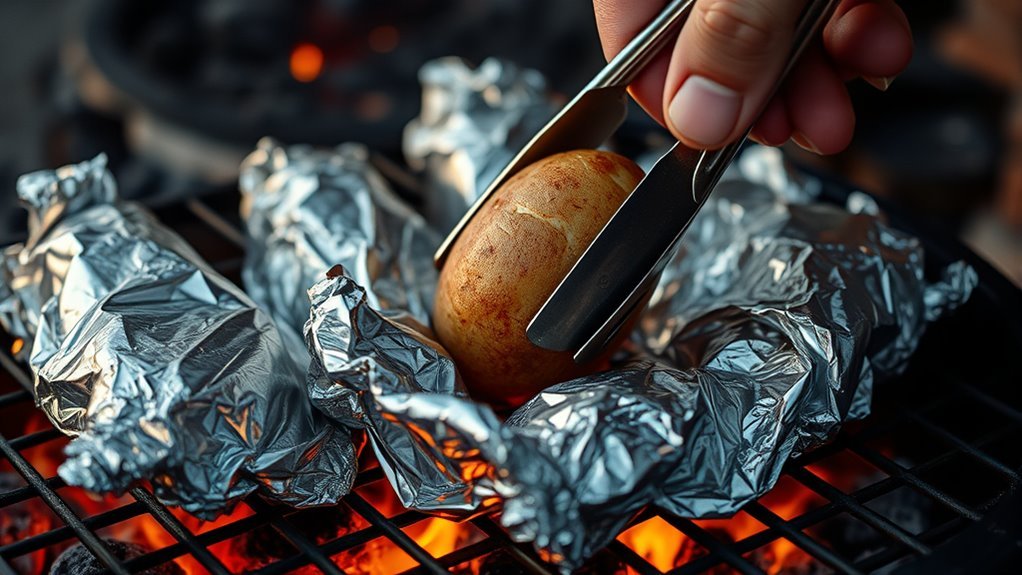
Next, wrap the potatoes tightly in foil to keep the moisture in while cooking. Preheat your grill to indirect heat at about 350°F. Place the wrapped potatoes on the grill and let them cook for 30 to 40 minutes.
Make sure to turn them every 15 minutes so they cook evenly.
To check if they’re done, poke them to feel softness or use a thermometer to see if the internal temperature hits 205°F.
If you want a crispy skin, unwrap the potatoes and finish them directly over high heat. Turn them often so they don’t burn but get that perfect crispiness.
Follow these simple steps, and you’ll master grilling baked potatoes that are fluffy on the inside and full of smoky flavor on the outside.
Key Takeaways
- Preheat your grill to 350°F (175°C) and let it heat up for about 10-15 minutes. This sets you up for some perfect indirect cooking of those potatoes.
- Take 8-10 oz russet potatoes and wrap them tightly in heavy-duty foil. Before wrapping, give them a good coat of olive oil and sprinkle with kosher salt.
- Place the foil-wrapped potatoes on the grill over indirect heat. Cook for around 30 minutes, and don’t forget to turn them every 15 minutes to make sure they cook evenly.
- To check if they’re done, look for an internal temperature between 205-210°F. Or simply poke with a knife — it should slide in easily if the potato is cooked through.
- Want crispy skin? Unwrap the potatoes and put them directly over high heat (450-500°F). Turn them every 1-2 minutes until the skin turns golden and delicious.
Selecting the Right Potatoes for Grilling
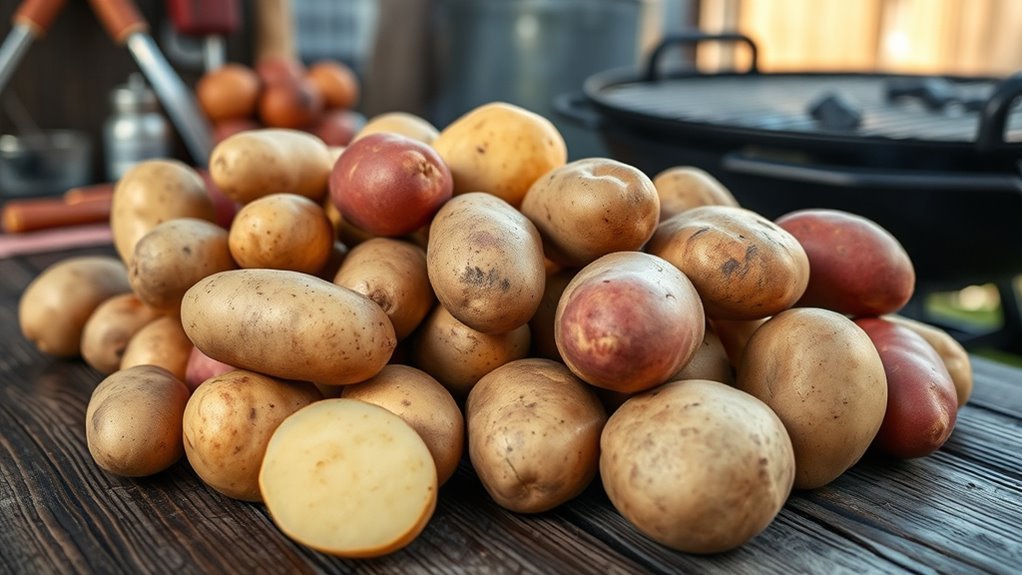
When selecting potatoes for grilling, you’ll want to pick russets because their high starch content yields a fluffy interior that’s perfect for the grill. Choose russet potatoes weighing between 8 to 10 ounces to make certain they cook evenly and fit well on your grill.
Their sturdy skin holds up nicely, preventing splitting and making them ideal for wrapping in foil if you prefer. While sweet potatoes are an option for a sweeter, softer bite, avoid waxy potatoes like red or fingerlings since their dense texture won’t give you that fluffy result you’re after.
Sticking with russet potatoes guarantees the best balance of texture and flavor when you grill your baked potatoes. It’s really the way to go if you want that classic grilled potato experience.
Preparing Your Potatoes for the Grill
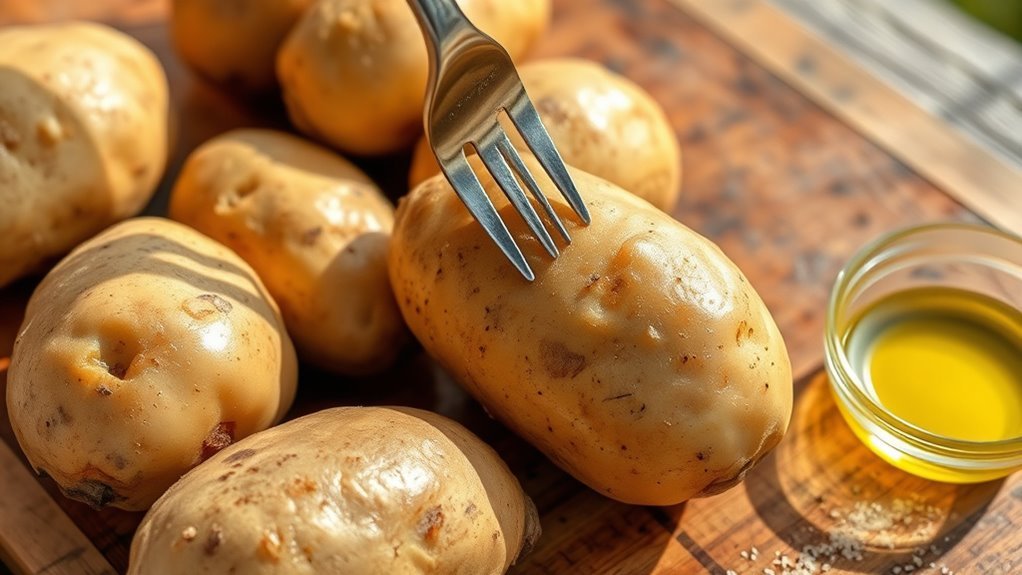
Before you start grilling, make sure to choose russet potatoes for the best texture. Give them a good rinse and scrub to remove any dirt, then dry them completely to help the seasoning stick.
Finally, coat them with olive oil and salt. And don’t forget to pierce the skin so steam can escape while cooking.
Selecting Russet Potatoes
Because the right potato sets the foundation for a perfect grilled baked potato, you should pick large Russets weighing 8 to 10 ounces each. These potatoes offer the ideal size and texture for grilling, ensuring a fluffy interior and crisp skin.
When selecting Russet potatoes, choose ones that feel firm and free from blemishes, sprouts, or soft spots to guarantee quality and even cooking. Avoid potatoes with any damage, as they won’t bake evenly on the grill.
Cleaning and Drying
Choosing the right Russet potatoes sets you up for success, but prepping them properly guarantees they cook evenly and taste great. Start by rinsing your potatoes thoroughly under cold water to remove dirt and debris.
Use a scrub brush if needed to get them completely clean. Next, pat each potato dry with a clean towel—it’s important the skin is dry to help seasoning stick and prevent sogginess.
Check for any blemishes or sprouts and remove them to ensure a smooth surface. Finally, poke several holes in each potato with a fork.
This allows steam to escape during grilling, preventing the potatoes from bursting. Make sure all potatoes are uniformly dry before moving on to the next step.
Seasoning and Wrapping
Once your potatoes are clean and dry, coat them evenly with olive oil to help the seasonings stick and to crisp up the skin during grilling. Next, generously sprinkle kosher salt all over each potato to boost flavor and create a deliciously crispy crust.
Before wrapping, pierce each potato several times with a fork to let steam escape and avoid bursting while cooking. Finally, wrap each potato tightly in heavy-duty aluminum foil or double layers of regular foil to guarantee even heat retention.
Here’s a quick rundown:
- Coat potatoes with olive oil.
- Sprinkle kosher salt generously.
- Pierce with a fork, then wrap in foil.
This preparation locks in flavor and moisture, setting you up for perfectly grilled baked potatoes. Easy, right?
How to Wrap Potatoes in Foil Properly
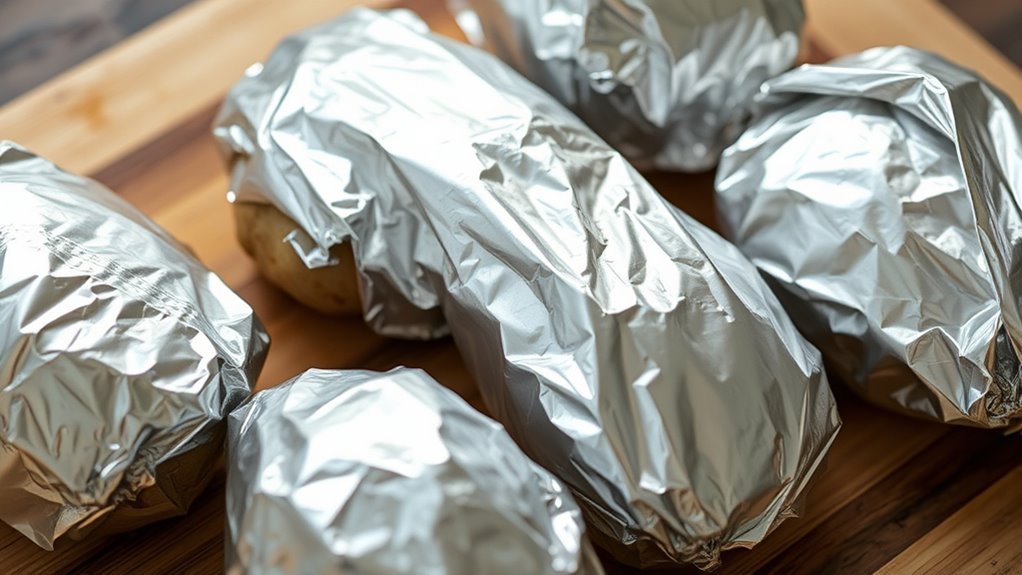
When you wrap potatoes in foil properly, you lock in moisture and flavor while protecting them from direct heat on the grill.
Start by piercing each potato several times with a fork to vent steam and avoid bursting. Next, rub the potato with olive oil and sprinkle salt for extra taste.
Place the potato in the center of a heavy-duty foil wrap, then fold the edges over carefully to seal without pressing too tightly.
For added security, double wrap the potato with a second layer of foil to prevent rips or leaks. This method of wrapping potatoes traps heat and flavor, ensuring your baked potatoes come out perfectly cooked and delicious every time you grill.
Setting Up Your Grill for Indirect Cooking
To cook baked potatoes evenly, you’ll want to set up your grill for indirect heat by turning on only one side’s burners or piling coals on one side. Keep the temperature around 350°F and use a grill thermometer to maintain consistent heat throughout.
Whether you’re using charcoal or gas, placing the potatoes on the cooler side makes certain gentle, thorough cooking without burning. It’s all about that steady heat, so your potatoes come out perfectly cooked every time.
Indirect Heat Zones
Although direct heat cooks food quickly, you’ll want to set up indirect heat zones on your grill to bake potatoes evenly without burning them.
Indirect heat guarantees your potatoes cook through slowly at a steady grill temperature of about 350°F, preventing flare-ups and charring.
Here’s how to create this zone:
- On a gas grill, turn off or reduce burners on one side; for charcoal, push lit coals to one side.
- Use a grill thermometer to monitor and maintain the indirect zone’s temperature around 350°F.
- Place your foil-wrapped potatoes on the cooler side to cook gently and evenly.
Reserve the direct heat side for crisping skins after the potatoes are fully cooked in the indirect zone.
Temperature Control Tips
Setting up your grill for indirect cooking starts with controlling the temperature carefully. Preheat your grill to around 350°F to guarantee even heat distribution.
If you’re using a gas grill, ignite burners on one side only, leaving the other side off to create an indirect cooking zone. With charcoal grills, push the lit coals to one side, keeping the other side empty for indirect heat.
Use a grill thermometer to monitor and maintain the temperature within the ideal range for baking potatoes. Position your potatoes over the cooler, unlit side of the grill to prevent direct flame contact.
This method ensures consistent roasting and helps you achieve perfectly cooked baked potatoes every time. Temperature control is key to mastering indirect grilling.
Charcoal vs. Gas Setup
When you grill with charcoal, you’ll pile hot coals on one side to create a two-zone fire. That leaves the other side free for indirect heat.
On a charcoal grill, this setup lets you place your potatoes over the cooler side, so they don’t get blasted by direct flames. For a gas grill, just turn on one side’s burners to high and leave the others off. That way, you get similar indirect zones.
Here’s how to set up your grill for perfect baked potatoes:
- Light coals and pile them on one side (charcoal grill).
- Turn on one burner high, leave the rest off (gas grill).
- Keep the temperature around 350°F using a thermometer for even heat.
This method guarantees slow, even cooking without burning. It’s pretty foolproof!
Preheating the Grill to the Ideal Temperature
To achieve perfectly baked potatoes on your grill, you need to preheat it to a steady 350°F. This temperature ensures even cooking and proper heat distribution, which is vital for fluffy insides and crispy skins.
Use a grill thermometer to monitor the temperature accurately while you preheat. If you’re using a gas grill, turn on one or two burners to medium or high heat, leaving others off to create indirect heat.
For charcoal grills, arrange lit coals on one side to form a two-zone setup. Let the grill heat for at least 10 to 15 minutes to reach and stabilize the ideal temperature before adding your potatoes.
Proper preheating makes all the difference in grilling success. Trust me, taking this step seriously will really pay off when you bite into those perfectly cooked spuds.
Placing Potatoes on the Grill and Timing
Although preheating is essential, placing your foil-wrapped potatoes on the indirect heat zone of the grill at 350°F guarantees even cooking without burning. This method allows your grill baked potatoes to cook through gently and consistently.
Follow these steps for perfect results:
- Wrap each potato tightly in heavy-duty foil to protect against tearing and ensure even heat distribution.
- Arrange the foil-wrapped potatoes on the cooler, indirect heat zone of the grill, avoiding direct flames.
- Grill the potatoes for about 30 minutes, maintaining the steady 350°F temperature for thorough cooking.
Rotating and Checking Potatoes During Cooking
You’ll want to rotate your potatoes every 15 minutes to make certain they cook evenly and avoid hot spots.
Keep an eye on them as they grill, using a thermometer or a gentle squeeze to check for doneness.
Timing your checks right helps you pull them off the grill perfectly tender and crispy.
Importance of Rotation
When grilling baked potatoes, rotating them every 10 to 15 minutes is essential for even cooking and preventing burnt skins. This rotation guarantees the potatoes receive even heat exposure, avoiding hot spots that can char the skin.
By turning them regularly, you help distribute heat uniformly, which results in fluffy interiors and crispy skins.
To keep your potatoes perfectly cooked, remember:
- Rotate potatoes using tongs or heat-resistant gloves to handle them safely.
- Check the potatoes frequently to spot uneven cooking early.
- Maintain consistent rotation to promote even heat penetration, especially for larger potatoes.
This method guarantees your grilled baked potatoes come out tender inside and beautifully crisp outside every time.
Timing for Checks
Since even heat distribution is key, rotate your wrapped potatoes every 30 minutes while grilling to guarantee uniform cooking. This timing helps each side get equal exposure to the heat, preventing uneven spots.
Around the 45-minute mark, use a thermometer to check the internal temperature, aiming for 205-210°F for perfectly cooked potatoes. Monitoring this temperature ensures they’re thoroughly cooked without overdoing it.
After about an hour, unwrap them carefully to inspect for doneness, but remember to keep checking the grill temperature too. If you want crispier skin, briefly place the unwrapped potatoes on direct heat for 1-2 minutes per side, turning frequently.
Staying attentive to timing and internal temperature throughout the process guarantees your baked potatoes come out just right every time.
Methods to Test Doneness
Rotating the potatoes during grilling helps promote even cooking, but knowing when they’re done requires a few simple tests. To check the doneness of your potato, try these methods:
- Use a meat thermometer to check the internal temperature; it should be between 205-215°F for perfect doneness.
- Insert a paring knife into the center; if it slides in easily without resistance, the potato is cooked through.
- Gently squeeze the potato—if it yields slightly and feels soft, it’s ready.
Additionally, look for crispy, salted skins and fluffy insides as visual cues. Use tongs or heat-resistant gloves to carefully rotate the potatoes during grilling, ensuring even doneness throughout.
These steps guarantee your grilled baked potatoes come out perfectly cooked every time. Easy, right? Just a little attention and you’re golden!
Determining Potato Doneness by Temperature and Texture
Although grilling can vary in heat, you can confidently determine your baked potato’s doneness by checking its internal temperature and texture. Use a food thermometer to measure the internal temperature by inserting it into the center; your potato is perfectly cooked when it reaches about 210°F (99°C).
Along with temperature, test the texture by sliding a paring knife into the potato—if it slips in easily with little resistance, the flesh is fluffy and ready. Visually, the skin should be crispy, and the interior soft without any dense or raw spots.
After removing the potato from the grill, let it rest for a few minutes. This rest allows heat to redistribute, making it easier to assess both texture and internal temperature accurately.
Finishing Potatoes on Direct Heat for Crispy Skin
When your potatoes have cooked through indirectly, you’ll want to finish them on direct heat to achieve that perfect crispy skin. First, preheat your grill to high heat, around 450-500°F.
Next, carefully remove the foil using tongs or heat-resistant gloves before placing the potatoes directly over the flames. Then, follow these steps:
- Place the potatoes on the direct heat side of the grill.
- Turn them every 1-2 minutes to crisp all sides evenly.
- Watch for a nicely charred, crispy skin and an internal temperature of 205-210°F.
This method ensures your grilled potatoes have a tender inside with a golden, crispy skin that’s simply irresistible. Give it a try—you won’t regret it!
Serving Suggestions and Topping Ideas
To elevate your grilled baked potatoes, choose from a variety of toppings that suit your taste and occasion. Classic options like butter, sour cream, and shredded cheese add creamy richness.
For a heartier meal, try chili, pulled pork, or bacon bits. Vegetables such as grilled corn or sautéed mushrooms bring texture and spice. Add toppings just before serving to keep the skin crispy and the interior fluffy.
Here are some tasty ideas to try with your baked potato:
| Creamy | Hearty | Veggie |
|---|---|---|
| Butter | Chili | Grilled Corn |
| Sour Cream | Pulled Pork | Sautéed Mushrooms |
| Shredded Cheese | Bacon Bits | Jalapeños |
| Chopped Chives | BBQ Chicken | Roasted Peppers |
| Cream Cheese | Meat Sauce | Caramelized Onions |
These potato recipes let you customize every bite. Give them a try and find your favorite combo!
Conclusion
Grilling baked potatoes takes patience and precision—slow heat transforms firm, raw spuds into soft, fluffy treasures inside, while a quick sear crisps their skins to golden perfection. You’ll watch them shift from cool, rough exteriors to steaming, tender delights ready for your favorite toppings.
The contrasting textures and the smoky aroma make every bite worth the wait. With these steps, your grilled potatoes will steal the show at any cookout.
When you grill baked potatoes, it’s all about timing and technique. Cooking them on the grill lets you enjoy that perfect balance of a fluffy inside and crispy skin, which is hard to beat. So, if you want to master how long to cook baked potato on grill, remember: slow and steady heat is your best friend.
Follow these essential steps, and your grilled potatoes will be a hit every time—juicy, flavorful, and cooked to perfection. Whether you’re hosting a barbecue or just grilling for fun, these baked potatoes will add something special to your meal.