How Does a Grill Pan Work?
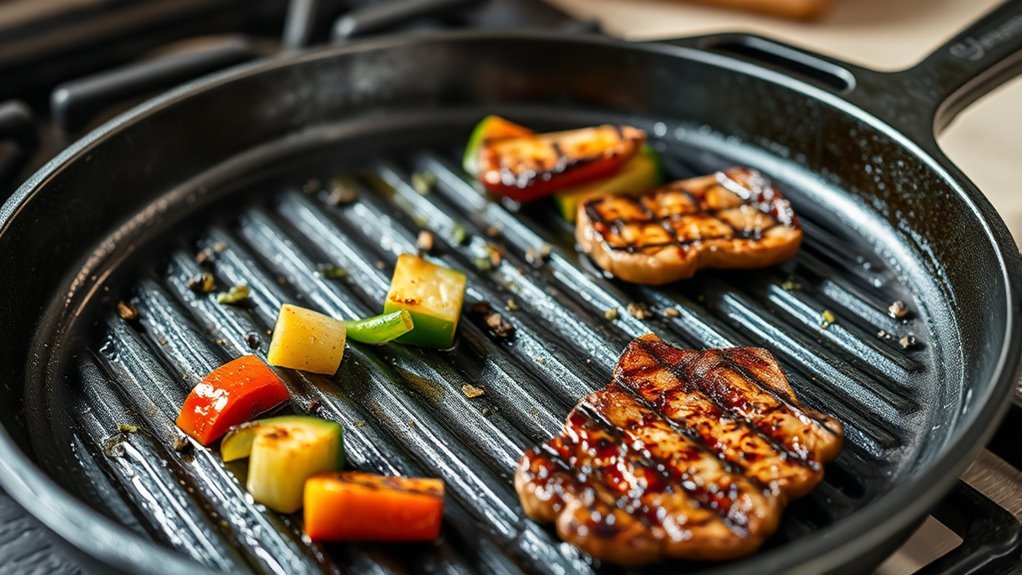
When you cook with a grill pan, its raised ridges create direct heat contact with your food, giving you those classic sear marks and promoting rich browning through the Maillard reaction. These ridges lift your food above the pan’s surface, allowing fat and juices to drip away.
This prevents your food from steaming and helps it char nicely.
This method mimics the effects of outdoor grilling, enhancing flavor and texture. However, it doesn’t provide the smoky notes you get from charcoal grilling.
So, while a grill pan is great for indoor cooking, it offers a slightly different taste experience. Keep exploring to see how indoor grill pans compare to traditional outdoor grilling methods.
Key Takeaways
- Raised ridges on a grill pan create direct heat contact and distinct searing marks on food. The ridges lift food above the pan surface, allowing fat and juices to drip away and prevent steaming.
- Concentrated heat on the ridges promotes the Maillard reaction, enhancing browning and flavor development. The pan maintains high temperatures that encourage caramelization and mimic outdoor grilling effects.
- Grill pans don’t provide that smoky flavor you get from an outdoor grill, but they do visually replicate grill marks. Plus, they produce a rich, seared taste right in your kitchen.
The Science Behind Grill Pan Cooking
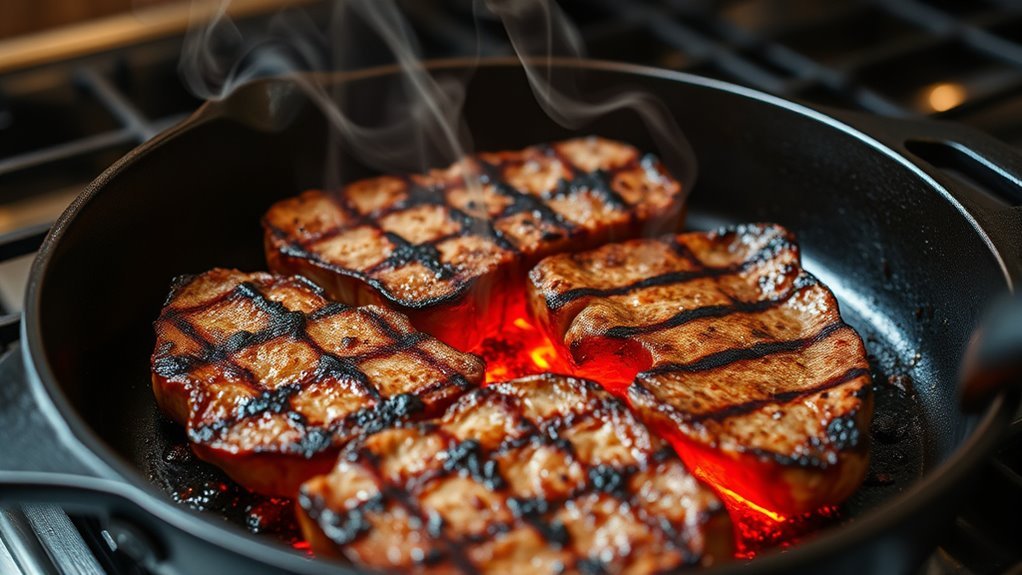
Although grill pans don’t offer the smoky flavor of outdoor grills, they use raised ridges to deliver direct heat to your food, creating those classic searing marks and enhancing browning through the Maillard reaction.
Grill pans use raised ridges to sear food with direct heat, creating classic grill marks and rich browning.
These raised ridges lift your food above the pan’s hot metal surface, letting fat and juices drip away. This moisture escape stops steaming, keeping temperatures high for *ideal* heat transfer.
The conductive heat from the ridges quickly browns and chars where the food makes contact, encouraging caramelization and flavor development. By focusing heat where your food touches the ridges, grill pans mimic outdoor grilling effects, giving you those distinct searing marks and rich flavors.
Knowing this science can really help you get the most out of grill pan cooking, so you end up with delicious, well-browned meals every time.
Comparing Indoor Grill Pans to Outdoor Grilling
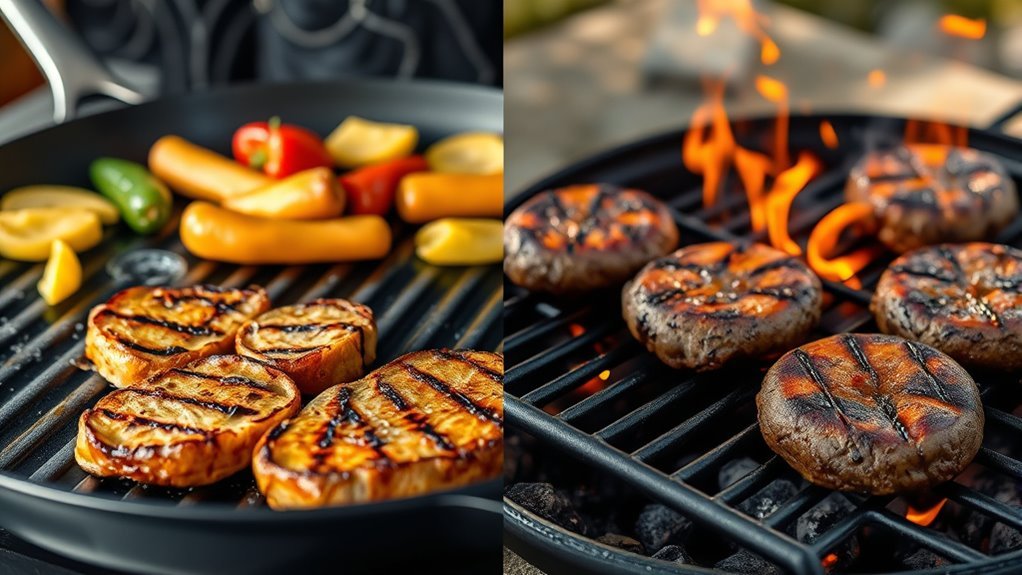
When you use an indoor grill pan, you get those familiar grill marks and some charring that visually resemble outdoor grilling, but the experience and flavors don’t fully match up.
Indoor pans rely on raised ridges to create visual grill marks and promote heat conduction through direct contact with the metal surface. However, unlike outdoor grilling, you miss out on the smoky flavor that fire and carbon produce.
Outdoor grilling uses radiant heat and burning wood or charcoal, generating complex flavors from vaporized fats igniting over the fire. While indoor grill pans offer flavor benefits and the look of grill marks, the indoor vs outdoor difference lies in the depth of flavor and smoky notes you can’t replicate indoors.
Conclusion
Now that you understand the science behind grill pan cooking and how it stacks up against outdoor grilling, you’re probably wondering which method truly brings out the best flavors.
The answer isn’t as straightforward as you might think. Before you decide whether to fire up your outdoor grill or stick with your trusty grill pan, consider how each one transforms your food in its own unique way.
Grill pans are fantastic for indoor cooking, offering those beautiful sear marks and smoky flavors without needing an outdoor setup. Outdoor grills, on the other hand, provide that authentic char and smoky aroma that’s hard to beat.
The secret to perfect grilling? It’s all about understanding how a grill pan works—its ability to retain heat and create those signature grill lines while cooking evenly. So, whether you’re using an indoor grill pan or an outdoor grill, both have their perks.
In the end, choosing between a grill pan and an outdoor grill comes down to convenience, flavor preference, and cooking style. Explore both, and you’ll discover the best way to bring out delicious, grilled flavors every time.