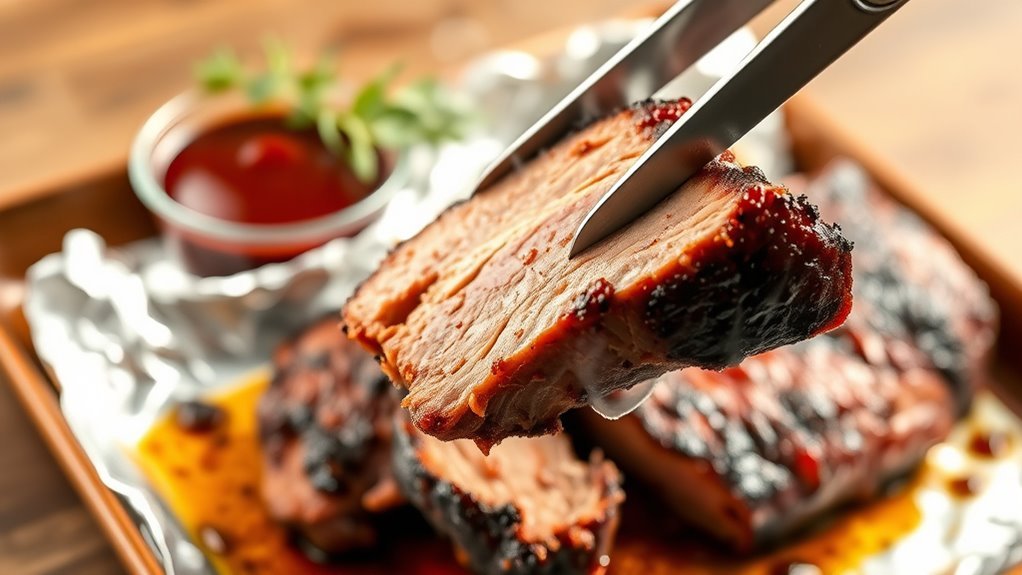
How to Reheat BBQ Brisket Without Drying It Out
To reheat BBQ brisket without drying it out, the key is to heat it slowly at a low temperature, ideally between 225°F and 250°F. Wrapping the brisket tightly in foil helps trap steam, keeping all that delicious moisture locked in.
Adding a splash of beef broth or au jus before you seal the foil really makes a difference—it helps retain juiciness and flavor. Whether you use an oven or a sous vide setup, aim to warm the meat evenly to about 140°F.
Once it’s heated through, let the brisket rest for a few minutes. This step allows the juices to redistribute, so every bite stays tender and flavorful.
Follow these tips, and you’ll enjoy BBQ brisket that tastes just as good as when it was first cooked!
Key Takeaways
- Reheat brisket slowly at 225°F–250°F in the oven, wrapped tightly in foil or butcher paper to trap steam and preserve moisture. This helps keep it juicy and tender.
- Using sous vide at 150°F for 1-2 hours is another great way to warm the brisket evenly while maintaining its juiciness. It’s pretty foolproof for avoiding dry meat.
- Adding beef broth or au jus when you reheat adds moisture and boosts the flavor. Don’t skip this step if you want your brisket to taste amazing.
- Keep an eye on the internal temperature, aiming for about 140°F. That way, you won’t overcook it and dry it out.
- After reheating, let the brisket rest for 5 minutes. This lets the juices redistribute evenly throughout the meat, making every bite delicious.
Best Methods to Reheat Brisket for Maximum Juiciness
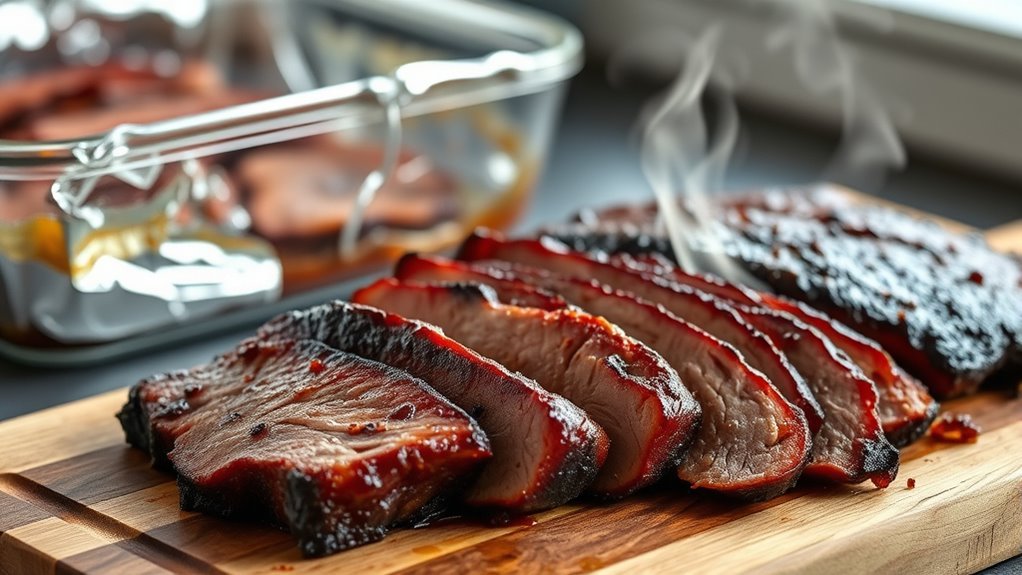
When you want to reheat brisket without drying it out, slow and low is the way to go. The best way to reheat brisket is by using an oven set between 225°F and 250°F. This allows gentle reheating that preserves moisture.
Wrapping your leftovers tightly in foil or butcher paper traps steam, keeping the meat tender. Alternatively, sous vide at 150°F for 1-2 hours evenly warms the brisket while maintaining juiciness.
Wrap brisket tightly or sous vide at 150°F to keep it tender and juicy.
During reheating, adding a splash of au jus or broth boosts moisture and flavor. Keep an eye on the internal temperature, aiming for about 140°F to avoid overcooking.
Whether you choose oven or sous vide, these methods ensure your brisket stays moist and delicious. This way, you make the most of your leftovers without sacrificing texture or taste.
Essential Tips for Keeping Brisket Moist During Reheating
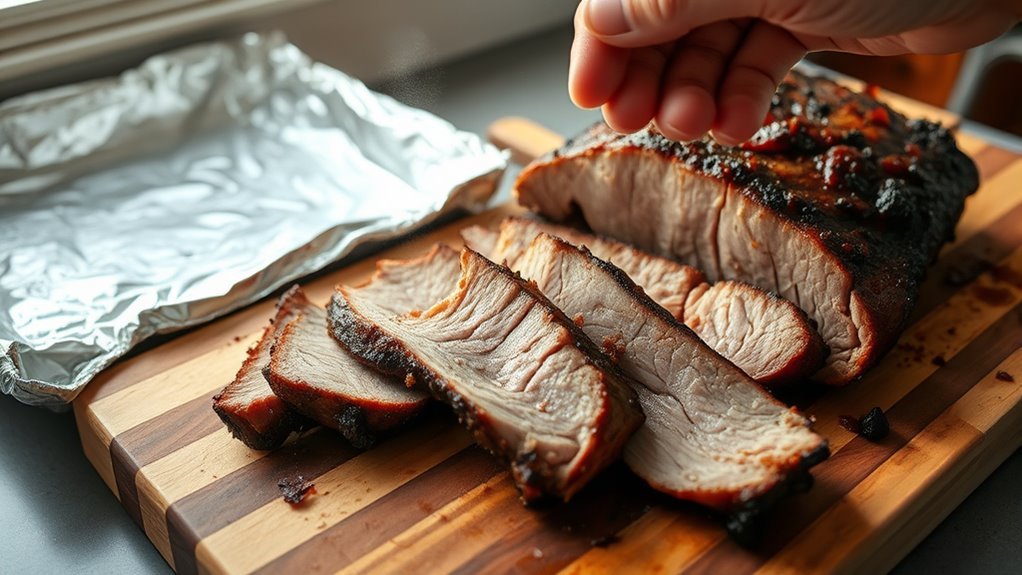
Although reheating brisket might seem straightforward, keeping it moist requires a few essential steps. To prevent drying, always use low heat between 150°F and 165°F and cover with foil to trap steam.
Adding moisture-rich liquids like beef broth or au jus during oven reheating or slow cooker use helps maintain a juicy brisket. A water bath or sous vide method also evenly reheats leftovers without drying out the meat.
Don’t forget to rest after reheating for 5 minutes to let juices redistribute.
| Tip | Benefit |
|---|---|
| Low heat (150-165°F) | Prevents moisture loss |
| Cover with foil | Traps steam, keeps moist |
| Moisture-rich liquids | Adds juiciness |
| Rest after reheating | Redistributes juices |
Conclusion
Reheating your BBQ brisket without drying it out is all about patience and care. By wrapping it tight and heating it low and slow, you’ll keep every tender bite juicy and flavorful. Think of it like waking up a sleeping giant—gentle and steady wins the race.
Follow these simple tips, and your brisket will taste just as mouthwatering as the first time you sliced into it. Keep that deliciousness alive! When you reheat BBQ brisket, the key is to maintain moisture and tenderness. Using a low temperature and wrapping the meat in foil helps trap the juices.
This method ensures your brisket stays succulent and packed with flavor, avoiding that dreaded dryness. So next time you reheat BBQ brisket, just remember: slow and steady with a tight wrap keeps it juicy and delicious every time!