Is Japanese BBQ Sauce the Same as Teriyaki?
Japanese BBQ sauce and teriyaki aren’t exactly the same, though they both have sweet and savory flavors that make them popular choices in Japanese cooking. Japanese BBQ sauce tends to be lighter and more complex, often including unique ingredients like yuzu or miso.
This makes it fantastic for glazing or quick cooking, adding a subtle depth to your dishes.
On the other hand, teriyaki is thicker and sweeter. It’s perfect for marinating and caramelizing on grilled meats, giving them that classic shiny, flavorful coating.
Knowing these differences can really help you pick the right sauce to match your cooking style and flavor preferences. So, next time you’re choosing between Japanese BBQ sauce and teriyaki, you’ll know exactly what each brings to the table!
Key Takeaways
- Japanese BBQ sauce has a lighter, more complex umami flavor compared to teriyaki’s straightforward sweetness.
- Teriyaki sauce is thicker and syrupy, ideal for caramelizing grilled meats, while Japanese BBQ sauce is thinner and glaze-like.
- Japanese BBQ sauce is more versatile, used as a marinade, glaze, dip, or stir-fry sauce, unlike teriyaki’s primary use as a marinade and glaze.
- The texture difference influences cooking methods: teriyaki clings well during grilling, whereas Japanese BBQ sauce suits glazing and quick cooking.
- Both sauces balance sweet and savory notes but serve distinct culinary purposes due to their flavor and consistency differences.
Differences in Flavor and Texture Between Japanese BBQ Sauce and Teriyaki
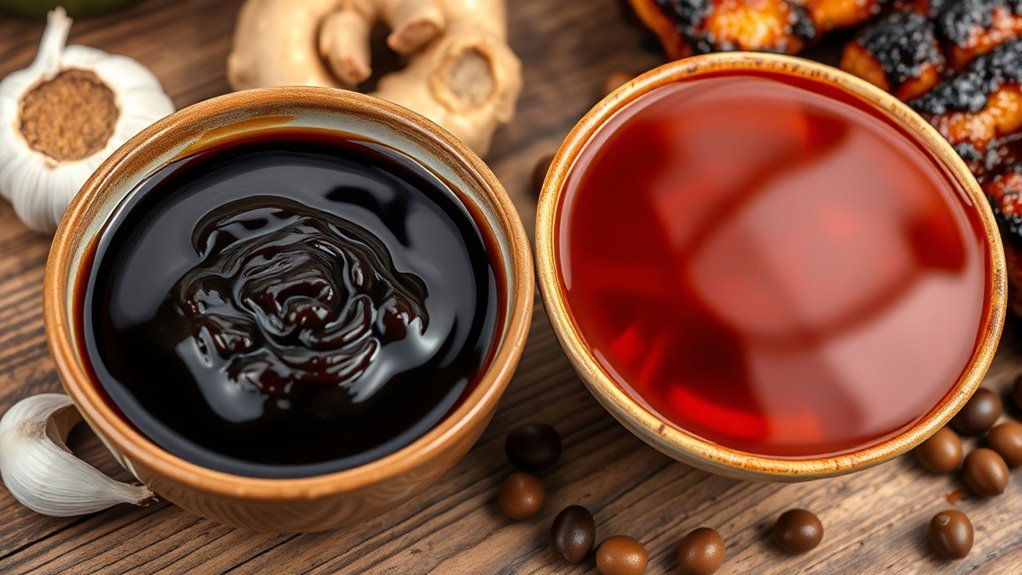
Although both Japanese BBQ sauce and teriyaki share sweet and savory notes, you’ll notice clear differences in their flavor and texture. Japanese BBQ sauce typically offers a lighter, more complex umami flavor, often enhanced with ingredients like yuzu or miso, unlike the straightforward sweetness of teriyaki.
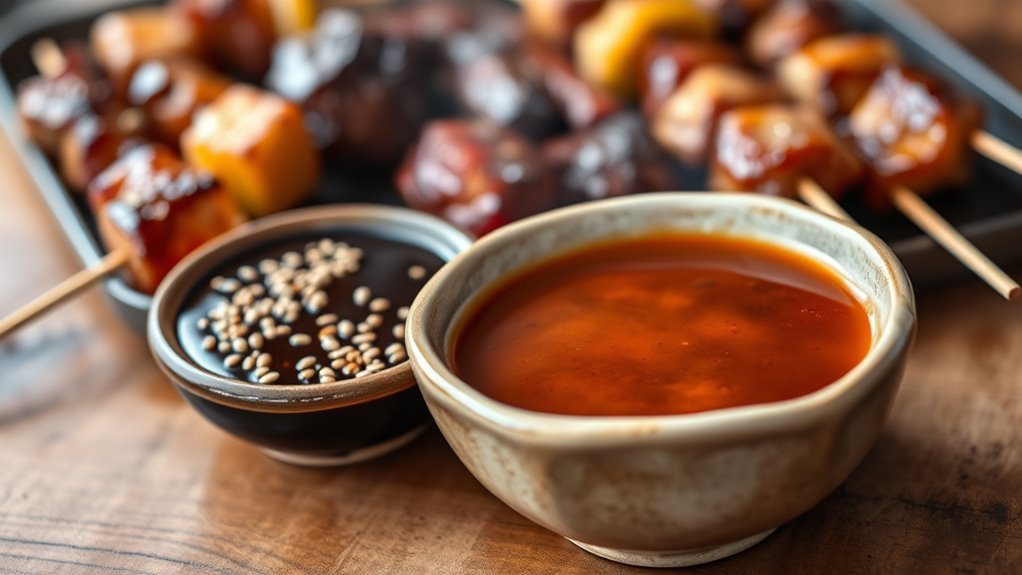
When it comes to texture, Japanese BBQ sauce has a thinner, glaze-like consistency that’s perfect as a marinade or for pouring. Teriyaki, on the other hand, boasts a thicker, syrupy texture designed for caramelization on grilled meats.
This difference in consistency means Japanese BBQ sauce glazes foods without the sticky heaviness teriyaki delivers. So, while both balance sweetness and savory depth, their flavor profiles and textures serve distinct purposes in your cooking.
Culinary Uses and Versatility of Japanese BBQ Sauce Versus Teriyaki
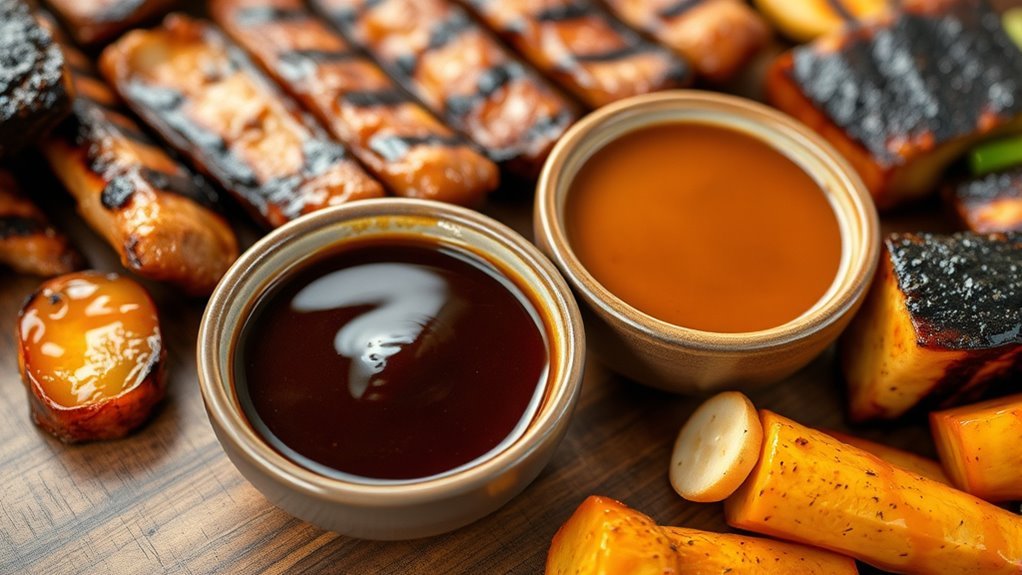
When you explore Japanese BBQ sauce and teriyaki, you’ll find each offers unique culinary uses that suit different cooking styles. Teriyaki shines as a marinade and glaze with a consistent, sweet-savory flavor profile, perfect for coating grilled or broiled dishes. Its thicker consistency helps it cling well during glazing.
Japanese BBQ sauce, on the other hand, boasts greater versatility with varied applications—from marinating and glazing to dipping and stir-frying. Its flavor profile often includes garlic, ginger, or citrus, adding complexity beyond teriyaki’s uniform sweetness.
Japanese BBQ sauce tends to be thinner, making it ideal for grilling and quick-cook methods. While both sauces overlap in culinary uses, their differences in consistency and flavor profile mean you’ll want to choose based on the specific cooking method and taste you’re aiming for.
Conclusion
You might think Japanese BBQ sauce and teriyaki taste the same, but they differ distinctly in flavor and feel. While teriyaki tantalizes with its sweet, soy-based smoothness, Japanese BBQ sauce bursts with bold, smoky spice.
Both bring brilliant benefits to your cooking, but knowing their nuanced notes lets you layer flavors like a pro. So, savor the subtle shifts and select your sauce to suit your savory, sweet, or smoky cravings perfectly.
When deciding between Japanese BBQ sauce and teriyaki, think about the flavor profile you want to highlight. Teriyaki is great if you prefer a sweeter, more mellow taste, while Japanese BBQ sauce adds that smoky, tangy kick. Understanding these differences helps you enhance your dishes and make the most out of each sauce’s unique qualities.