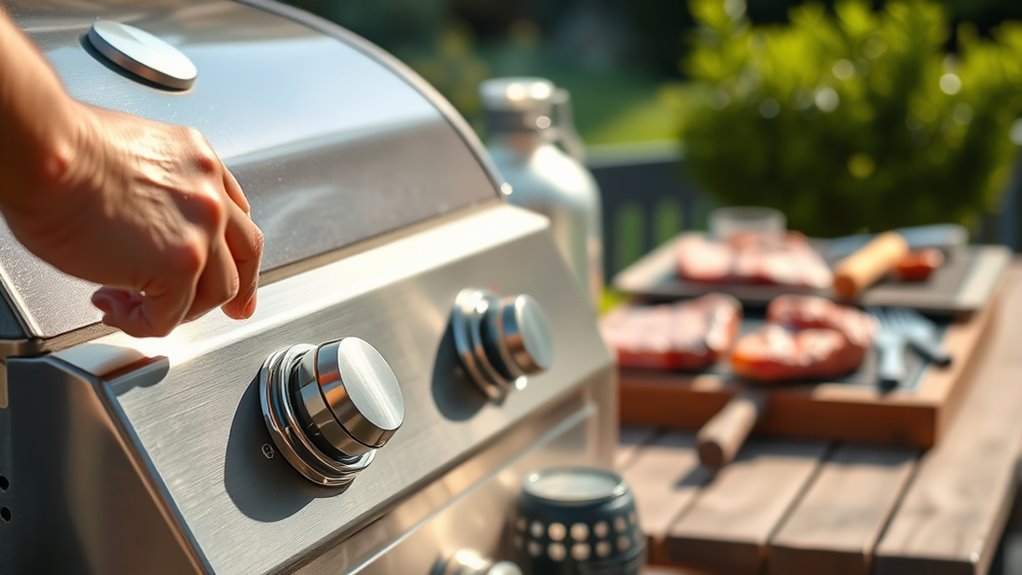
How to Use a Propane Grill in 5 Easy Steps
First, connect your propane tank securely. Start by closing the valve, then remove the cap, and tighten the regulator carefully. This step is crucial to ensure safety and proper gas flow.
Next, open the valve and check for leaks using soapy water. If you see bubbles forming, tighten the connections and test again. Safety first, always!
Then, ignite the grill with the lid open. This helps prevent gas buildup, which can be dangerous. Make sure no leaks are present before you continue.
Preheat your grill by setting the burners to high. Let it warm up, then adjust the temperature as needed for your cooking. This prepares the grill for even heat distribution.
Finally, cook your food to perfection. When finished, turn off all the burners before closing the propane valve. Following these steps closely will have you grilling like a pro in no time!
Key Takeaways
- Securely connect the propane tank by aligning and tightening the regulator to the tank valve. Make sure the valve is fully closed beforehand.
- Open the propane valve fully and check all connections for leaks using a soap and water solution before igniting.
- Ignite the grill with the lid open. Use the igniter or a long lighter, and keep a fire extinguisher nearby just in case.
- Preheat the grill by turning all burners to high with the lid closed for 10 minutes. Then, adjust the burners to your desired cooking temperatures.
- After cooking, turn off all burners first. Next, close the propane valve and let the grill cool with the lid open.
Connect Your Propane Tank Securely
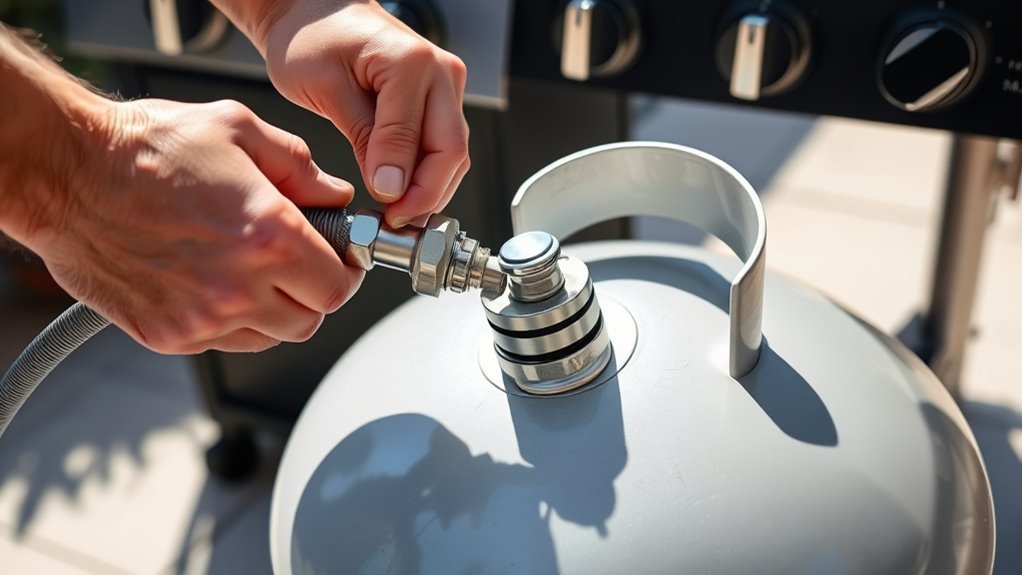
Before connecting your propane tank, make sure the valve is completely closed to prevent leaks. Start by removing the safety cap from the propane tank.
Then, inspect the valve carefully for any damage or debris that could affect the connection. When you’re ready, align the regulator’s hose connector with the tank’s valve and connect them by hand, tightening securely.
If the connection feels loose, use a wrench to tighten it further—but don’t over-tighten, as that might damage the fittings.
Open the Propane Valve and Check for Leaks
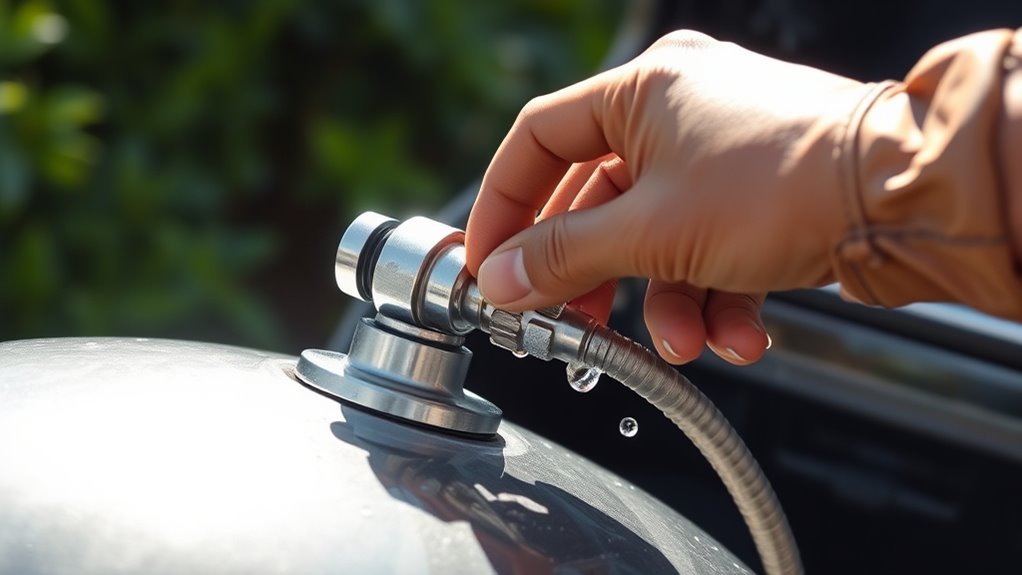
How do you guarantee your propane grill is safe to use before lighting it? First, make sure you turn the propane tank valve counterclockwise to fully open it, allowing gas to flow to the grill.
Next, check for leaks by applying a soap and water solution to all connections and hoses. Look closely for bubbles, which indicate a leak. Perform this test in a well-ventilated area to prevent gas buildup.
Check connections with soapy water for bubbles to detect leaks in a well-ventilated area.
If you spot bubbles, immediately turn off the propane tank, inspect the connections, and retest. Regularly inspect your propane grill’s tank and hoses for damage, corrosion, or wear to maintain safety.
These steps help ensure your grill operates safely every time you cook. It’s a simple routine that can save you from potential hazards.
Ignite the Grill Safely
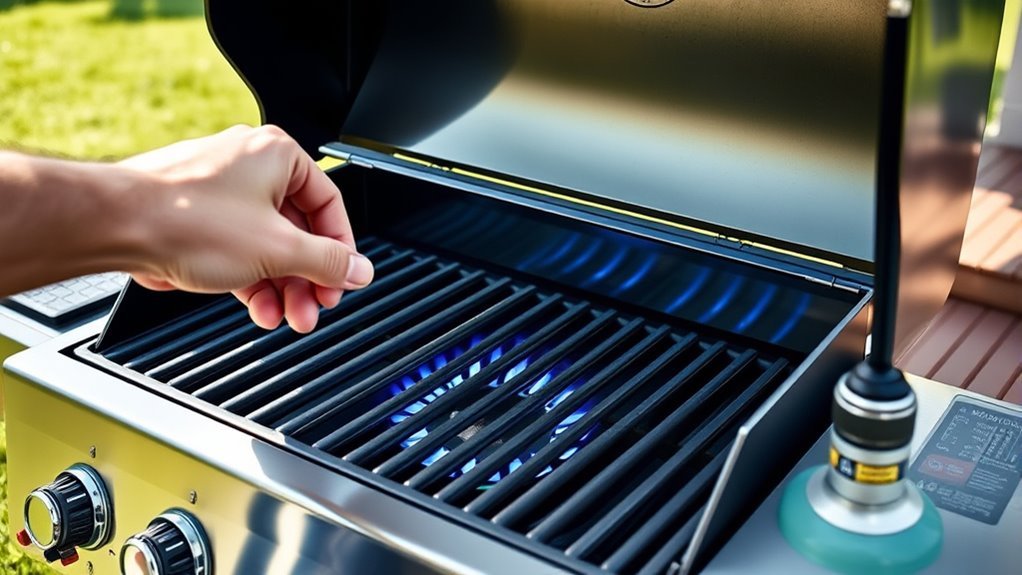
When should you ignite your propane grill to guarantee safety? Always make sure the propane tank valve is fully open by turning on your propane counterclockwise before ignition. Keep the grill lid open to prevent gas buildup and allow proper ventilation.
Use the built-in electronic igniter to light the burners once you confirm gas flow. If the automatic igniter fails, manually light the burners through the side hole using a long lighter or match.
Before igniting, check for leaks by applying soapy water to connections—bubbles indicate a leak. Keep a fire extinguisher nearby as a precaution in case of unexpected flare-ups.
Following these steps ensures a safe and controlled start, letting you enjoy your grilling experience without worry. So, take your time and grill safely!
Preheat and Adjust Temperature Settings
Although it might be tempting to start cooking immediately, you should always preheat your propane grill by turning all burners to high and closing the lid for about 10 minutes. This step guarantees even heat distribution.
Use the built-in temperature gauges to monitor the internal heat and adjust knobs accordingly. Once the grill reaches your target temperature, lower burners to medium or low for consistent temperature control.
You can also customize heat by turning individual burners on or off based on your recipe’s needs. It’s all about making sure your food cooks just right!
| Burner Setting | Temperature Range (°F) | Use Case |
|---|---|---|
| High | 450-550 | Searing meats |
| Medium-High | 375-450 | Grilling veggies |
| Medium | 300-375 | Cooking chicken |
| Low-Medium | 200-300 | Slow cooking |
| Low | 100-200 | Warming food |
Cook Your Food and Turn Off the Grill Properly
Once your food is cooked to perfection, make sure to turn off all the burners before closing the propane tank valve to stop the gas flow. Use heat-resistant gloves or tools to handle hot grates while turning off the grill safely.
Keep the lid open and let the grill cool for at least 15 minutes to prevent overheating and ensure safety. Unlike charcoal grills, propane grills heat up and cool down more quickly, so you won’t need to wait a long time before cleaning or storing.
Leave the lid open and allow at least 15 minutes for your propane grill to cool safely before cleaning or storing.
Always double-check that all burners are off and no flames remain before leaving the grill unattended. Also, regularly confirm the propane tank valve is fully closed to avoid leaks or accidental gas release after use.
This careful process keeps your grilling safe and efficient. It’s a simple routine that makes a big difference!
Conclusion
Using your propane grill is like conducting a well-tuned orchestra—each step plays a crucial part in creating a perfect harmony of flavors.
By connecting your tank securely and checking for leaks, you ensure safety right from the start. Igniting the grill safely is your next move, setting the tone for a great cooking session.
Preheating the grill properly gets it ready for those delicious meals ahead. And don’t forget to turn off the grill correctly when you’re done—that’s part of the process too.
Follow these simple steps, and you’ll master your propane grill with confidence. Whether you’re grilling burgers, veggies, or steaks, these easy steps help turn every cookout into a memorable feast. Using a propane grill doesn’t have to be complicated—just a few careful moves can bring out amazing flavors every time!