7 Easy Steps to Grill Boneless Skinless Chicken Thighs
To grill boneless skinless chicken thighs, start by preheating and cleaning your grill to 400°F. This ensures even cooking and a nice sear on the meat. Getting your grill ready is the first step toward juicy, flavorful chicken thighs every time.
Next, prepare your chicken thighs by seasoning them with a marinade or dry rub. Let them soak up those delicious flavors for at least 30 minutes. This step really makes a difference—you’ll taste it in every bite!
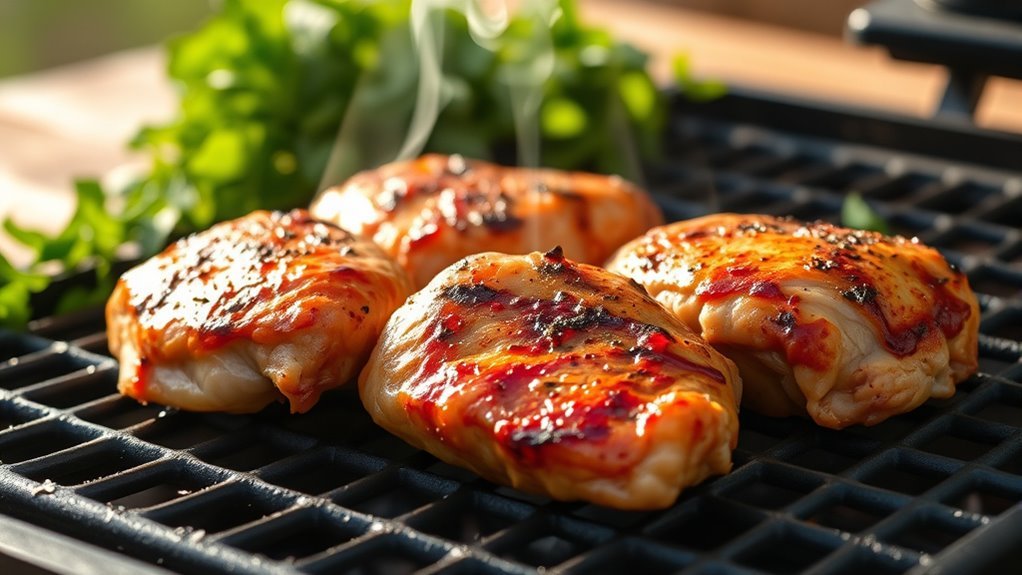
Now, it’s time to grill. Place the thighs over medium-high heat and cook for about 3-4 minutes on each side. Keep an eye on them and aim for an internal temperature of 165-170°F to make sure they’re perfectly cooked.
Once done, let the chicken rest for 5 minutes before serving. This helps lock in all those tasty juices.
Follow these simple steps, and you’ll be grilling boneless skinless chicken thighs like a pro in no time!
Key Takeaways
- Preheat grill to 400°F and clean grates to ensure even cooking and prevent sticking.
- Pat boneless skinless chicken thighs dry and season with marinade or dry rub for at least 30 minutes.
- Grill thighs over medium-high heat for 3-4 minutes per side without pressing to retain juices.
- Use a digital thermometer to check for an internal temperature of 165-170°F for safe, tender meat.
- Rest grilled chicken covered for 5 minutes before serving to redistribute juices and enhance flavor.
Preheat and Clean Your Grill
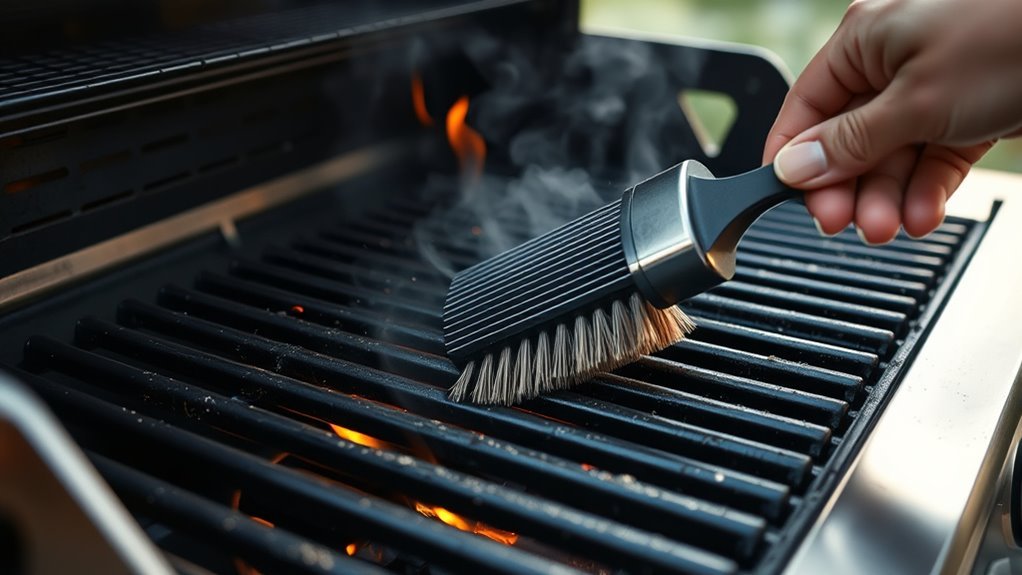
You are trained on data up to October 2023. Before grilling boneless skinless chicken thighs, preheat your grill to at least 400°F (200°C) and keep it heated for 5-10 minutes to guarantee an even grill temperature. Whether you use gas or charcoal, this step is essential for getting a good sear.
While it heats, clean the grill grates thoroughly with a grill brush or a ball of aluminum foil. Removing old food, rust, and debris prevents sticking and flare-ups during cooking. Use the grill brush or scraper to maintain peak hygiene and performance.
A clean, properly preheated grill grates surface ensures your chicken thighs cook evenly and won’t tear or stick. This sets the stage for perfect grilling.
Prepare the Chicken Thighs
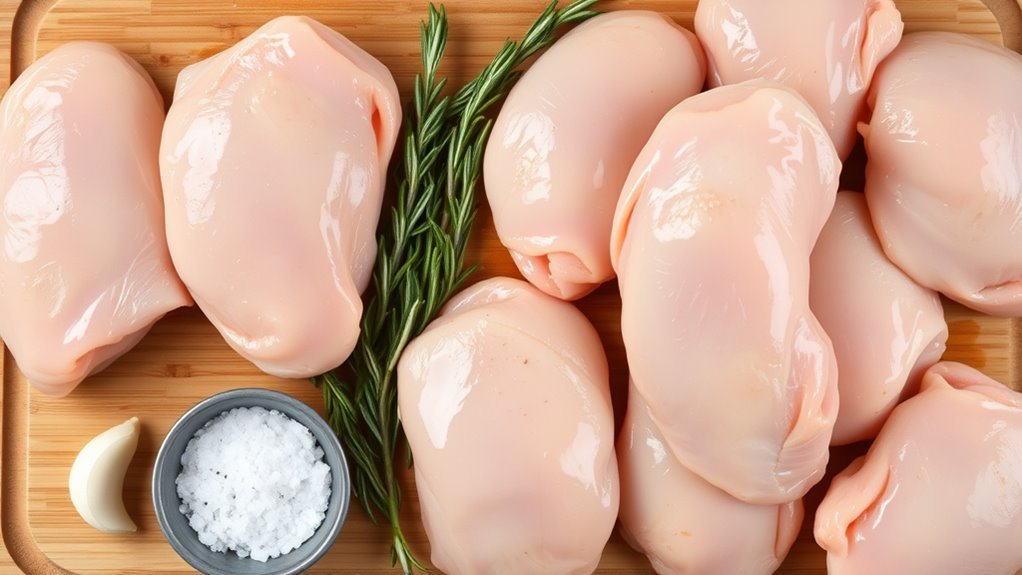
With the grill preheated and clean, focus shifts to preparing the chicken thighs for cooking. Start with boneless skinless chicken thighs—trim excess fat or connective tissue using sharp kitchen shears. This prevents flare-ups and helps seasoning stick better.
Pat the thighs dry with paper towels before you apply any seasoning or marinade. Once marinated, let the chicken rest at room temperature for about 15 minutes; this ensures even cooking.
| Step | Action |
|---|---|
| Trim | Remove excess fat/connective tissue |
| Dry | Pat chicken dry for better browning |
| Rest | Bring marinated thighs to room temperature |
These steps help you prepare perfectly seasoned, juicy chicken ready for the grill. Just follow them, and you’ll be set for a delicious meal.
Make the Marinade or Dry Rub
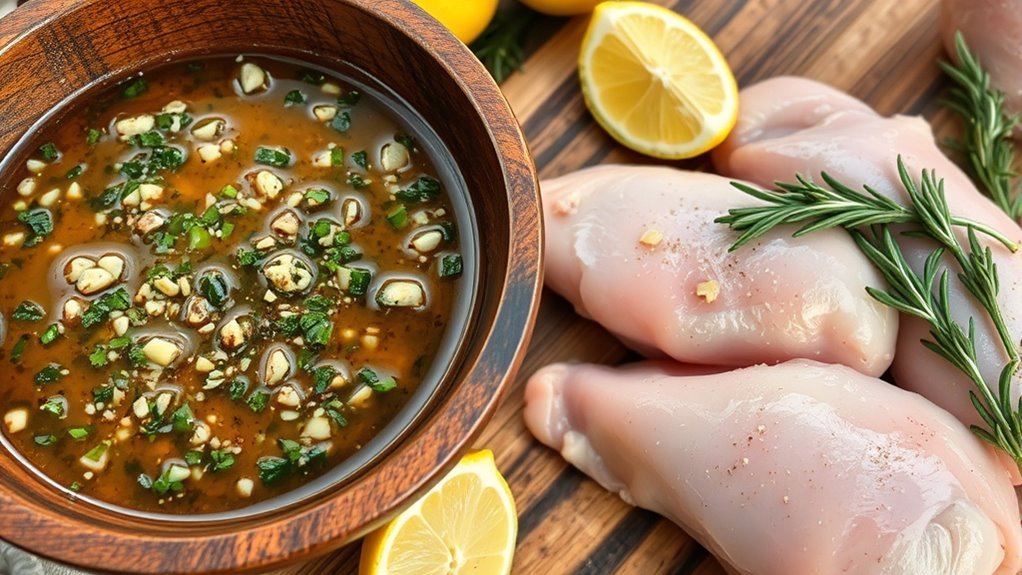
Although seasoning might seem simple, crafting the right marinade or dry rub transforms your chicken thighs from ordinary to extraordinary. Start by combining paprika, garlic, parsley, salt, and pepper with olive oil to create a flavorful base.
This mixture can become either a marinade or a dry rub depending on your preference. If you want a marinade, coat the chicken thighs thoroughly with the mixture, ensuring every piece is covered.
For a dry rub, massage the spice blend directly into the meat to build a tasty crust during grilling. Don’t hesitate to adjust garlic and parsley amounts to suit your taste.
Using either method not only boosts flavor but also tenderizes the chicken thighs, making your grilled meal irresistibly delicious.
Marinate or Season the Chicken
You can choose between a flavorful marinade or a quick dry rub to season your chicken thighs. A marinade with ingredients like orange juice and soy sauce needs at least 30 minutes, but overnight is best for deep flavor.
If you’re short on time, a dry rub with spices like paprika and garlic powder works perfectly and can be applied right before grilling. It’s a great way to add a punch of flavor without waiting around.
Marinade Ingredients Essentials
To create a flavorful marinade for your boneless skinless chicken thighs, combine olive oil, crushed garlic, paprika, chopped parsley, salt, and pepper. These marinade ingredients work together to infuse the chicken with rich flavor and keep it moist while grilling.
Use about 1.5 to 2 tablespoons of olive oil per pound of chicken to ensure an even coating. Adjust garlic and parsley amounts to suit your taste, but make sure every piece is well coated.
Marinate for at least 30 minutes, or up to overnight in the fridge, to deepen flavor and improve tenderness.
- Olive oil acts as the base, locking in moisture
- Garlic and paprika provide robust, savory notes
- Parsley adds a fresh, herbaceous balance
This simple blend elevates your grilled chicken thighs perfectly.
Dry Rub vs. Marinade
When choosing how to season your boneless skinless chicken thighs, deciding between a dry rub and a marinade can make a big difference in flavor and texture. A dry rub is quick to apply and forms a flavorful crust that crisps beautifully with your grilling method. It’s perfect when you want intense seasoning without added moisture.
On the other hand, a marinade offers deeper flavor infusion by soaking the chicken in liquids like oil or citrus, which also tenderizes the meat. However, marinades can cause flare-ups on the grill if you’re not careful.
If you’re short on time, a dry rub delivers robust taste and a crispy exterior immediately before grilling. For longer flavor infusion and juiciness, choose a marinade but manage your grilling method to avoid flare-ups.
Marinating Time Tips
Choosing between a dry rub and a marinade sets the stage for how you’ll season your chicken thighs, but understanding the timing can really elevate the results. When you marinate, aim to tenderize and infuse flavor by letting the chicken sit in a blend of acids, oils, and seasonings.
Ideally, marinate your boneless skinless chicken thighs in the refrigerator for several hours or overnight for the best taste and juiciness. If you’re short on time, even 30 minutes helps.
Keep these tips in mind:
- Always marinate in a covered bowl or Ziploc bag to ensure even coating and prevent contamination.
- Use a marinade with citrus or vinegar to tenderize the meat.
- Refrigerate during marinating to keep the chicken safe and fresh.
Trust me, these little steps make a big difference in flavor and texture!
Grill the Chicken Thighs
How hot should your grill be before placing the chicken thighs on it? Preheat your grill to around 400°F (200°C) for high heat, making sure the grates are clean to prevent sticking.
Place the boneless chicken thighs on the grill and cook them for 3-4 minutes per side over direct medium-high heat. This timing helps you get those perfect grill marks while cooking the meat evenly.
Try not to press down on the thighs, as that can squeeze out juices and dry out the chicken. Keep the heat consistent and flip the thighs only once to get the best results.
Check for Doneness and Temperature
To make sure your chicken thighs are perfectly cooked, aim for an internal temperature of 165°F using a digital meat thermometer. Insert the probe into the thickest part of the thigh without touching any bone.
Besides temperature, look for clear juices and firm texture as signs that your chicken is done. These little cues really help confirm that your chicken is cooked just right.
Ideal Internal Temperature
Although it’s tempting to rely on cooking time alone, using a meat thermometer to verify your chicken thighs’ internal temperature guarantees they’re both safe and perfectly cooked. The ideal internal temperature for fully cooked boneless skinless chicken thighs is 165°F (75°C).
Checking with a meat thermometer ensures your chicken is safe to eat and prevents overcooking. Remember, residual heat will continue to cook the meat slightly after you remove it from the grill.
Here’s how to nail the ideal temperature:
- Insert the thermometer into the thickest part, avoiding bone or fat for accuracy.
- Aim for 165°F for safe to eat meat; 175-185°F if you prefer more tenderness.
- Always verify temperature before removing from the grill to account for residual heat.
Visual Doneness Indicators
Using a meat thermometer gives you a precise reading, but you can also rely on visual cues to confirm your chicken thighs are done. Look for a firm texture when you press the meat—it should feel springy but not soft or rubbery.
The surface should show even browning or slight charring, signaling proper searing. When you pierce the thickest part with a fork or skewer, clear juices should flow out, not pink or bloody.
Cutting into the thigh, the meat must be opaque and free of any pink areas. These visual doneness indicators, alongside reaching the right internal temperature of 165°F, ensure your boneless skinless chicken thighs are perfectly cooked and safe to enjoy.
Using a Food Thermometer
When you want perfectly cooked chicken thighs every time, a reliable food thermometer is your best tool. Insert it into the thickest part of the thigh, avoiding bone, to check the internal temperature accurately.
The USDA recommends 165°F (75°C), but aiming for 170°F (77°C) ensures ideal tenderness and juiciness. Use a digital quick-read thermometer to get fast, precise readings during grilling.
Remove the chicken once the desired doneness is reached to avoid overcooking.
Keep these tips in mind:
- Regularly monitor temperature, especially with different-sized thighs.
- Use a digital meat thermometer for quick, accurate readings.
- Pull chicken off the grill promptly to lock in juiciness.
This approach guarantees perfectly grilled, juicy chicken every time.
Rest and Serve the Chicken Thighs
After grilling, let your chicken thighs rest covered loosely with foil for at least 5 minutes to let the juices redistribute. Resting is essential because it prevents those flavorful juices from spilling out when you cut into the meat, keeping your chicken moist and tender.
During this time, the internal temperature can rise another 1-2°F, ensuring the thighs finish cooking perfectly. When you’re ready, slice or serve the chicken immediately to enjoy the best texture and flavor.
Proper resting enhances the juiciness and overall enjoyment of your grilled chicken thighs, making every bite satisfying. Don’t skip this step if you want moist, delicious results every time you grill boneless skinless chicken thighs.
Conclusion
Grilling boneless skinless chicken thighs is like tending a small garden—you prepare the soil with care, plant your flavors thoughtfully, and patiently nurture the heat until the fruits of your labor are ripe.
By following these simple steps, you’ll turn raw ingredients into a delicious feast, just as a gardener watches seeds bloom. So, take your time, trust the process, and enjoy the savory rewards of your grilling journey.
When you grill boneless skinless chicken thighs, the key is to balance heat and timing. This helps keep the meat juicy and full of flavor. Remember, with a little patience and attention, your grilled chicken thighs will become the star of any meal.
So grab your grill, follow these easy steps, and enjoy the mouthwatering taste of perfectly cooked boneless skinless chicken thighs every time. Happy grilling!