10 Tips to Keep Your Charcoal Grill Hot Throughout Cooking
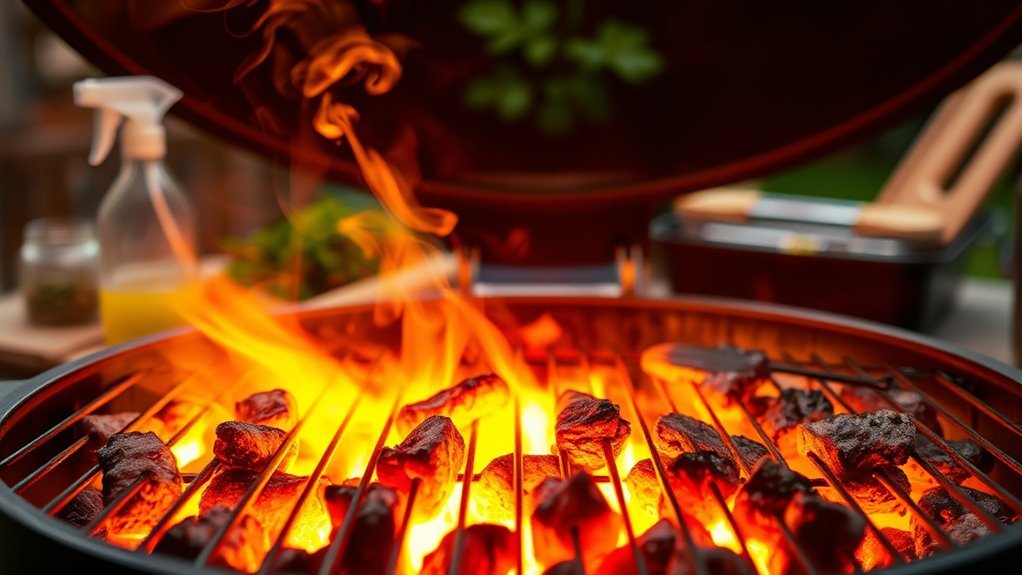
To keep your charcoal grill hot throughout cooking, start by using quality charcoal and lighting it with a chimney starter for even heat. This helps get your grill going strong without the hassle. Preheat the grill with the lid closed for 10-15 minutes to lock in the heat.
Next, spread the coals evenly or create heat zones to control where the heat is strongest. Adjust the vents to regulate oxygen flow, which is key to managing your grill’s temperature. If flare-ups happen, simply close the lid to keep things under control.
Add unlit charcoal slowly to maintain a steady heat level as you cook. Don’t forget to use a reliable thermometer to keep an eye on the temperature.
Master these basics, and you’ll be ready to explore more advanced grilling techniques with confidence.
Key Takeaways
- Preheat the grill with the lid closed for 10-15 minutes. This helps the grill reach and stabilize the ideal temperature before you start cooking.
- Arrange fully ashed coals to create direct and indirect heat zones. This way, you can manage the cooking temperature better and handle flare-ups more effectively.
- Add unlit charcoal gradually on top of the burning coals. Then, wait about 15 minutes for them to ignite without smothering the fire.
- Adjust the bottom and top vents carefully to regulate airflow. Controlling the oxygen supply helps maintain steady heat throughout cooking.
- Keep the lid closed during cooking and flare-ups. This traps the heat, preserves the temperature, and prevents sudden heat loss.
What You’ll Need for Effective Heat Control
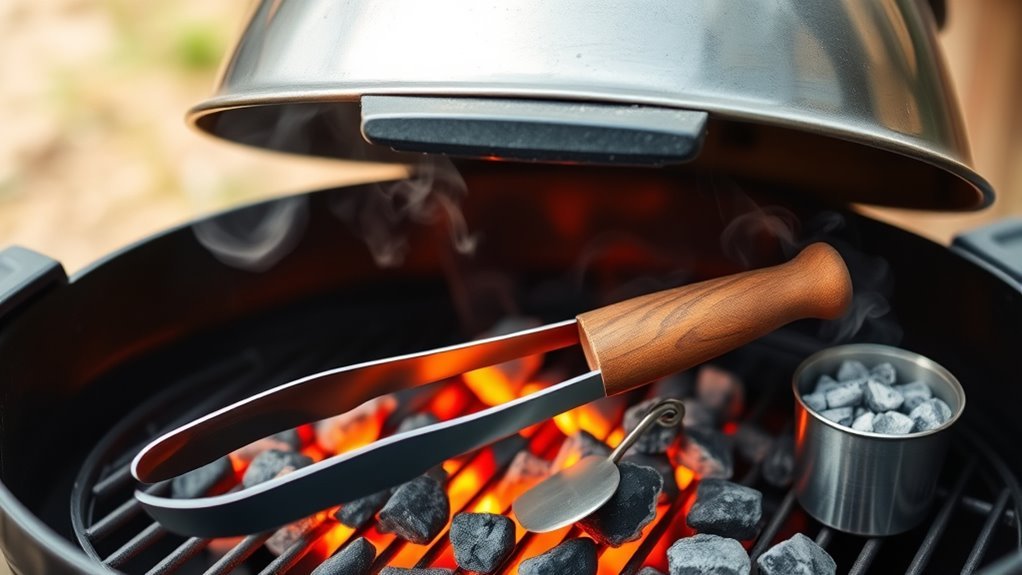
Before you fire up your charcoal grill, you’ll want to gather a few essentials to control heat effectively. Start with high-quality charcoal, like briquettes or lumpwood, to ensure consistent and long-lasting heat.
Proper heat control depends largely on managing airflow, so focus on adjusting your grill’s vents carefully. The vents regulate oxygen flow, which directly impacts the grill’s temperature.
Preheat your grill with the lid closed for 10-15 minutes to reach the ideal heat level before cooking. Keep a reliable thermometer handy to monitor internal temperatures, allowing you to make precise vent adjustments.
During long cooks, replenish charcoal to avoid temperature drops and maintain steady heat. By preparing these essentials, you set yourself up for better control over your charcoal grill’s performance.
Understanding Oxygen’s Role in Charcoal Grilling
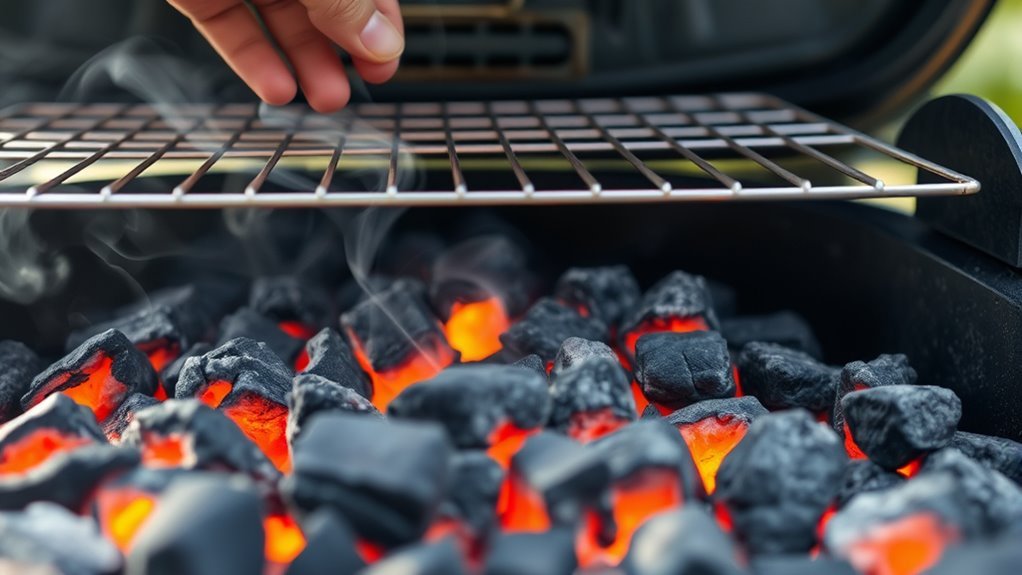
Because oxygen fuels combustion, controlling its flow is essential to managing your charcoal grill’s heat. Your grill’s vents regulate how much oxygen reaches the charcoal, directly affecting the temperature and burn rate.
Controlling oxygen flow through vents is key to managing your charcoal grill’s heat and burn rate.
Here’s what you need to know: Opening vents increases oxygen flow, raising the temperature and speeding up the burn. Closing vents limits oxygen, lowering the temperature and slowing combustion.
Proper vent adjustment maintains a consistent temperature throughout cooking. Too much oxygen can cause flare-ups; too little can leave food undercooked.
Balancing airflow lets you control heat levels precisely and avoid temperature swings. Mastering oxygen management through vents ensures your charcoal grill stays hot and steady, giving you perfect grilling results every time.
Lighting Charcoal Efficiently Using a Chimney Starter
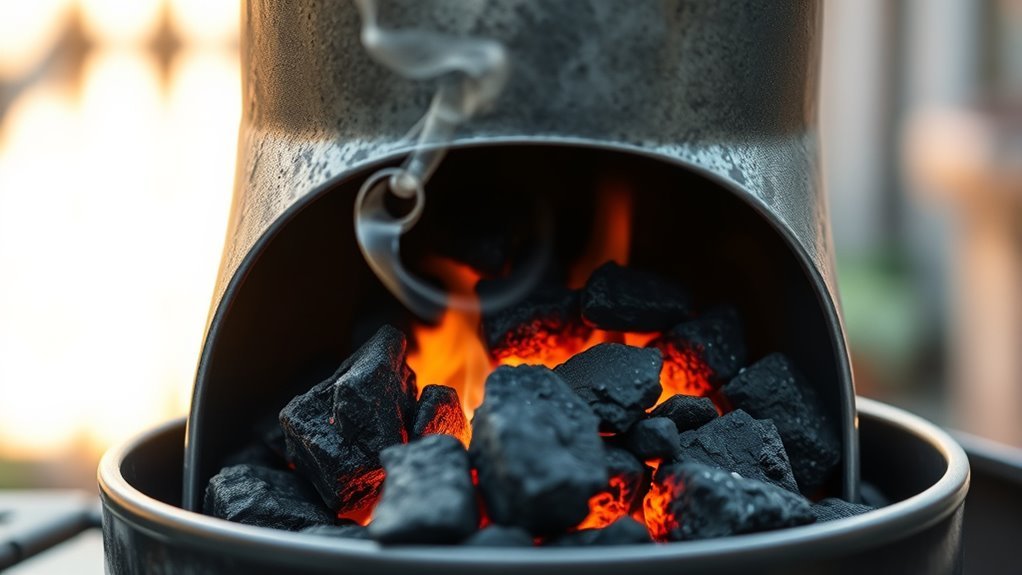
Using a chimney starter helps you light charcoal quickly and evenly without lighter fluid. You can choose between starter cubes or crumpled newspaper to ignite the coals efficiently.
This method sets you up for a consistently hot grill throughout your cooking session. It’s a simple trick that makes all the difference when you’re ready to cook.
Chimney Starter Benefits
When you light charcoal with a chimney starter, you create a powerful airflow that ignites the coals faster and more evenly. This method guarantees quick ignition and consistent heat, setting you up for a successful grilling session.
Here’s why using a chimney starter benefits you:
- Draws air through the charcoal for faster, even lighting
- Ignites coals from the bottom up for consistent heat
- Eliminates the need for lighter fluid, reducing chemical residues
Plus, it helps you control the amount of charcoal for perfect temperature. And it cuts down wait time to about 15-20 minutes before you can start grilling. Pretty handy, right?
Lighting Materials Choice
Although getting your charcoal glowing evenly can be tricky, choosing the right lighting materials makes all the difference.
Start by filling your chimney starter with high-quality charcoal briquettes or lumpwood for fast, even ignition. Place 2-3 starter cubes or tumbleweeds beneath the chimney to ignite the coals efficiently without using flammable liquids.
Light the starter from the bottom with long matches or a lighter to ensure safety and consistent heat. After about 20 minutes, when the charcoal is covered with gray ash, pour it into your grill.
Distribute the coals evenly or pile them in a mound to maintain uniform burning and steady heat. Using the right lighting materials with a chimney starter sets you up for a hot, reliable grill throughout your cooking session.
Preheating Your Grill for Optimal Temperature
Because even heat distribution is key, you should preheat your charcoal grill for 10-15 minutes with the lid closed. This step sets the stage for perfect grilling by ensuring the coals reach an ideal temperature.
To preheat your grill effectively, use a chimney starter to quickly ignite and heat your coals. Fully open the vents to maximize airflow and speed up heating.
Wait until the coals are covered with a uniform layer of gray ash. Then, spread the hot, ashed-over coals evenly across the grill.
Don’t forget to monitor the temperature with a grill thermometer for accuracy. This way, you’ll know exactly when your grill is ready to go!
Adjusting Vents to Maintain Consistent Heat
You control your grill’s temperature mainly by adjusting the vents. Opening the bottom vent lets more oxygen in, heating up the coals.
Closing it slows the airflow and cools things down. Keep an eye on the vents and tweak them gradually to manage airflow.
This helps you maintain steady heat throughout cooking. Just take it slow and steady—that way, your temperature stays consistent.
Vent Control Basics
When you adjust the vents on your charcoal grill, you control the airflow that fuels the fire. This makes it easier to maintain consistent heat. Mastering vent control helps you set the right temperature for any cooking style.
Here’s how to use your vents effectively:
- Open the bottom vent to increase oxygen flow and raise the temperature.
- Close the bottom vent to reduce oxygen and lower heat.
- Adjust the top vent to let smoke and heat escape, stabilizing temperature.
- Start with both vents fully open for maximum heat, then partially close to moderate.
Use a thermometer to monitor temperature and tweak vents for steady control. It’s the best way to keep your cooking just right.
Managing Airflow for Temperature
Although managing airflow might seem tricky at first, adjusting your grill’s vents gradually helps you maintain consistent heat throughout cooking. Opening the bottom vent increases oxygen flow, raising the temperature, while closing it lowers heat by reducing airflow.
Keep the lid closed to trap heat and control airflow through the vents effectively. Use a grill thermometer to monitor temperature closely, making precise vent adjustments as needed.
Avoid sudden changes—partially open or close the vents to fine-tune airflow. This way, you’ll ensure your coals burn efficiently without flare-ups or cooling down.
Creating Direct and Indirect Heat Zones
Since controlling temperature is key to perfect grilling, creating direct and indirect heat zones on your charcoal grill lets you cook different foods simultaneously with precision.
Start by arranging your charcoal on one side to form a direct heat zone, leaving the other side empty for indirect cooking. Adjust the vents to regulate airflow: open them to increase oxygen for the direct heat zone and partially close for the indirect zone.
Make sure the coals are fully ashed over and glowing before cooking to maximize heat. Here’s how to set it up:
- Pile coals in a mound or bank on one side
- Leave opposite side free of coals
- Use vents to balance airflow and heat
Cook high-heat foods directly over coals and place delicate items in the indirect heat zone.
This method ensures consistent heat and better cooking control. Easy, right?
Managing Flare-Ups Without Losing Heat
If flare-ups catch you off guard, you can quickly control them without sacrificing your grill’s heat by pushing the coals to one side and moving your food to the cooler zone with a long-handled spatula. This two-zone fire setup lets you regulate heat efficiently, giving you control when flames flare unexpectedly.
Avoid dousing flare-ups with water, as it creates ash that can spoil your food’s flavor. Instead, keep the grill lid closed to reduce oxygen, which helps contain flames and trap heat.
Keep the grill lid closed during flare-ups to starve flames of oxygen and preserve flavor.
When flare-ups subside, you can return food to the hot side. Adding unlit charcoal or wood chunks around the coals also helps maintain steady heat and prevents flare-ups from reigniting.
This way, you keep your cooking smooth and your grill hot throughout the session.
Adding Charcoal to Sustain High Temperatures
When you want to keep your charcoal grill hot for hours, adding unlit charcoal directly on top of the burning coals can extend the heat without smothering the fire. These new coals take about 15 minutes to ignite and blend seamlessly into the existing heat.
This method helps you regulate the temperature effectively and maintain steady heat inside the grill. To sustain high temperatures:
- Add small amounts of unlit coals gradually to avoid flare-ups.
- Use a chimney starter to quickly light fresh coals for a heat boost.
- Incorporate larger briquettes or lumpwood for longer-lasting flames.
- Avoid Match Light® Briquets once the fire is going to prevent uneven heat.
- Distribute unlit coals evenly to maintain consistent heat inside the grill.
These tips ensure your grill stays hot and your cooking remains perfect. Easy, right? Just keep an eye on it, and you’ll be good to go!
Using the Lid to Retain Heat and Control Airflow
Though it might be tempting to lift the lid frequently, keeping it closed traps heat inside your charcoal grill and maintains a consistent cooking temperature. The lid prevents heat loss through convection and radiation, helping your coals stay hot longer.
You can also use the vents on the lid to control airflow precisely. Opening the vents increases oxygen flow, raising the temperature, while closing them reduces airflow and cools the fire.
By adjusting the vents with the lid on, you regulate the internal heat without letting it escape. Keeping the lid closed during cooking minimizes temperature swings caused by frequent opening.
This ensures your food cooks evenly and efficiently. Mastering lid and vent use is key to sustaining steady heat throughout your grilling session.
Monitoring Temperature With a Reliable Thermometer
You need a reliable thermometer to keep your grill temperature steady and your food perfectly cooked.
Choose one that gives accurate readings and place the probe correctly for the best results.
Regularly check and interpret the numbers to adjust vents and maintain the heat just right.
Choosing Accurate Thermometers
Accurate temperature monitoring plays a crucial role in keeping your charcoal grill hot and your food perfectly cooked. Choosing the right thermometer ensures you get precise temperature readings, helping you maintain consistent heat.
Here’s what to consider:
- Use a digital or analog thermometer designed for high temperatures to withstand grilling conditions.
- Place the probe on grill grates or insert it into food for accurate internal temperature readings.
- Calibrate your thermometer regularly following the manufacturer’s instructions to avoid inaccurate measurements.
- Opt for an infrared thermometer for quick, contactless surface temperature checks.
- Keep your thermometer clean and free of soot or grease buildup to prevent false readings.
Selecting and maintaining a reliable thermometer helps you control grill temperature effectively and cook your meals to perfection. It’s definitely worth the effort!
Using Thermometers Properly
When monitoring your grill’s temperature, using a reliable thermometer is essential to keep your cooking on track. Place the thermometer probe in the thickest part of the food, steering clear of bones or fat to get accurate readings.
Don’t forget to regularly check the grill’s ambient temperature by positioning your thermometer on the grill grate or using built-in lid thermometers. This way, you’ll know exactly how hot your grill is inside.
Consistent monitoring allows you to adjust the vents effectively—open them to increase heat or close them to lower it. It’s all about finding that perfect balance.
Keep a log of temperature readings at regular intervals, especially during long cooks, to maintain tight temperature control. Trust me, it really helps you stay on top of things.
Using thermometers properly ensures your charcoal grill stays hot and your food cooks perfectly every time. And who doesn’t want that?
Interpreting Temperature Readings
Although monitoring temperature readings might seem straightforward, interpreting them correctly is key to maintaining consistent heat on your charcoal grill. Using a reliable grill thermometer and ensuring its calibration keeps your measurements accurate.
Here’s how to interpret your temperature readings effectively:
- Place the thermometer probe on the cooking grate or near food for precise surface temperature.
- Check your grill thermometer regularly during cooking to track changes.
- Calibrate your thermometer periodically, especially digital or infrared models.
- Record readings at intervals to spot trends rather than relying on a single measurement.
- Adjust vents or charcoal based on consistent temperature data to maintain steady heat. It’s all about keeping things steady so your food cooks just right!
Conclusion
Keeping your charcoal grill hot throughout cooking takes a bit of practice, but with these tips, you’ll master it in no time. Like a well-tuned instrument, controlling heat lets you create delicious meals with ease.
Remember to manage your vents, add charcoal when needed, and use the lid to lock in heat. These simple steps help maintain a steady temperature and keep your grill ready for whatever you’re cooking.
Stay attentive, and your grill will reward you with perfectly cooked food every time. With consistent heat control and proper charcoal management, you can enjoy flavorful results and a great grilling experience.
Happy grilling! Keeping your charcoal grill hot throughout cooking ensures your food turns out juicy and delicious, making every barbecue a memorable one.