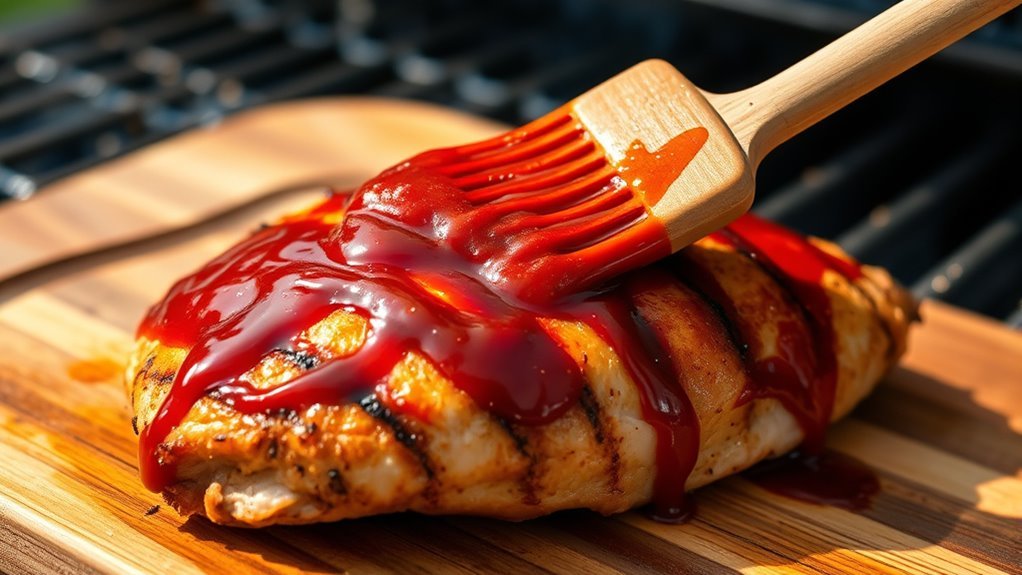
5 Tips on When to Put BBQ Sauce on Chicken
You should apply BBQ sauce to your chicken during the last 10-15 minutes of cooking. This timing helps avoid burning the sugars in the sauce, which can lead to a bitter taste.
Wait until the chicken’s internal temperature hits 155-160°F before brushing on the sauce. Use thin, even coats and let each layer set properly.
Save thicker, sugary sauces for the very end of cooking to get that glossy, irresistible glaze.
Combining marinating and saucing at the right times will really boost both flavor and juiciness.
There’s more to mastering this technique than just slapping on sauce—timing is everything when it comes to perfect BBQ chicken.
Key Takeaways
- Apply BBQ sauce during the last 10-15 minutes of cooking to prevent burning and bitterness.
- Wait until chicken’s internal temperature reaches 155-160°F before saucing for proper caramelization.
- Use multiple thin coats of sauce spaced 30-60 seconds apart for a glossy, even finish.
- Reserve thick, high-sugar sauces for the final stage to avoid charring and maintain flavor.
- Marinate chicken beforehand and then add sauce near the end for enhanced moisture and taste.
Understanding the Ideal Timing for Applying BBQ Sauce
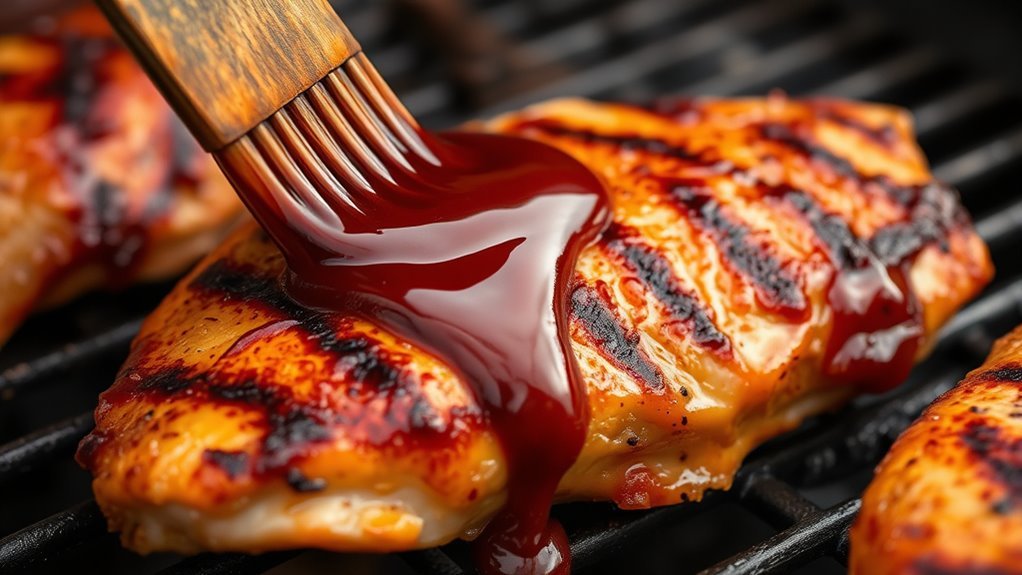
Although it might be tempting to slather BBQ sauce on your chicken early, you should wait until the last 10-15 minutes of cooking to apply it. When grilling, applying BBQ sauce too soon risks burning the sugars, which creates a bitter, charred surface.
Avoid slathering BBQ sauce too early; wait until the last 10-15 minutes to prevent burning and bitterness.
Instead, wait until your chicken reaches an internal temperature of about 155-160°F before you apply sauce. This timing ensures better caramelization without compromising flavor.
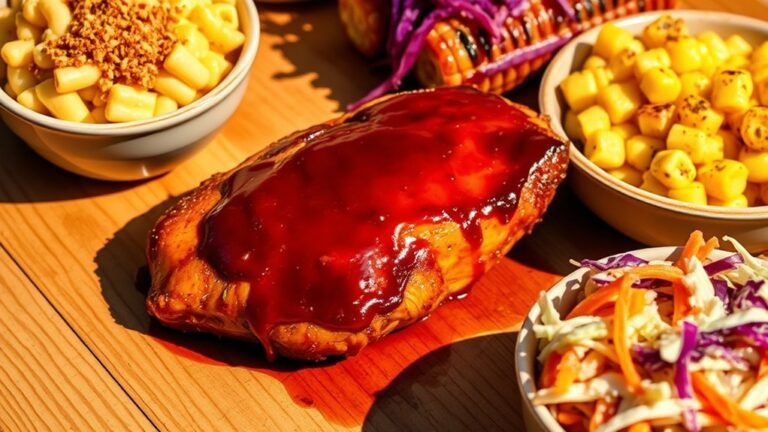
To build a glossy, flavorful glaze, brush on multiple light coats of sauce, spacing each 30-60 seconds apart near the end of cooking. If your BBQ sauce is thick or extra sugary, consider adding it at the very end or even after cooking to avoid excessive charring.
Mastering this timing elevates your cooking chicken game and delivers tastier results every time.
Avoiding Common Mistakes With Early Sauce Application
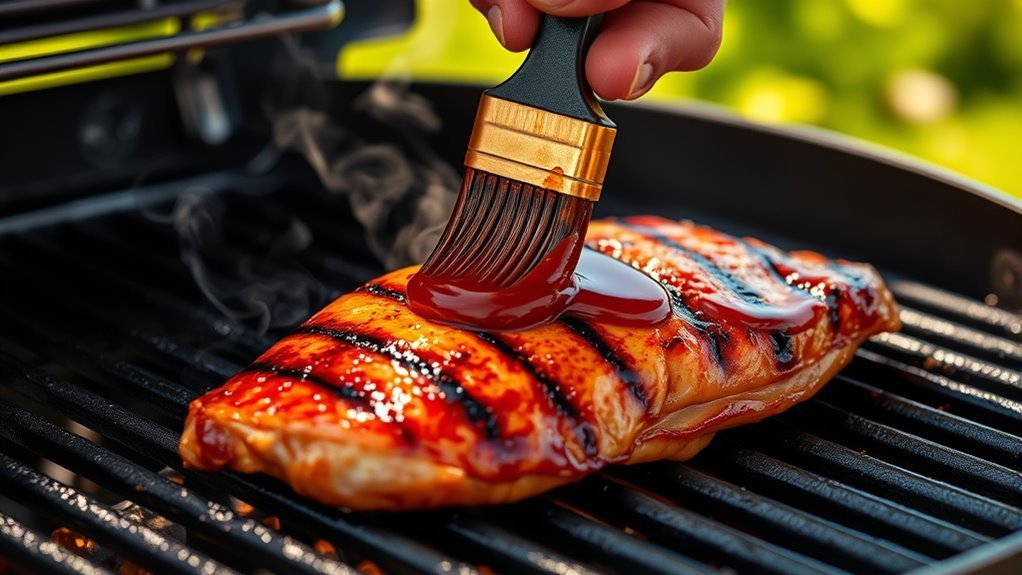
If you apply BBQ sauce too early, you risk burning the sugars, which creates a bitter taste and blackened spots on your chicken. When you apply BBQ sauce at the start of grilling, the sugars in the sauce burn quickly, leading to burnt sauce that ruins flavor and appearance.
Early saucing also prevents proper caramelization of the chicken skin, leaving it soggy instead of crispy. Plus, applying sauce too soon can hinder heat penetration, making it harder to cook the chicken to a safe internal temperature.
To avoid these common mistakes, wait until the chicken is nearly done before you apply BBQ sauce. This way, you’ll ensure even coating, maintain crisp chicken skin, and enjoy perfectly caramelized, flavorful barbecue without burnt sauce.
How Sauce Composition Affects Cooking and Flavor
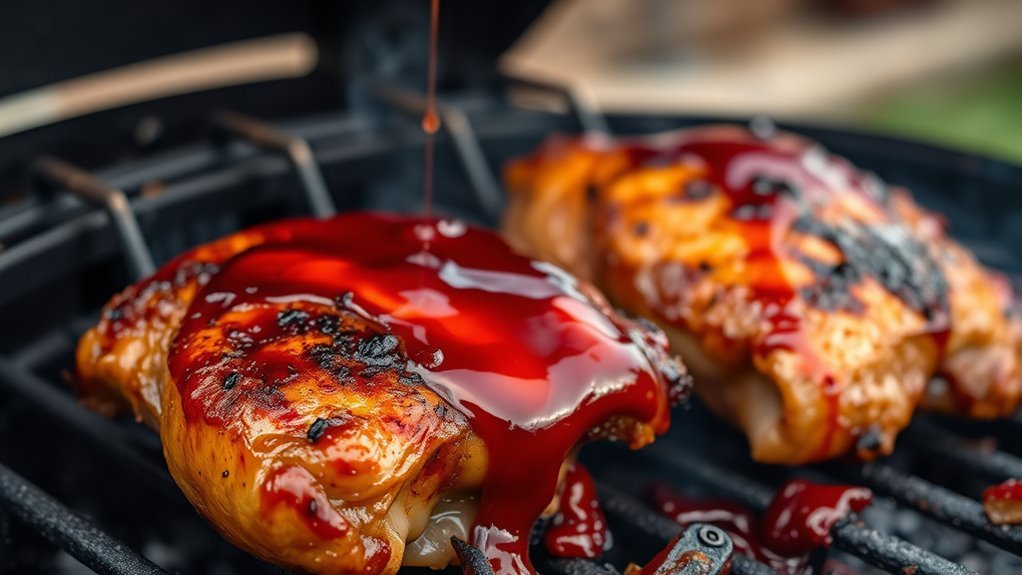
Because the ingredients in your BBQ sauce affect how it behaves on the grill, you need to choose the right type for your cooking timing. Sauce composition, especially sugar content, plays a key role in flavor development and burn risk.
Thinner, low-sugar sauces suit early application or marinades, enhancing flavor without burning. Thick, sugary sauces should be reserved for the final stages to avoid scorching.
| Sauce Type | Sugar Content | Best Use Timing |
|---|---|---|
| Vinegar-based | Low | Early / Marinade |
| Wine-based | Low | Early / Marinade |
| Soy-based | Low | Early / Marinade |
| Thick BBQ sauce | High | End of Cooking |
| Store-bought | High | End of Cooking |
Match your sauce choice to your cooking method for optimal taste and minimal burn risk. It’s all about timing and picking the right sauce to get the best flavor without any burnt bits.
Techniques for Applying Sauce to Achieve the Perfect Glaze
When you apply BBQ sauce during the last 10 to 15 minutes of cooking, you prevent the sugars from burning while creating a glossy, flavorful glaze. To achieve this, wait until the chicken reaches an internal temperature of 150-155°F before you apply sauce.
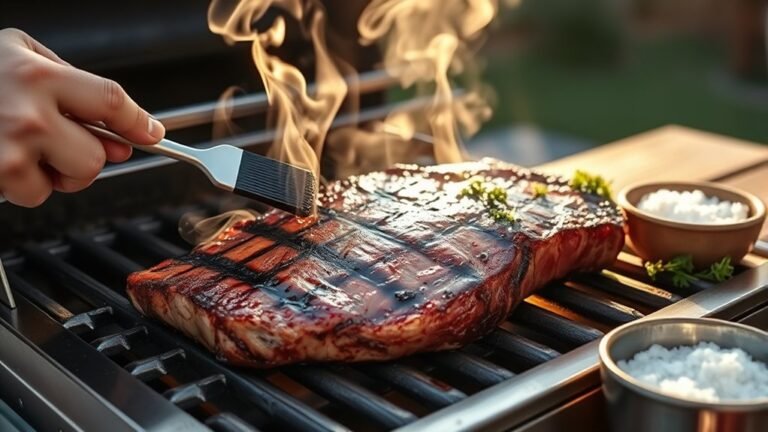
Use a heat-resistant brush or spoon to spread thin layers evenly, allowing each coat to set before adding the next. This step encourages caramelization, helping the sauce to stick and develop that perfect glossy glaze.
For thicker, sugar-based sauces, add them at the very end, while thinner, vinegar-based ones can go on slightly earlier. By layering light coats and letting each one set, you’ll get a beautifully caramelized finish without burning the sugars or losing flavor.
Combining Marinating and Saucing for Maximum Flavor
Applying BBQ sauce during the last stages of cooking gives your chicken a glossy, caramelized finish. But pairing this with a marinade can take the flavor even further.
Marinating infuses deep flavor and locks in moisture. Then, applying the final sauce late ensures perfect glazing without burning.
This combo maximizes flavor infusion, moisture retention, and caramelization for tender, juicy chicken.
| Step | Benefit |
|---|---|
| Marinating 30 mins | Deep flavor infusion |
| Moisture retention | Juicier chicken |
| Early cooking | Tenderizes meat |
| Final 10-15 mins | Perfect glazing & caramelization |
| Combining both | Rich, glossy finish |
Use both techniques to enhance taste and texture. You’ll end up with BBQ chicken that’s bursting with flavor and beautifully glazed.
Conclusion
Remember, good things come to those who wait—especially when it comes to BBQ sauce. Applying it too early can burn the sugars, while adding it too late might leave your chicken dry.
By understanding the right timing, sauce composition, and glazing techniques, you’ll guarantee every bite is flavorful and perfectly cooked. Combining marinating with careful saucing really takes your BBQ game to mouthwatering new heights.
Patience really pays off! When you master when to put BBQ sauce on chicken, you ensure juicy, tender meat with that irresistible smoky glaze. So, take your time, follow these tips, and enjoy the best BBQ chicken ever.