
How to Tell if There Is Gluten in BBQ Sauce
You can tell if there’s gluten in BBQ sauce by checking the ingredient list for barley malt, malt vinegar, soy sauce, or modified food starch, as these often contain gluten. These ingredients are common culprits that can sneak gluten into your favorite BBQ flavors.
Look for clear gluten-free labels or trusted certifications to be sure. If the label is unclear, contacting the manufacturer can help prevent accidental gluten intake.
By understanding common gluten sources and how to spot them, you can confidently choose safe BBQ sauces for your meals. It’s all about knowing what to watch out for so you can enjoy your BBQ without worry.
Key Takeaways
- Check the ingredient list for wheat, barley malt, malt vinegar, soy sauce, or beer, which commonly contain gluten. These are some of the usual suspects to watch out for.
- Look for explicit “gluten-free” labels or certifications from trusted organizations like GFCO on the BBQ sauce packaging. That’s a quick way to know it’s safe.
- Avoid sauces with unverified additives such as modified food starch or natural smoke flavoring that may contain gluten. Sometimes, these sneaky ingredients can hide gluten.
- Contact the manufacturer directly if the gluten content or ingredient sources are unclear or not specified on the label. It’s always better to ask than to guess.
- Prioritize buying sauces with clear gluten-free certification to minimize the risk of hidden gluten contamination. Playing it safe is the best move here.
Common Gluten Sources in BBQ Sauce Ingredients

Although BBQ sauces often seem gluten-free, you need to watch out for ingredients like barley malt, malt vinegar, and beer, which commonly contain gluten. These gluten sources can sneak into your BBQ sauce ingredients, making what you thought was safe risky.
Soy sauce, often made with wheat, is another hidden gluten culprit in many marinades and sauces. Keep an eye on modified food starch too—it might come from wheat, adding gluten without clear labeling.
Even natural smoke flavoring can sometimes contain gluten if derived from gluten-containing grains. Plus, gluten contamination can occur during manufacturing when equipment processes both gluten and gluten-free products, causing hidden gluten in your BBQ sauce.
To stay truly gluten-free, you must scrutinize labels and ingredient lists carefully. It’s always better to double-check and be safe than sorry!
Identifying Gluten-Free BBQ Sauces and Certifications
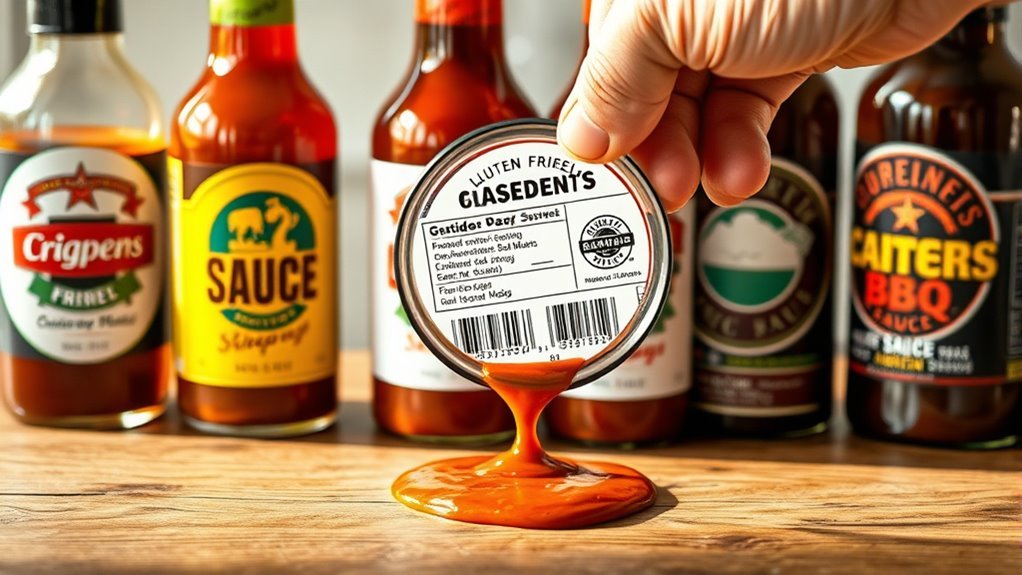
When choosing a BBQ sauce, you should look for labels that explicitly say “gluten-free” or carry certifications from trusted organizations like GFCO. These certifications guarantee the product meets strict gluten content limits, typically below 20 ppm.
Always check the ingredients list for common gluten sources such as wheat, barley, rye, soy sauce, or malt vinegar. If the product labeling doesn’t clearly state gluten content or certification, contact the manufacturer directly to confirm its safety for your gluten-free diet.
Be cautious with sauces containing beer, malt flavoring, or unverified additives, as they may contain hidden gluten. Identifying gluten-free BBQ sauces through certification and careful ingredient review helps you avoid gluten exposure and maintain your health confidently.
Conclusion
Now that you know where gluten can hide in BBQ sauce, you can spot it like a pro. Always check ingredient labels carefully, and look for trusted gluten-free certifications to avoid any surprises.
Just like spotting a hidden ingredient in a secret recipe, identifying gluten takes attention and practice. With these tips, you’ll enjoy your BBQ without worry, knowing exactly what’s in your sauce.
By being vigilant about reading labels and understanding common gluten-containing ingredients, you can keep your meals safe and tasty every time. So, whether you’re grilling for friends or family, you’ll confidently avoid gluten in BBQ sauce and savor every bite without stress.