7 Tips on When to Put BBQ Sauce on Ribs
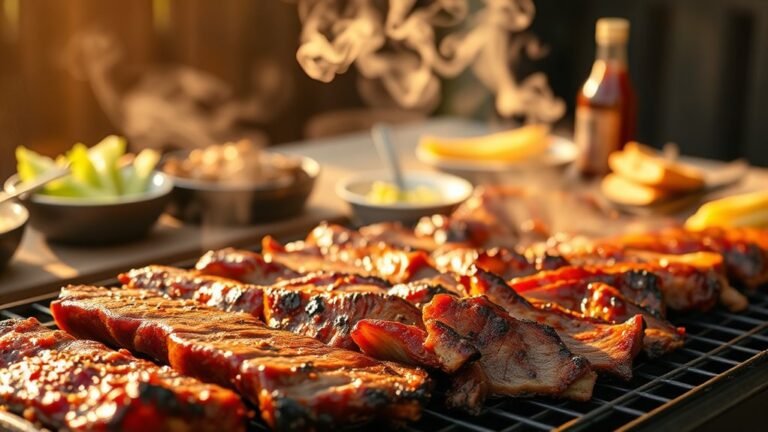
You should wait until your ribs hit around 190°F and are tender before applying BBQ sauce. This is key to getting that perfect balance between smoky flavor and saucy goodness.
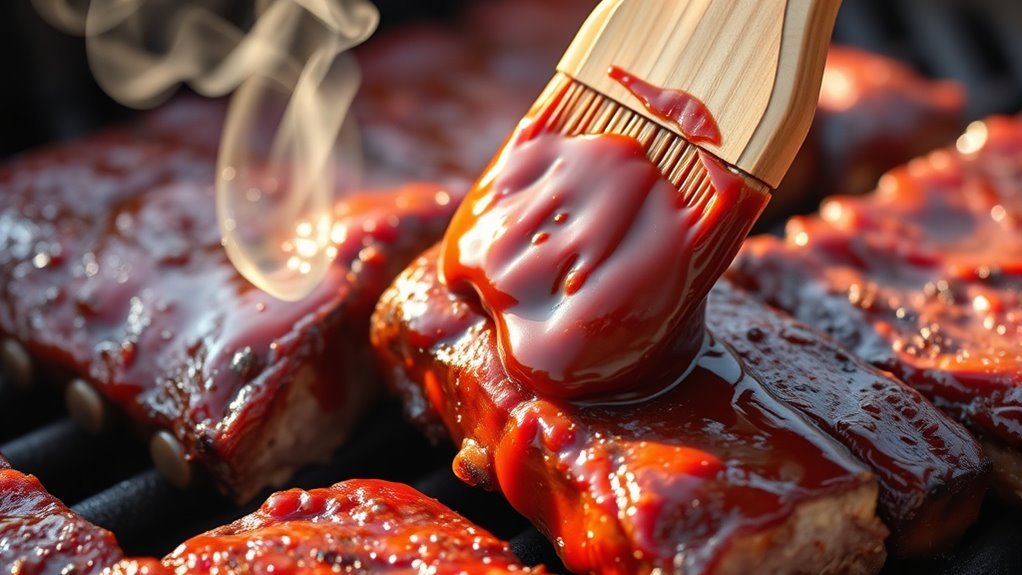
Slather on thin, multiple coats during the last 10-15 minutes of cooking for a sticky, glossy finish.
Avoid saucing too early to prevent burning sugars and losing that rich smoky flavor. Rest your ribs after cooking to help juices redistribute and improve sauce adhesion. Trust me, letting them rest makes a huge difference!
Warming the sauce first and saucing after unwrapping can boost caramelization. This little trick gives your ribs that irresistible shine and flavor punch.
Keep going if you want to master every saucing step — it’s all about timing and technique!
Key Takeaways
- Apply BBQ sauce during the last 10-15 minutes of cooking for a sticky, caramelized glaze. This helps the sauce to set nicely without burning.
- Wait until ribs reach about 190°F and become probe tender before saucing. That’s when they’re perfectly cooked and ready to soak up the flavor.
- Use multiple light coats of warm sauce to build flavor and enhance appearance. It looks great and tastes even better when you layer it on.
- Avoid saucing too early to prevent burning sugars and loss of smoke flavor. Early saucing can make your ribs taste bitter instead of smoky.
- Rest ribs for 5-10 minutes after cooking to improve juice redistribution and sauce adherence. This little wait makes a big difference in taste and texture.
When Should You Sauce Ribs for Best Flavor?
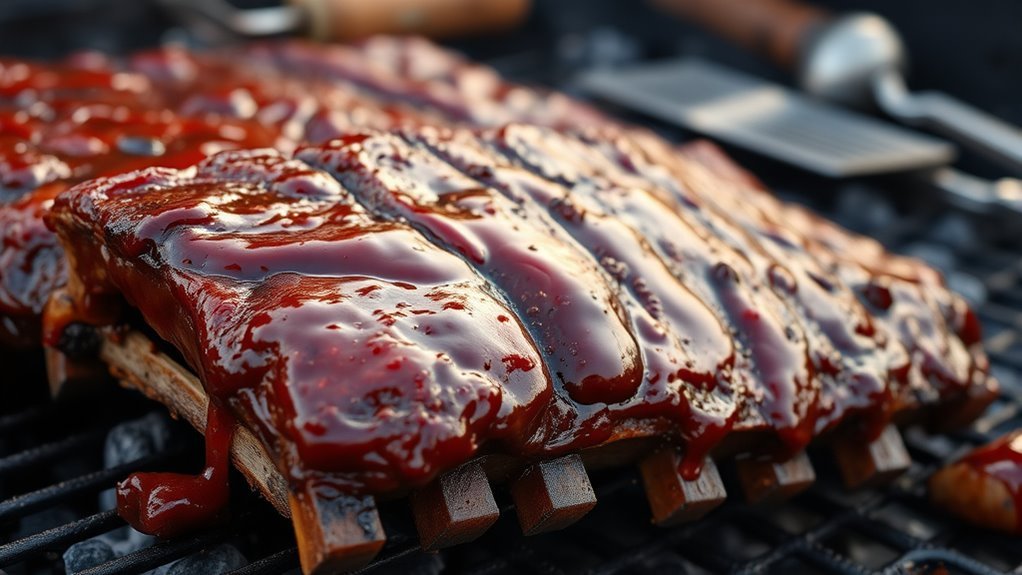
Although it might be tempting to slather BBQ sauce on ribs early, you should wait until the final 10-15 minutes of cooking to get the best flavor. The best time to apply the sauce is when your ribs reach around 190°F and are probe tender.
Applying sauce too soon can prevent the meat from absorbing smoke properly and risk burning the sauce. Instead, focus on building a sticky, flavorful coating rather than a thick, burnt layer.
For ideal results, apply the sauce in multiple light coats near the end of cooking. Also, resting your ribs for 5-10 minutes before saucing helps juices redistribute, enhancing both flavor and appearance.
This timing ensures your ribs have that perfect balance of smoky depth and caramelized glaze. Trust me, it’s worth the wait!
Saucing Ribs During the 2-2-1 Cooking Method
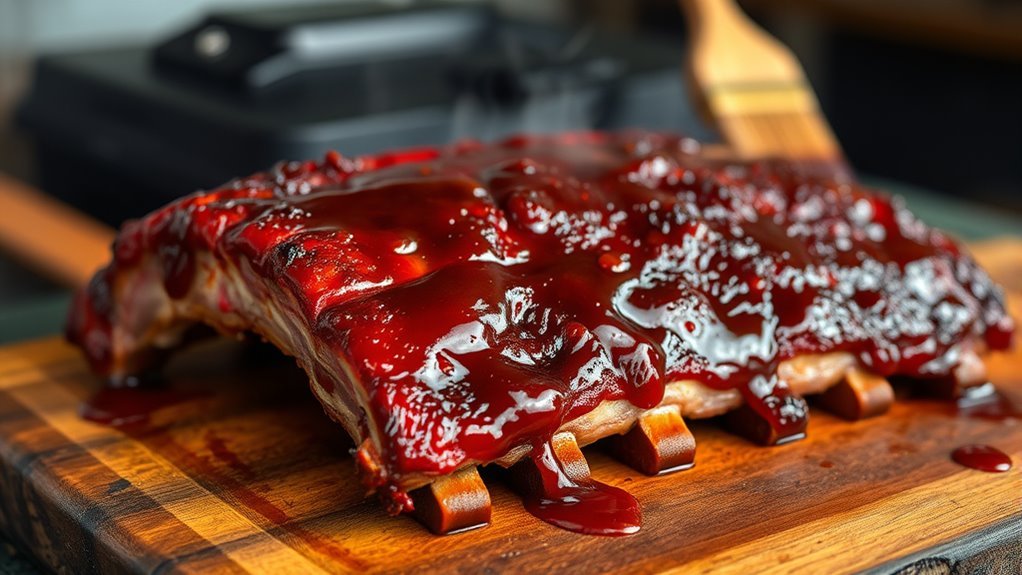
When using the 2-2-1 method, you’ll want to time your sauce carefully to avoid burning and maximize flavor. Wrapping ribs can affect how much sauce sticks, so applying it after unwrapping often works best.
Also, letting the ribs rest before saucing helps the flavors settle and soak in nicely. It’s all about getting that perfect balance of taste and texture!
Sauce Timing Options
Since the 2-2-1 method breaks cooking into distinct phases, knowing when to apply BBQ sauce can substantially impact your ribs’ flavor and texture. You can put BBQ sauce during the last 30 minutes of cooking, allowing it to caramelize and form a sticky glaze without burning during earlier phases.
Some pitmasters even reapply sauce in this final window to boost flavor and lock in moisture. Alternatively, you might wait until after removing the ribs from the foil wrap to apply sauce for a cleaner, more vibrant appearance.
Avoid putting sauce during the wrap stage since it often gets absorbed or lost. Choosing the right sauce timing guarantees your ribs have that perfect balance of caramelization and bold BBQ flavor.
Wrapping Impact On Sauce
Applying BBQ sauce during the 2-2-1 method involves more than just timing—it also depends on how wrapping affects the sauce’s behavior. When you wrap ribs, some of the sauce you applied beforehand can be absorbed into the meat or lost altogether.
The steam and heat inside the wrap tend to break down the sauce, reducing its stickiness and preventing that rich caramelization on the surface. If you sauce too early, wrapping may dilute or wash away the flavors, leaving a less pronounced glaze.
To keep the sauce bold and vibrant, many pitmasters wait to add it after unwrapping or during the final stage. Your sauce’s texture, appearance, and intensity hinge on when you apply it relative to the wrap, so plan accordingly.
Resting Before Saucing
Although it might be tempting to sauce your ribs right away, letting them rest first helps the juices redistribute, making the meat more tender and flavorful. Resting for 5 to 10 minutes allows the meat to reabsorb moisture, preventing the sauce from being washed away or diluted during wrapping.
In the 2-2-1 cooking method, you typically rest the ribs after the initial cooking phase and before applying the BBQ sauce. This pause ensures the sauce sticks properly and enhances caramelization when you finish the ribs under high heat or broil them.
Sauce Before or After Wrapping: What’s Best?
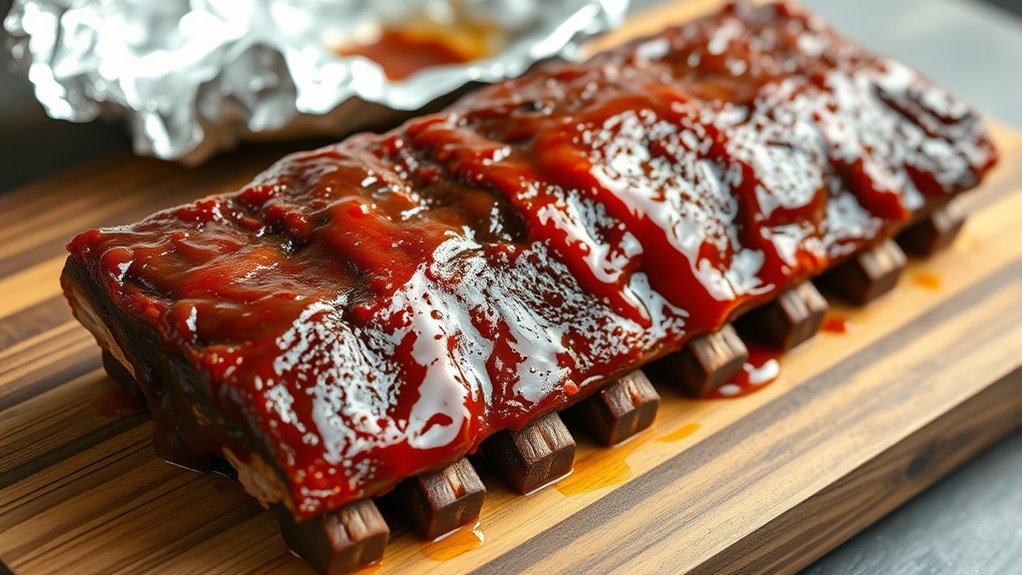
Deciding whether to sauce your ribs before or after wrapping can considerably impact the final flavor and texture. If you apply BBQ sauce before wrapping, the sauce seeps into the meat, adding deep flavor. However, some sauce may get absorbed by the foil, reducing its stickiness.
Wrapping ribs before saucing traps moisture and heat but can prevent the sauce from caramelizing properly. Applying sauce after unwrapping lets you control caramelization better, avoiding burnt or dull sauce.
Many pitmasters prefer saucing during the last 30 minutes or after unwrapping to achieve a glossy, sticky finish. Ultimately, if you want a clean, well-defined sauce layer, saucing after wrapping is your best bet.
Choose based on whether you prioritize infused flavor or a perfect glaze. It’s really about what you want your ribs to taste and look like in the end.
Why Resting Ribs Before Saucing BBQ Sauce Helps
When you let your ribs rest after cooking, the juices redistribute throughout the meat, making it more flavorful and moist so it can absorb BBQ sauce better. Resting for 5-10 minutes reduces surface moisture, so the sauce won’t slide off but sticks more effectively.
This pause also stabilizes the internal temperature, helping you judge the perfect moment to apply sauce without losing heat. Plus, rested ribs offer an improved texture and appearance, creating an ideal canvas for your BBQ sauce.
When to Sauce for Perfect Caramelization
You’ll want to apply BBQ sauce during the last 10-15 minutes of cooking to get that perfect caramelized glaze without burning it. Brushing on thin layers before a final broil helps the sugars bubble and develop a sticky, glossy finish.
Timing and layering your sauce just right make all the difference in flavor and texture. It’s all about getting that balance so your BBQ turns out irresistible.
Optimal Timing For Saucing
Although applying BBQ sauce too early can ruin the ribs’ texture, adding it during the final 10-15 minutes of cooking allows you to achieve perfect caramelization without burning.
Wait until the ribs reach about 190°F internally and the meat feels tender before you start saucing. Brush on thin layers multiple times in those last minutes to build flavor and develop a glossy, sticky crust.
Applying sauce too soon can cause a gummy texture by over-caramelizing the sugars and prevent proper browning. Once you’ve finished saucing, a quick broil or direct heat blast seals the deal, enhancing caramelization and giving you that irresistible, shiny coating.
Timing your saucing right guarantees your ribs are flavorful and perfectly textured every time.
Saucing Before Final Broil
Perfectly caramelizing your BBQ sauce hinges on timing it just before the final broil or grilling. Apply the sauce during the last 10-15 minutes of cooking to create a sticky, flavorful glaze without burning the sugars.
Start by warming your sauce to avoid temperature drops that can affect how well it sticks to the ribs. When ready, briefly remove the ribs from heat, brush on the sauce, then return them to high heat or under the broiler for 2-3 minutes.
This quick caramelization step gives you a glossy finish and a deep, rich crust. Just don’t sauce too early, because sugar can burn and turn bitter under prolonged high heat.
Nail this timing, and your ribs will look and taste irresistible.
Sauce Layering Techniques
When aiming for a deep, flavorful crust on your ribs, layering thin coats of BBQ sauce and letting each set under heat makes all the difference. Apply sauce during the last 10-15 minutes to avoid burning sugars and guarantee perfect caramelization.
Warm the sauce beforehand for better adhesion and flavor activation. For a glossy, sticky finish, coat the ribs and return them to high heat or broil for 2-3 minutes.
Remember, adding too much sauce too early risks a burnt or gummy texture.
- Apply sauce in thin layers during final cooking stages
- Warm sauce before applying for better stickiness
- Let each layer set under heat for even caramelization
- Broil briefly after saucing for a glossy glaze
- Avoid saucing too early to prevent burning sugars
Does Warming BBQ Sauce Make a Difference?
If you want your BBQ sauce to spread smoothly and stick well to your ribs, warming it first makes a noticeable difference. When you heat the sauce, it becomes easier to apply evenly, helping you create a consistent, sticky glaze that clings beautifully to the meat.
Warm sauce caramelizes faster during cooking, enhancing the flavor and producing a rich, glossy finish that’s more visually appealing than cold or room-temperature sauce. Plus, applying warm sauce won’t cool down your ribs as much, so you keep the cooking process steady.
How to Personalize Your BBQ Sauce Timing
Although there’s no one-size-fits-all answer, you can personalize your BBQ sauce timing by experimenting with different application moments during cooking. Try applying sauce in the last 10-15 minutes for a caramelized glaze or earlier for deeper flavor.
Warm your sauce beforehand to maintain the ribs’ temperature and guarantee even coverage. Focus on the meat’s tenderness and appearance, rather than strict timings.
Warm your sauce first to keep ribs hot and ensure smooth, even coating every time.
Whether you prefer multiple light coats for layered flavor or a single coat for a cleaner finish, adjusting your method helps you achieve your ideal taste.
- Apply sauce late for a sticky, shiny finish
- Use multiple light coats for layered flavor
- Warm sauce before applying to keep ribs hot
- Watch meat’s tenderness and visual cues
- Adjust timing based on your flavor preference
Frequently Asked Questions
What Is the 3 3 3 Rule for Ribs?
The 3-3-3 rule means you cook ribs for 3 hours unwrapped, wrap and cook for another 3 hours to stay moist, then unwrap and cook for 3 more minutes to finish, often glazing with sauce at the end.
What Are Some Common Mistakes When Cooking Ribs?
Cooking ribs is like painting a masterpiece—you can’t rush the layers. You’ll burn sauce too soon, overcook meat, wrap too tight, use cold sauce, or ignore tenderness. Patience and timing make your ribs sing.
Should I Bake Ribs at 350 or 400?
You should bake ribs at 350°F for tender, evenly cooked meat. It takes longer but prevents drying out. Use 400°F only if you’re short on time and watch closely to avoid burning or drying the ribs.
How Long to Let Barbecue Sauce Tack Up?
Like waiting for a sunset to paint the sky, you should let your barbecue sauce tack up for 5 to 10 minutes. This time lets it thicken and caramelize, creating that irresistible sticky glaze you’ll love.
Conclusion
So, you want perfect ribs, but can’t decide when to slap on that BBQ sauce? Ironically, timing it just right means you’re never really sure if you nailed it—or if you ruined it. Sauce too early, and it’s a sticky mess; too late, and you miss out on that caramelized magic.
But hey, that’s the beauty of BBQ—you get to experiment, mess up, and still eat delicious ribs every time. Now, isn’t that the best kind of success?
When it comes to putting BBQ sauce on ribs, the timing is everything. Whether you’re a fan of saucing early for deep flavor or prefer a finishing touch to keep things sticky and sweet, knowing when to add your BBQ sauce can make all the difference. So don’t stress too much about the perfect moment—embrace the process, try different methods, and enjoy those fall-off-the-bone ribs covered in your favorite BBQ sauce every time. That’s the real secret to BBQ success!