10 Facts About How Many Calories Are in Korean BBQ
Korean BBQ calories can be tricky to track because meats vary widely and marinades add hidden sugars and oils.
Grilling melts fat, cutting calories by up to 15%, but fattier cuts like pork belly rack up more calories than lean options like chicken breast.
Sauces and shared portions can boost intake, and drinks like soju add extra calories too.
By choosing lean cuts and watching portions, you can enjoy Korean BBQ without overeating.
Keep exploring to uncover smart calorie-saving tips and comparisons. It’s all about making tasty choices without sacrificing flavor or fun!
Key Takeaways
- Korean BBQ calories vary widely because of different meat types, marinades, portion sizes, and shared servings. This makes it tricky to pin down exact calorie counts.
- Lean meats like bulgogi and chicken breast usually have about 133–188 calories per 100g. On the other hand, fatty cuts like pork belly can go over 300 calories per 100g.
- When you grill the meat, some fat drips off, reducing fat and calories by about 5–15%. That makes the meat leaner but changes the total calorie content a bit.
- Don’t forget, marinades, sauces, and drinks like soju and beer add a lot of hidden calories to your Korean BBQ meal.
- Typically, a Korean BBQ meal can range from 500 to 1,000 calories. It all depends on what meats you pick, the sides, and what you drink.
Why It’s Hard To Pin Down Korean BBQ Calories
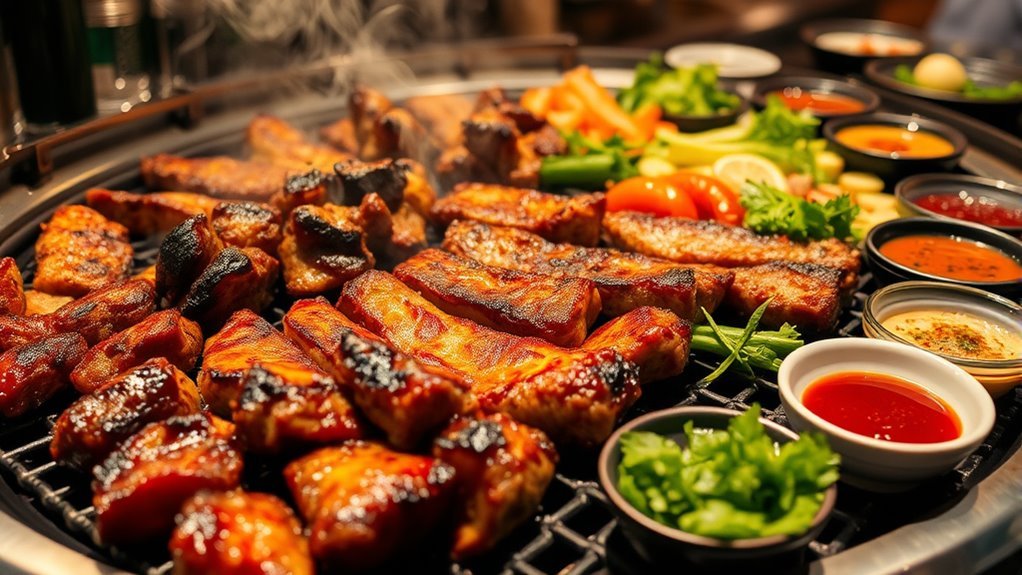
Because Korean BBQ involves a variety of meats, marinades, and shared servings, it’s tough to pinpoint exact calorie counts. You deal with marinated meats that often contain sugar, sesame oil, and soy sauce, all adding hidden calories.
Portion sizes vary widely too, especially since people share plates, making it hard to track your personal intake. Calories per serving depend not just on the cut of meat but also on how much marinade soaks in.
Grilling methods affect fat content, but since fat renders off during cooking, it’s tricky to estimate calories accurately. Even USDA references and cooked portion data only give rough estimates.
How Grilling Changes Fat And Calories In Korean BBQ
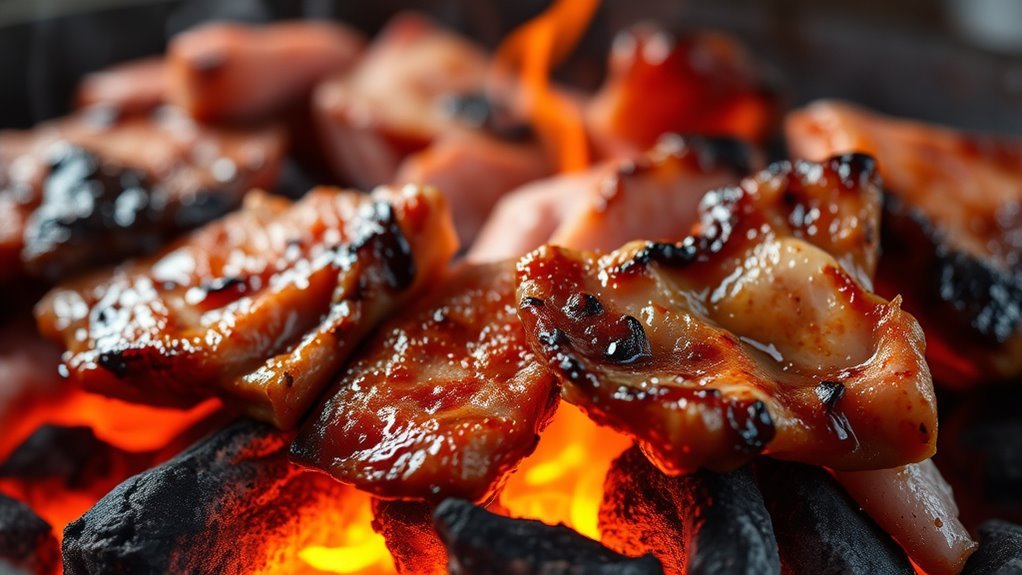
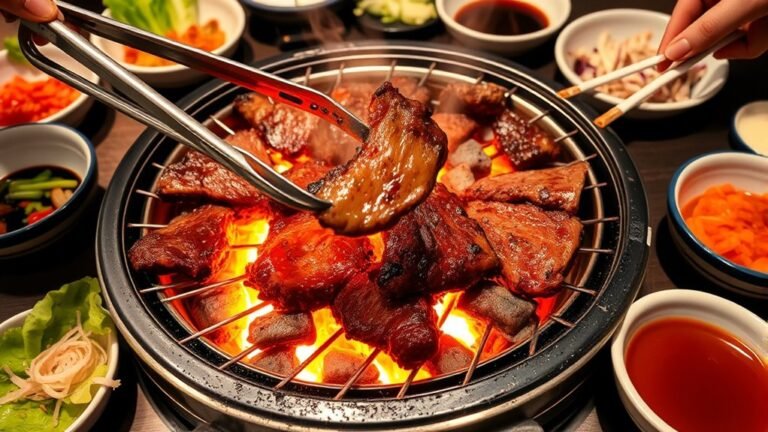
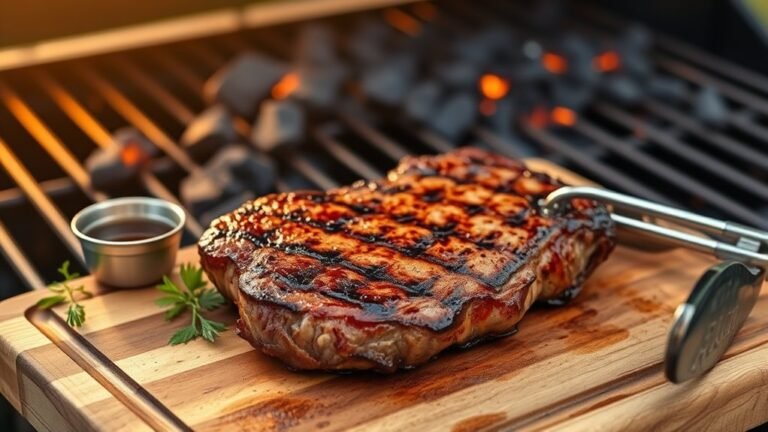
While grilling Korean BBQ, you’ll notice that fat melts and drips off the meat, reducing its calorie content by about 5 to 15%. This fat-rendering process lowers the calories in cooked meat compared to raw meat, especially in fattier cuts like pork belly.
However, keep in mind that marinades with sugar and oils can add hidden calories. Grilling not only enhances flavor but also trims excess fat, making your meal a bit leaner.
| Aspect | Effect on Calories |
|---|---|
| Fat melting | Reduces calories 5-15% |
| Excess fat drip | Lowers overall fat |
| Marinade sugars | Can increase calories |
Understanding these changes helps you manage calorie intake while enjoying Korean BBQ.
How Different Korean BBQ Meats Vary In Calories
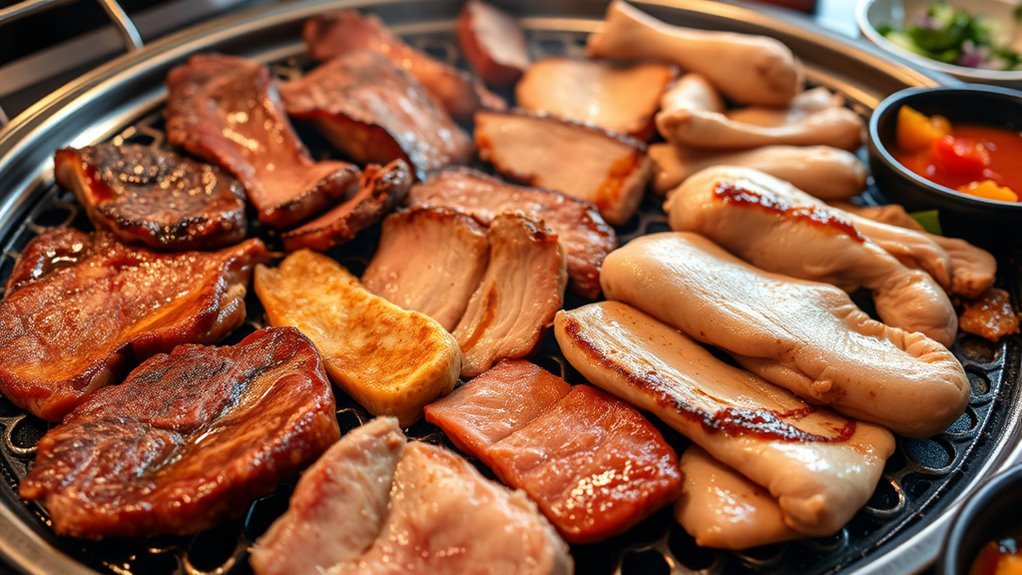
When you choose Korean BBQ meats, calories can vary a lot depending on the cut and fat content. Lean options like bulgogi or chicken breast have fewer calories than fatty cuts like samgyeopsal or galbi.
Knowing these differences can really help you enjoy your meal without worrying too much about calorie intake. It’s all about finding the right balance for your taste and goals.
Calorie Differences By Cut
If you want to manage your calorie intake at Korean BBQ, knowing how different cuts vary is key. Pork belly packs more calories than leaner cuts, while beef short ribs fall somewhere in between.
Understanding these calorie differences helps you make smarter choices without sacrificing flavor.
| Meat Cut | Calories per 100g |
|---|---|
| Pork Belly | 290–310 |
| Beef Short Ribs | ~350 (per 85g) |
| Bulgogi | 133–188 |
| Chicken Breast | 165 |
| Samgyeopsal (cooked) | 520–580 (per 200g) |
Choosing leaner cuts like bulgogi or chicken breast lets you enjoy Korean BBQ with fewer calories. On the other hand, pork belly and short ribs offer richer, higher-calorie options.
Lean Vs. Fatty Meats
Because Korean BBQ offers a variety of meats, you can easily choose between lean and fatty options to control your calorie intake. Lean meats like chicken breast and pork tenderloin typically have around 150-200 calories per 100g, making them lower in calorie content.
On the other hand, fatty meats such as samgyeopsal (pork belly) pack about 290-310 calories per 100g, thanks to their higher fat levels. Marbled cuts like galbi (short ribs) range even higher, with 300-350 calories per 85g serving.
Grilling causes some calorie loss—about 5-15%—as fat renders off, but fatty meats still contain considerably more calories than lean meats. So, choosing lean meats can cut your calorie intake nearly in half compared to indulging in fatty meats.
Lowest-Calorie Korean BBQ Meats To Choose
Although Korean BBQ is known for its rich and savory flavors, you can still enjoy it without consuming excessive calories by choosing leaner meats like chicken breast, pork tenderloin, or beef sirloin. These low-calorie, lean meats provide satisfying protein without the added fat.
For example, chicken breast has about 165 calories per 100 grams, pork tenderloin only 143, and beef sirloin 206. When selecting your cuts, pay attention to portion size to keep calories in check.
You can also opt for tofu or shrimp, which are low-calorie options that absorb marinades well, enhancing flavor without extra calories. By choosing lean meats and controlling your portion size, you can savor Korean BBQ while sticking to your calorie goals.
How Korean BBQ Marinades And Sauces Add Calories
When you enjoy Korean BBQ, the marinades and sauces play a big role in the flavor but also add extra calories that you might not expect. Marinades often include sesame oil and sugars, which pack a punch in both taste and calories.
Sauces like ssamjang and gochujang bring dense flavors along with significant calorie counts. Sometimes, these condiments can contribute more calories than the meat itself. So, being mindful of how much you use helps control your total calorie intake.
| Marinade/Sauce | Calories per Unit | Key Ingredients |
|---|---|---|
| Ssamjang | 30–40 per tbsp | Fermented soybeans, chili |
| Sesame Oil | 40 per tsp | Pure sesame oil |
| Sugar/Honey | 16–20 per tsp | Sweeteners |
| Gochujang | 30 per tbsp | Chili paste, sugars |
| Total Impact | Varies | Often exceeds meat calories |
Calorie Impact Of Popular Korean BBQ Side Dishes
If you want to keep your Korean BBQ meal balanced, paying attention to the side dishes is key. Side dishes vary widely in calorie content, so choosing wisely helps you manage your intake.
Kimchi, a popular vegetable side, is very low in calories—only about 11 calories per 60 grams—making it a great option. Other vegetable-based sides like kongnamul (bean sprouts) and seasoned spinach add just 25-30 calories per serving. However, some sides pack more calories, so watch out.
Here’s a quick glance at popular Korean BBQ side dishes and their calorie impact:
- Kimchi: ~11 calories per 60g
- Steamed rice: ~195 calories per 150g
- Vegetables like kongnamul and spinach: 25-30 calories per 80g
- Japchae (stir-fried noodles): 110-130 calories per 100g
Choosing low-calorie vegetables and kimchi can keep your meal lighter. It’s a simple way to enjoy Korean BBQ without the extra calories.
How Alcohol And Drinks Add Calories At Korean BBQ
When you enjoy Korean BBQ, keep in mind that drinks like soju and beer add a significant number of calories to your meal. Alcohol not only increases your calorie intake but can also lead you to eat more.
Choosing low-calorie options like barley tea can help you manage both your thirst and your calorie count. It’s a simple swap that makes a big difference!
Calorie Content Of Drinks
Although Korean BBQ centers on flavorful grilled meats, the drinks you choose can considerably boost your calorie intake. Alcohol, especially soju and beer, adds significant calories that often go unnoticed.
Knowing the calorie content of these drinks helps you manage your overall intake better.
Consider these key points about calories in Korean BBQ drinks:
- A typical shot of soju contains about 70 calories; a 360ml bottle packs roughly 540 calories.
- Drinking 2-3 shots of soju and 1-2 beers can add 280-420 calories to your meal.
- Sharing a full bottle of soju means about 270 calories per person.
- Beer adds around 150 calories per 355ml can or bottle.
Choosing your drinks wisely can help keep your calorie count in check.
Alcohol’s Impact On Intake
Drinks at Korean BBQ don’t just quench your thirst—they add a surprising number of calories to your meal. Alcohol, especially soju and beer, can quickly increase your calorie intake.
A shot of soju packs about 70 calories, while a beer adds roughly 150. Sharing a full bottle of soju with a friend can contribute around 540 calories each.
When you combine multiple shots and beers, calories add up fast, impacting your overall meal intake.
| Drink Type | Calories per Serving | Typical Consumption |
|---|---|---|
| Soju (1 shot) | 70 | 2-3 shots |
| Beer (1 bottle) | 150 | 1-2 bottles |
| Soju (full bottle shared) | 540 | 1 bottle per 2 people |
| Combo (soju + beer) | 280-420 | Varies |
| Non-alcoholic (barley tea) | 0 | Optional |
Choosing your drinks wisely helps control calorie intake during Korean BBQ.
Low-Calorie Beverage Options
If you want to enjoy Korean BBQ without piling on extra calories, choosing low-calorie beverage options is key. Alcohol intake can quickly add up—soju calories alone make a big difference.
A shot of soju has about 70 calories, and beer adds even more. To keep your meal lighter, consider swapping higher-calorie drinks for better options that support hydration.
Here are some low-calorie beverages to try:
- Light soju or flavored seltzers to reduce alcohol calories
- Barley tea (boricha) for hydration without added calories
- Water infused with lemon or cucumber for a refreshing twist
- Sparkling water to enjoy bubbles without sugar or alcohol
These choices help you stay hydrated and control calorie intake during your Korean BBQ feast. Give them a shot next time!
How Portion Sizes And Sharing Affect Your Korean BBQ Calories
When you share Korean BBQ with friends, your total calorie intake can quickly add up, even if individual portions differ. Portion sizes play a big role since standard raw meat servings are about 150–200 grams per person but can swell to 250–350 grams after cooking.
Sharing means meat consumption varies widely depending on how much each person takes, especially with high-fat cuts like samgyeopsal, which boost calories considerably. The social nature of Korean BBQ often leads to multiple rounds, increasing calorie intake further.
While communal side dishes like lettuce wraps and banchan are low in calories and can help balance your meal, the generous sharing of fatty meats means you should be mindful of how much you’re actually eating to manage your calorie consumption effectively.
Tips To Cut Calories When Eating Korean BBQ
To cut calories at Korean BBQ, choose lean meats like chicken breast or pork tenderloin instead of fattier cuts. You’ll want to use sauces sparingly and pick lighter options to avoid extra calories.
Finally, swap rice for vegetable and lettuce wraps to keep your meal lighter and more satisfying. It’s an easy way to enjoy all the flavors without feeling too full.
Choose Lean Meat
Although Korean BBQ is known for its rich, flavorful meats, you can cut calories considerably by choosing lean cuts like chicken breast or pork tenderloin. Opting for lean meats helps with calorie control without sacrificing taste.
When you pick your cuts, focus on grilling methods that allow fat to drip away, reducing calories further. Also, be mindful of your portion size to avoid overeating. Here are some tips to keep calories in check:
- Choose chicken breast (~165 calories/100g) or pork tenderloin (~143 calories/100g) over fatty cuts like pork belly.
- Avoid heavy marinades to keep calories low.
- Grill meats without added oils or fats.
- Balance your meal with plenty of vegetables and lettuce wraps instead of rice or bread.
Trust me, these small changes can make a big difference without making your meal any less tasty!
Limit Sauce Usage
Since sauces can quickly add hidden calories, limiting how much you use is one of the easiest ways to keep your Korean BBQ meal lighter. Pay attention to your sauce usage by applying dipping sauces sparingly rather than pouring them generously.
For better calorie control, choose soy-vinegar dipping sauces, which have about 10 calories per tablespoon, instead of heavier options like ssamjang or sesame oil-based sauces that add 30-40 calories per tablespoon. Limiting sauces not only reduces calorie intake but also lets you enjoy the natural flavors of grilled meats without heavy marinades.
Embrace Vegetable Wraps
When you swap rice or bread for crisp lettuce or fresh vegetable wraps at Korean BBQ, you cut down on calories without sacrificing flavor. Using vegetable wraps like lettuce wraps lets you enjoy your favorite grilled meats while keeping your meal low in calories.
These healthier options also add volume and nutrients to your plate, making it easier to manage your calorie intake. Plus, they bring a fresh crunch that just works.
- Lettuce or perilla leaves reduce calories by up to 100 per meal compared to rice.
- Wrapping meat in veggies cuts carbs without losing taste.
- Veggies like cucumber and radish are low in calories and add crunch.
- Vegetable wraps allow you to eat more lean meat and stay fuller longer.
Go for vegetable wraps to enjoy Korean BBQ guilt-free. It’s an easy way to stay on track with your health goals while still having a delicious meal.
Comparing Korean BBQ Calories To Other Grilled Meals
If you’re watching your calorie intake, you’ll find that Korean BBQ offers a range similar to other grilled meals, typically between 500 and 1,000 calories per serving. The calorie content varies based on the grilled meats and fatty cuts you choose.
Leaner options like chicken breast have fewer calories, while pork belly packs more. So, it really depends on what you pick off the grill.
| Grilled Meal | Approximate Meal Calories |
|---|---|
| Korean BBQ (mixed) | 500-1,000 |
| American BBQ steak | 600-1,200 |
| Grilled chicken | 400-700 |
| Kebab (mixed meats) | 600-1,100 |
Frequently Asked Questions
Is Korean Barbecue High in Calories?
Yes, Korean barbecue can be high in calories. You’ll want to watch your portions and choose lean meats if you’re mindful. Sauces and sides add extra calories, so be careful not to overindulge.
How Many Calories Did I Eat at Korean BBQ?
You likely ate between 700 and 1,400 calories, depending on your meat portions, side dishes, and drinks. If you had fatty cuts or alcohol, calories add up quickly. Lean choices keep it lower.
Is Korean Barbecue Healthy for Weight Loss?
You can keep your Korean BBQ plate vibrant with lean meats and crisp greens, skipping fatty cuts and heavy sauces. With portion control and mindful choices, you’ll enjoy a flavorful, calorie-friendly meal perfect for weight loss.
Is Korean Barbeque Unhealthy?
Korean BBQ isn’t inherently unhealthy, but you can make it unhealthy by choosing fatty meats and using lots of sugary sauces. If you pick lean cuts, watch portions, and load up on veggies, it can be a balanced meal.
Conclusion
Think of Korean BBQ as a vibrant grill fire—its calorie count flickers with every marinade, meat choice, and drink you add. Just like tending the flames, you hold the power to balance flavors and calories by choosing lean cuts, watching portions, and savoring sauces mindfully.
By understanding these sparks, you can enjoy the feast without the burn. This way, your Korean BBQ experience turns into a glowing celebration of taste and wellness. So next time you dig into that sizzling grill, remember: managing calories doesn’t mean missing out on flavor.
With a bit of mindfulness, Korean BBQ can be both delicious and calorie-conscious. Enjoy the rich flavors while keeping your calorie intake in check—it’s all about balance and smart choices.