How to Korean BBQ in 10 Easy Steps for Beginners
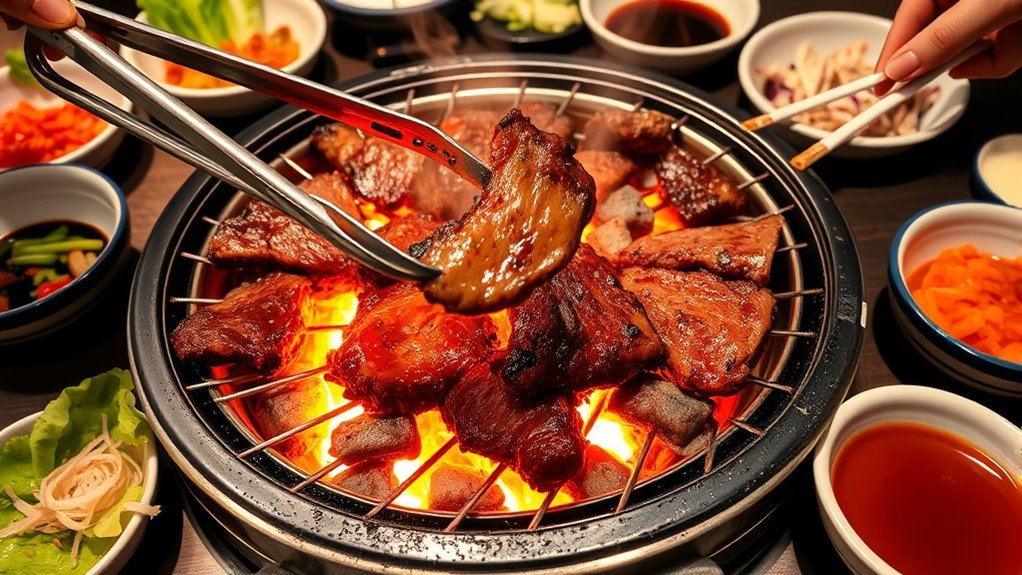
To Korean BBQ in 10 easy steps, start by choosing fresh, thinly sliced meats and a reliable grill with good ventilation. Korean BBQ is all about enjoying the flavors of grilled meat paired with delicious side dishes, so picking quality ingredients is key.
Prepare side dishes like kimchi and veggies separately.
Marinate meats for at least 30 minutes, and preheat your grill to high heat. These steps really help bring out the best flavors and ensure everything cooks perfectly.
Cook meats quickly on each side, using dipping sauces like ssamjang to add flavor. Keep rice paper wraps ready for easy wrapping.
Follow these basics, and you’ll unseal more tips to enjoy Korean BBQ like a pro.
Key Takeaways
- Select quality thinly sliced meats like bulgogi or galbi. Also, prepare traditional banchan side dishes ahead of time. It really helps to have everything ready before you start grilling.
- Set up a well-ventilated grill with adjustable heat. Arrange meats, vegetables, and side dishes around it so they’re easy to reach. This way, you can cook and eat without any hassle.
- Marinate meats separately with soy sauce, garlic, sugar, sesame oil, and pear juice. Let them soak for at least 30 minutes before grilling. This step adds so much flavor!
- Grill thin meats quickly on high heat, flipping once in 1-3 minutes. For thicker cuts, cook them slowly to keep them tender. Timing is key here.
- Serve the grilled meat wrapped in lettuce or perilla leaves. Add ssamjang, sesame oil dip, and other traditional dipping sauces. It’s a perfect bite every time!
Understanding Korean BBQ Culture
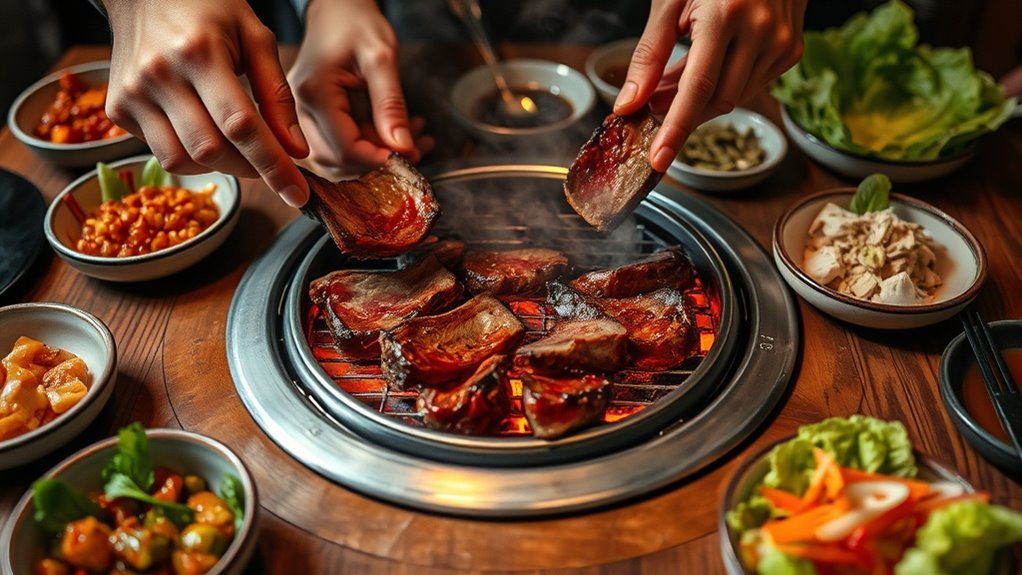
When you sit down for Korean BBQ, you plunge into a culture that values sharing and connection. Korean BBQ isn’t just about grilling meat; it’s a communal experience where everyone cooks and eats together, strengthening social bonds.
Korean BBQ is more than food; it’s a shared experience that brings everyone together around the grill.
Originating from the Goguryeo era, Korean BBQ has evolved from simple skewered meats to flavorful dishes like bulgogi and galbi grilled right at your table. The grill becomes a centerpiece, inviting everyone to participate.
Alongside the meats, you’ll enjoy banchan—small side dishes like kimchi and seasoned vegetables—that add variety and balance to the meal. You’ll often wrap grilled meat in lettuce or perilla leaves called ssam, combining sauces and garnishes for a burst of flavor.
This culture encourages you to relax, share, and savor every bite together. It’s all about enjoying the moment and connecting with the people around you.
Choosing the Right Grill and Setup
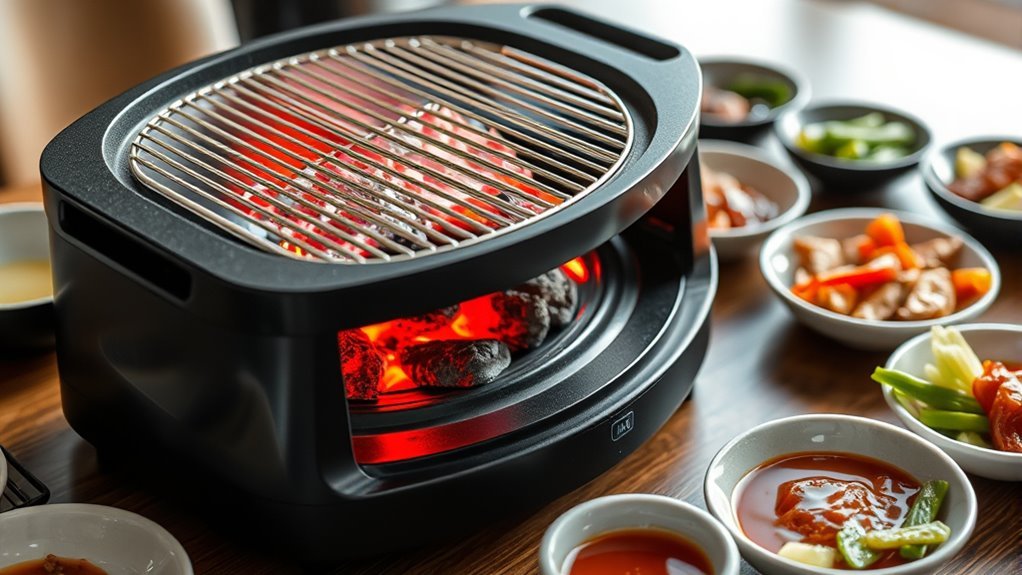
Although selecting the right grill can seem intimidating, choosing one with adjustable heat control and a reliable power source guarantees your Korean BBQ cooks evenly and safely.
For indoor setups, a portable stove works great, especially in a well-ventilated area near open windows to avoid smoke buildup. Outdoor grilling calls for a small charcoal grill but requires proper monitoring and space.
When planning your setup, keep these tips in mind:
- Ensure good ventilation to keep smoke away and maintain air quality.
- Position the grill centrally with enough room around it for side dishes and utensils.
- Use tools like tongs and scissors to handle food safely and efficiently.
A thoughtful grill and setup make your Korean BBQ experience smooth and enjoyable.
Selecting Quality Meats for Korean BBQ
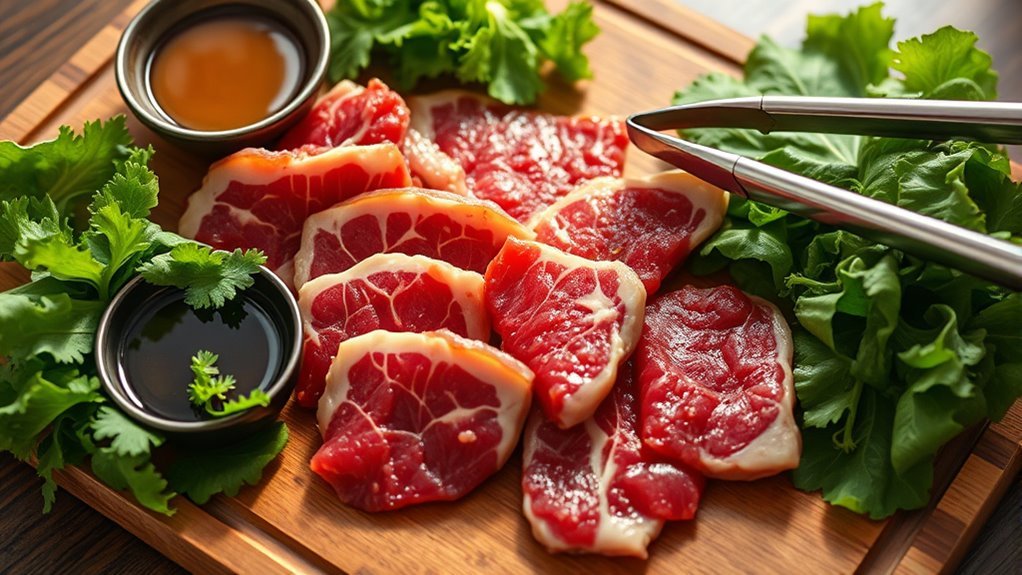
Because the meat is the star of Korean BBQ, selecting quality cuts is essential to achieve authentic flavors and perfect textures. When doing Korean BBQ at home, choose thinly sliced meats like brisket (chadol baegi) and bulgogi for quick grilling and tender bites.
Opt for marinated options such as LA galbi or seasoned pork to boost flavor and moisture. Always prioritize high-quality, well-marbled beef to keep your meat juicy and avoid toughness.
Before grilling, trim excess fat to prevent flare-ups and ensure even cooking. Finally, buy fresh, properly stored meat from reputable sources or Korean markets to guarantee safety and the best taste.
Following these steps will make your Korean BBQ experience delicious and satisfying. It’s really worth taking the time to pick the right cuts!
Preparing Vegetables and Side Dishes
You’ll want to pick vegetables like onions, mushrooms, and zucchini, slicing them evenly for consistent grilling.
Don’t forget to prepare traditional side dishes like kimchi and seasoned spinach ahead of time for authentic flavor.
Keep everything organized and separate from raw meats to make your Korean BBQ smooth and safe.
Selecting Vegetables to Grill
When selecting vegetables to grill for your Korean BBQ, focus on those that cook quickly and pair well with meats, such as onions, sliced garlic, mushrooms, and zucchini.
Proper preparation is key to even cooking and great flavor. Start by washing your vegetables thoroughly, then cut them into uniform pieces for consistent grilling.
Season lightly with salt or a bit of sesame oil to boost their natural taste without overpowering it. To keep flavors pure and prevent cross-contamination, grill vegetables separately from meats or use skewers.
Here’s how to approach grilling vegetables:
- Choose quick-cooking vegetables that complement your meat selection.
- Prepare by washing and cutting evenly for uniform heat exposure.
- Grill until tender with a slight char, about 2–4 minutes per side.
Preparing Traditional Side Dishes
Although the main focus is on grilling, preparing traditional side dishes like kimchi, seasoned spinach, and pickled radish adds essential flavors and textures to your Korean BBQ experience.
Start by slicing vegetables such as onions, garlic, mushrooms, and peppers into bite-sized pieces, perfect for grilling or wrapping. You can marinate some veggies with simple ingredients like sesame oil, soy sauce, or garlic to boost their flavor.
Arrange these vegetables on small plates or trays near the grill for easy access while cooking. Don’t forget to prepare fresh leafy greens like lettuce and perilla leaves, keeping them crisp by storing in a damp cloth or paper towel in the fridge.
These side dishes complement the grilled meats and complete the meal beautifully. So, take your time with the sides—they really make a difference!
Mastering Meat Marination and Timing
Since marination and timing directly impact the flavor and texture of your Korean BBQ, mastering these steps is essential for a delicious meal. To get the best meat tenderness and flavor, you should:
- Marinate beef in a mix of soy sauce, sugar, garlic, sesame oil, and pear juice for at least 30 minutes. Marinate different cuts separately to optimize flavor and cooking duration.
- Pay close attention to grilling time—thinly sliced meats like bulgogi and galbi cook quickly, about 1-3 minutes per side. Use a timer or watch to avoid overcooking.
- After grilling, let the meat rest a few minutes to allow juices to redistribute, ensuring maximum tenderness.
This approach guarantees juicy, flavorful Korean BBQ every time.
Setting Up Your Korean BBQ Table
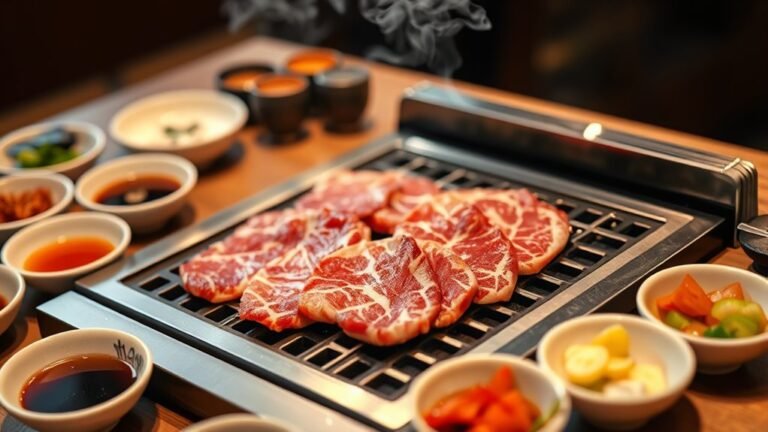
You’ll want to set a flat, stable grill in the center of your table with enough space around it for utensils and side dishes. Protect your table with a heat-resistant cover, then arrange small bowls of banchan, sauces, and condiments nearby for easy sharing.
Don’t forget to lay out essentials like tongs, scissors, and dipping bowls before you start cooking. It makes everything so much easier once you’re ready to dive in!
Table Layout Essentials
When setting up your Korean BBQ table, focus on arranging a flat, sturdy surface with the grill centered for easy access and safety. This setup guarantees everyone can reach the grill comfortably without any risk.
Next, organize your space thoughtfully: place small plates of banchan, sauces, and condiments around the grill for easy sharing and flavoring.
Set individual rice bowls, utensils, and dipping sauce dishes within arm’s reach of each guest to keep things neat. And don’t forget proper ventilation. Open windows or use fans, especially indoors, to prevent smoke buildup and keep the air fresh.
Also, make sure to use a table cover that’s easy to clean to protect your table from grease and spills. This simple setup really makes your Korean BBQ experience smooth and enjoyable.
Organizing Side Dishes
Although the grill takes center stage, organizing your side dishes thoughtfully really enhances the whole Korean BBQ experience. Prepare a variety of side dishes like kimchi, seasoned vegetables, and pickles in small, individual bowls.
Arrange them evenly around the table to promote easy sharing and access during cooking. Include diverse options such as potato salad, stir-fried anchovies, and seasoned greens to balance flavors and textures.
Keep these side dishes at room temperature or slightly chilled, replenishing as needed to maintain freshness throughout the meal. Don’t forget to place rice, dipping sauces, and condiments within everyone’s reach, so diners can easily complement their grilled meats and wraps.
This setup encourages a communal atmosphere and ensures everyone enjoys a flavorful, well-rounded feast.
Arranging Utensils Properly
Since the grill sits at the center of your table, arranging utensils thoughtfully guarantees a smooth and enjoyable Korean BBQ experience. Proper utensils placement helps you organize serving tools and dining essentials efficiently.
Here’s how to set up your table: Place multiple tongs, scissors, and serving utensils near the grill, separating those for raw and cooked meats to avoid cross-contamination.
Arrange small plates of side dishes and condiments around the grill for easy sharing, while setting individual rice bowls, dipping sauce dishes, and chopsticks or spoons at each seat.
Keep napkins, paper towels, and cleaning tools within reach to maintain a tidy space as you cook and eat.
With these steps, you’ll ensure your utensils are organized, making your Korean BBQ experience seamless and enjoyable.
Cooking Meat Perfectly on the Grill
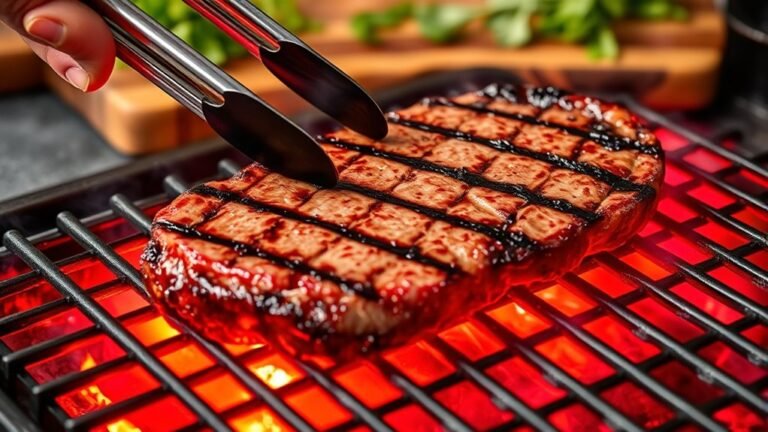
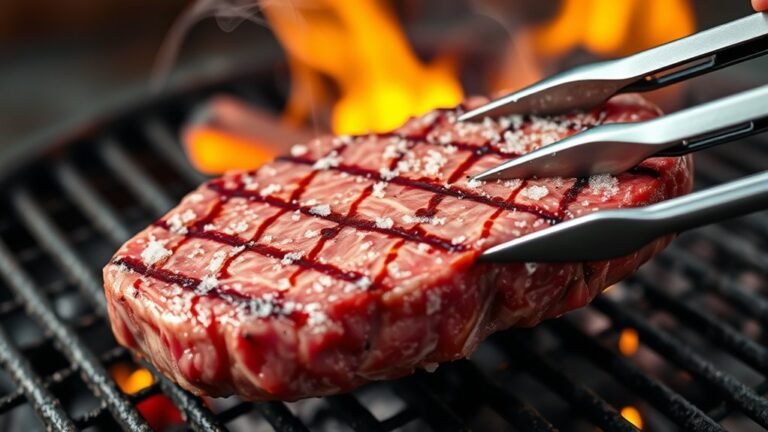
To get the perfect sear on your Korean BBQ meats, you’ll want to preheat your grill to a high temperature, around 400-500°F. When grilling meat like thinly sliced bulgogi or brisket, place the slices on the hot grill using tongs or scissors.
Cook each side for 1-2 minutes, flipping only once to guarantee even cooking and avoid burning. For thicker cuts such as short ribs, reduce the heat to medium and turn occasionally, preventing charring while cooking the inside thoroughly.
Always remove the meat promptly once it reaches your preferred doneness to keep it juicy and tender. Mastering these grilling techniques will elevate your Korean BBQ experience with perfectly cooked, flavorful meat every time.
Preparing and Handling Rice Paper Wraps
To get your rice paper wraps just right, soften them carefully by microwaving with a damp paper towel in short bursts. This helps you avoid over-softening or sticking.
Handle each sheet gently to prevent tears. You can use clean, dry hands or utensils for this.
Cutting the rice paper into smaller squares can also make wrapping easier. Plus, it reduces the risk of ripping.
Rice Paper Softening
How do you get rice paper perfectly soft without tearing it? The secret lies in careful softening.
Start by keeping your rice paper unopened until just before use to prevent it from drying out. When you’re ready:
- Cut the rice paper into 3-inch squares for easier handling.
- Place the squares between damp paper towels to gently moisten the surface.
- Microwave the wrapped rice paper in 30-second intervals, checking until it becomes pliable.
Avoid soaking the rice paper excessively; too much water makes it fragile and prone to ripping. Using a damp paper towel helps control moisture evenly, allowing the rice paper to soften just right.
With this method, your rice paper will be flexible and perfect for wrapping, enhancing your Korean BBQ experience without the frustration of tears.
Preventing Tears and Sticking
Although rice paper is delicate, you can prevent tears and sticking by handling it with care and the right technique. Keep your rice paper sealed until just before use to maintain moisture and flexibility.
Instead of soaking it in water, gently warm the rice paper with a damp paper towel in short microwave intervals. This softens it without making it overly wet and fragile.
When handling, use dry or slightly damp hands to avoid sticking and tearing. Cutting the rice paper into smaller squares, about 3 inches, also makes wrapping easier and reduces the risk of damage.
Making and Using Traditional Dipping Sauces
When you grill Korean BBQ, traditional dipping sauces bring out the best in each bite by balancing savory, spicy, and sweet flavors. A classic dipping sauce to try is ssamjang, made by mixing fermented soybean paste (doenjang) with spicy chili paste (gochujang).
Here’s how to make and use these sauces:
- Combine equal parts doenjang and gochujang, add minced garlic, sesame oil, and a touch of honey or rice syrup to create ssamjang.
- Serve sesame oil mixed with salt and pepper as a simple, subtle dipping option.
- Offer soy sauce with chopped onions for a fresh, salty complement.
Always serve sauces in small bowls so you can customize each bite, enhancing the grilled meat without overpowering its flavor.
It’s all about finding that perfect balance to make every mouthful delicious!
Pairing Drinks to Enhance Your Korean BBQ Experience
Pairing the right drinks with your dipping sauces and grilled meats can really take your Korean BBQ experience up a notch. Traditionally, cold beers like Hite, Cass, or OB are a great match. They balance the smoky flavors and refresh your palate.
Soju is another popular choice, especially when it comes in lychee or mango flavors. It adds a sweet, aromatic touch that complements the grilled meats perfectly.
To cleanse your palate between bites, you might want to try light, effervescent wines like Basque txakoli or sparkling wines. They’re crisp and keep your taste buds ready for more.
If you’re not into alcohol, no worries! Iced water, barley tea, or soda are excellent options. They hydrate you and help balance out spicy or salty notes.
Conclusion
Now that you’ve got the basics down, remember that practice makes perfect. Korean BBQ is as much about enjoying the process as it is about savoring the flavors.
Don’t rush—take your time with the marination, grilling, and dipping sauces. Gather friends or family, and make each meal a fun, interactive experience.
With these steps, you’ll be grilling like a pro in no time. Enjoy every bite and every moment of your Korean BBQ adventure!