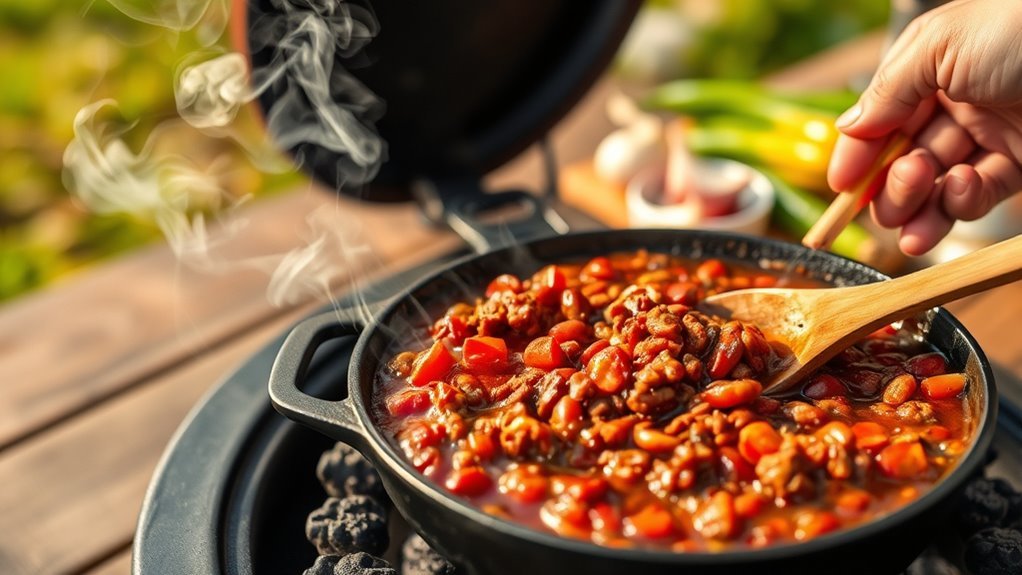
How to BBQ Chili Right in 7 Essential Steps
To BBQ chili right, start by selecting quality meats like chopped steak or ground beef, and season them well with bold spices. This is key to building a flavorful base for your chili that shines throughout the cooking process.
Set up your grill for indirect heat at 225°F–275°F, placing a drip pan to control moisture. This method helps your chili cook evenly without drying out.
Brown the meats thoroughly, then slow cook your chili in a covered pot for 2–3 hours, stirring occasionally.
This slow cooking allows the flavors to meld beautifully and the texture to become just right.
Keep an eye on the liquid and thickness, adjusting as needed to get that perfect consistency.
Once done, let it rest before serving to let all the flavors fully develop.
Stick around to unleash pro tips and next-level flavor layers that will take your BBQ chili to new heights!
Key Takeaways
- Select quality meats like brisket or ground beef and season generously with spices and salt before searing in bacon fat for smoky flavor.
- Set up a two-zone grill with direct and indirect heat, maintaining 225°F–275°F and using a water drip pan to control temperature.
- Brown meats properly on high heat without overcrowding, then slow cook chili in a covered pot over low heat for 2-3 hours.
- Monitor chili thickness during cooking, adjusting liquids as needed, and simmer uncovered to naturally reduce and develop rich flavors.
- Let chili rest covered loosely for 10-15 minutes after cooking, allowing flavors to meld and texture to thicken before serving.
Selecting the Perfect Ingredients for BBQ Chili
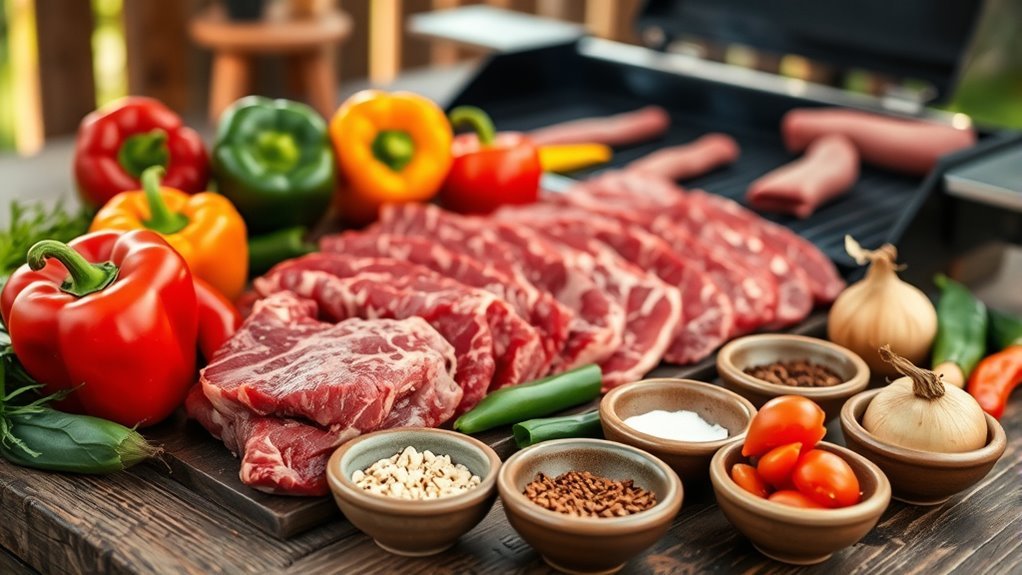
When selecting ingredients for BBQ chili, you’ll want to focus on quality and balance to build rich, layered flavors. Start with prime chili ingredients like chopped minute steaks, lean ground round, and ground pork for texture and depth.
Choose quality meats like chopped minute steaks and lean ground round for a flavorful, textured BBQ chili base
Incorporate smoked meats such as bacon or smoked brisket to introduce smoky complexity. Fresh vegetables—diced onions, bell peppers, and jalapeños—add sweetness, heat, and crunch.
Don’t forget bold spices like cumin, smoked paprika, and ancho chili powder; a pinch of cinnamon or cocoa powder can enhance richness. Use flavor-enhancing liquids like tomato soup, diced tomatoes, lite beer, and beef stock to create a silky, hearty base.
These choices ensure your BBQ chili bursts with balanced, robust flavor. You’ll love how every bite is packed with delicious layers!
Preparing and Seasoning Your Meats
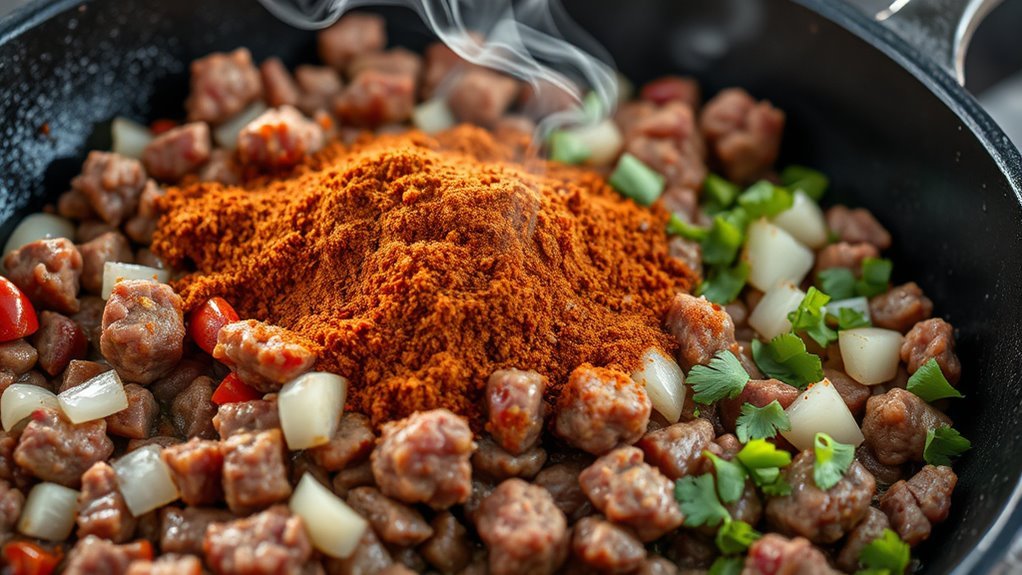
You’ll want to pick high-quality cuts like brisket flat for the best flavor and tenderness in your chili. Season your meat generously with kosher salt, pepper, and onion powder to boost its natural savoriness.
Don’t forget to sear it in bacon fat to lock in moisture and add a smoky depth. This little trick really takes your chili to the next level. Give it a try!
Meat Selection Tips
Although selecting the right cut might seem straightforward, choosing high-quality meats like beef brisket, chuck roast, or premium ground beef makes all the difference in your BBQ chili’s flavor and texture.
When it comes to meat selection, focus on cuts with good marbling but trim excess fat to avoid greasiness and ensure even cooking.
Before you start cooking, season your beef generously with salt, pepper, garlic powder, and chili powders to boost flavor.
For an extra layer of taste, marinate your meat in a spice blend or Worcestershire-based sauce for 1-2 hours.
When grilling, sear the meat over high heat to develop a savory crust, locking in juices before slow-cooking or smoking it to tender perfection.
Seasoning Techniques
Since seasoning sets the foundation for your BBQ chili’s flavor, it’s crucial to use a balanced blend of salt, pepper, and spices like cumin or chili powder. Start by applying a marinade or dry rub with garlic, paprika, and herbs to enhance flavor absorption and tenderize the meat.
After seasoning, let your meats rest for at least 30 minutes to allow the spices to set properly. During cooking, check the internal temperature with a meat thermometer to ensure doneness without over- or under-seasoning.
Don’t hesitate to adjust or reapply seasoning as needed based on taste tests. Mastering these seasoning techniques guarantees your BBQ chili meats develop a rich, savory crust and deep, satisfying flavor that elevates the entire dish.
Setting Up Your Grill for Indirect Cooking
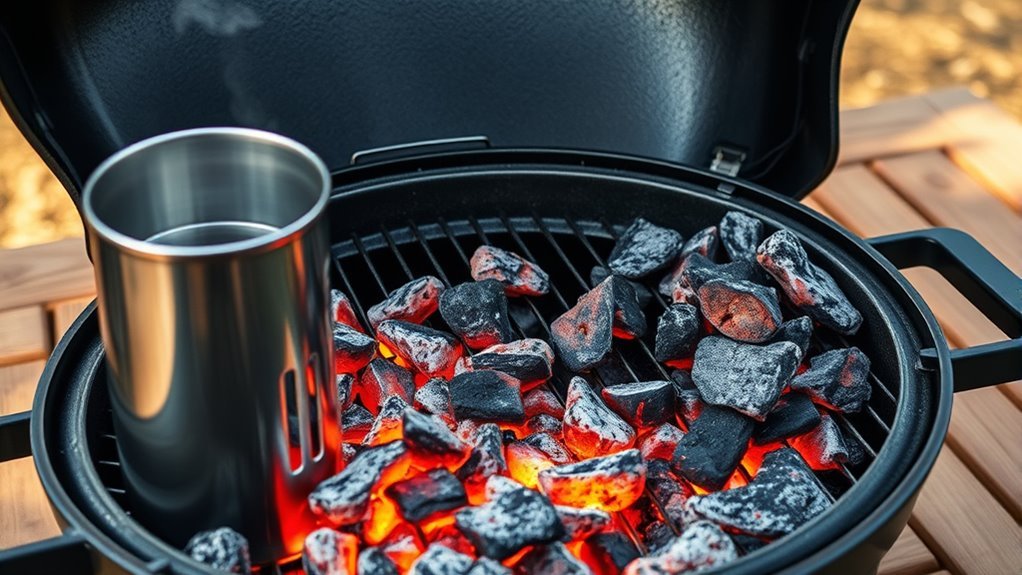
When setting up your grill for indirect cooking, start by choosing the right grill type—charcoal or gas—and arranging your heat zones accordingly.
For charcoal, bank the coals to one side and use a drip pan to control moisture. With gas, simply ignite one side.
Keep an eye on the temperature, aiming for 225°F to 275°F. This helps make sure your chili cooks evenly without burning.
Choosing the Grill Type
How do you create the perfect cooking environment for BBQ chili on your grill? It starts with choosing the right grill type and mastering your grill setup.
Whether you use a charcoal grill or gas grill, you’ll want to establish indirect heat by creating two zones: one side for direct heat and the other for indirect heat. On a charcoal grill, pile coals on one side, leaving the other side empty to maintain a cooler zone.
With a gas grill, simply turn on burners on one side, leaving the other side off. This setup gives you better temperature control, allowing you to keep the indirect zone steady between 225°F and 275°F—ideal for slow-cooking chili.
Using a grill thermometer helps you monitor and adjust as needed. It’s pretty straightforward once you get the hang of it!
Arranging Coals for Indirect
Although setting up your grill for indirect cooking might seem tricky at first, arranging the coals correctly is straightforward and essential for perfect BBQ chili. Proper charcoal arrangement creates the two-zone cooking setup needed for consistent indirect heat.
Here’s how to nail your grill setup:
- Pile lit coals on one side of the grill, letting them ash over for 15-20 minutes.
- Leave the opposite side empty to serve as the indirect heat zone.
- Place a drip pan with water or other liquids on the empty side to aid temperature control and catch drippings.
- Cover the grill and position vents above the coals to regulate airflow and maintain steady, low heat.
This two-zone cooking method ensures your chili cooks slowly and evenly without burning. It’s a simple trick that makes all the difference!
Maintaining Consistent Temperature
Once you’ve arranged your coals for indirect cooking, the next step is keeping your grill temperature steady. Focus on maintaining a grill temperature between 225°F and 250°F by adjusting vents or burners to regulate airflow and heat effectively.
Use a reliable grill thermometer to monitor the internal grill temperature, ensuring even heat distribution. Placing a drip pan filled with water on the unlit side stabilizes temperature and adds moisture, which helps keep your chili juicy.
Try to avoid opening the grill lid too often, as this causes temperature fluctuations that disrupt steady heat. By mastering temperature control, you create the perfect environment for slow-smoking chili with consistent indirect cooking, resulting in rich, flavorful results every time.
Browning and Layering Flavors
When you brown meats like brisket or ground beef properly, you create a rich fond that adds depth to your chili. Browning is the first essential step in layering flavors, developing rich caramelization on the meat’s surface.
To maximize flavor, heat your pan high enough to sear without steaming. Also, avoid overcrowding to ensure even browning and caramelization.
Season the meat consistently during browning to build complexity. Then, deglaze the pan with a splash of liquid, lifting those browned bits into the chili for added savoriness.
This careful process of browning and layering flavors gives your chili its signature depth and richness. It really sets the stage for a perfectly balanced BBQ chili.
Slow Cooking and Simmering to Perfection
To develop deep, well-rounded flavors, you should slow cook your chili in a heavy-bottomed pot or Dutch oven over low heat. This ensures even heat distribution, which is essential for slow simmering.
Maintain a gentle simmer for 2-3 hours, stirring occasionally to prevent sticking and promote uniform cooking. This slow simmering allows flavor development to unfold fully while transforming your meat into tender meat perfection.
Be mindful of gradual liquid addition, incorporating broth, beer, or tomato juice slowly to keep the chili thick yet moist. Partially cover the pot to retain moisture without trapping steam, which helps meld flavors beautifully.
Monitoring Consistency and Adding Liquids
How do you know when your chili is just right? It’s all about monitoring consistency and making timely liquid adjustments.
As you keep simmering, watch for a thickened texture and gentle bubbles—key signs your chili is nearing perfection. Stir often to prevent sticking and ensure even heat distribution.
Here’s how to nail it:
- Check the consistency regularly, using visual cues or a thermometer.
- Add broth or water gradually if the chili thickens too much.
- Simmer uncovered to encourage thickening by letting moisture evaporate.
- Cover the pot to retain liquid if the chili looks too thin.
Resting and Serving Your BBQ Chili
Once your chili reaches the perfect consistency, letting it rest for 10 to 15 minutes allows the flavors to meld and the juices to settle. During this resting period, cover your chili loosely with foil to keep the heat in while letting steam escape.
This step prevents separation and ensures a thicker, more cohesive texture when you serve. Use this time to prepare your toppings and sides for a complete meal.
If you need to reheat your chili, do so gently, stirring occasionally to maintain even flavor distribution. Proper resting and careful reheating will make your BBQ chili taste richer and more balanced, giving you a satisfying dish every time you serve.
Conclusion
Mastering BBQ chili is like orchestrating a smoky symphony—each step adds a crucial note to the final masterpiece. By choosing the right ingredients and seasoning your meats well, you set the foundation for incredible flavor.
Next, setting up your grill properly is key. Slow-cooking your chili patiently allows the flavors to meld beautifully. Keep an eye on consistency and add liquids as needed to get that perfect texture.
Finally, let your chili rest before serving to deepen the taste. Follow these essential steps, and you’ll transform a simple meal into a mouthwatering celebration. BBQ chili done right means layers of smoky, spicy, and savory flavors that come together perfectly. With the right technique and care, your BBQ chili will become the star of any cookout or dinner table!