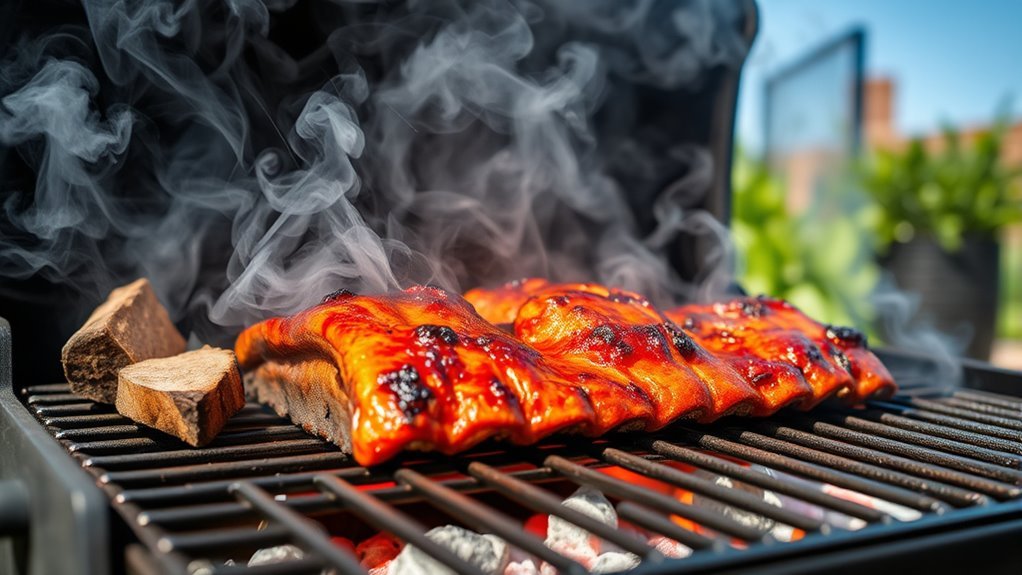
What Is Dirty Smoke in BBQ and How to Avoid It
Dirty smoke in BBQ is thick, white or gray smoke caused by burning wet or green wood and poor airflow. It produces harsh, acrid flavors and leaves black soot on your meat, ruining taste and appearance.
This dirty smoke can really mess up your BBQ experience, making your food bitter and unappetizing.
To avoid it, use dry, seasoned wood, keep your vents fully open, and maintain a hot, ashy coal bed for clean, blue smoke. Managing fire carefully makes all the difference.
With the right techniques, your BBQ will reach the next level and taste amazing every time.
Key Takeaways
- Dirty smoke is thick, white or gray smoke caused by incomplete combustion and wet or green wood in BBQ. It produces acrid flavors, soot deposits, and blackened meat surfaces, impairing BBQ taste and appearance.
- To avoid dirty smoke, use dry, seasoned wood and keep a hot, ashy gray coal bed for clean burning. This helps ensure the smoke stays thin and blue, which is what you want for great flavor.
- Make sure your smoker vents are fully open to allow proper airflow. This supports complete combustion and keeps that nasty dirty smoke at bay.
- When managing your fire, add small chunks of wood gradually. Also, clean your smoker regularly to prevent soot buildup, which can cause dirty smoke to form.
Understanding Dirty Smoke and Its Effects
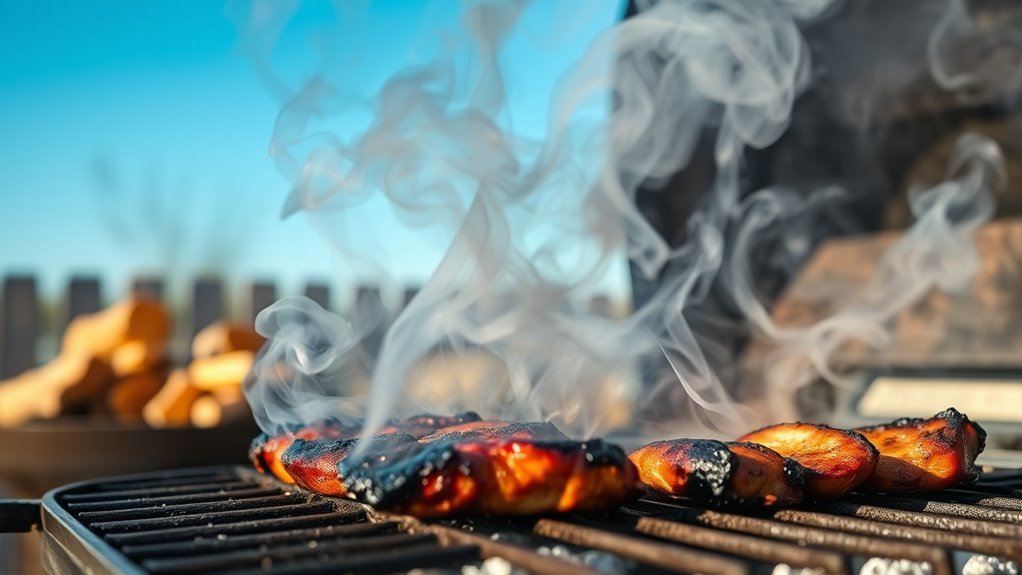
When you see thick, white or gray smoke rising from your BBQ, that’s dirty smoke caused by incomplete combustion. This bad smoke often results from using wet wood or green wood, which contain excess moisture that prevents clean burning.
Restricted airflow and low oxygen levels cause the fire to smolder, producing thick smoke instead of a clean burn. Improper fire management, like failing to maintain proper heat or airflow, also leads to smoldering fires that emit white smoke or even black smoke.
This dirty smoke carries acrid flavors and deposits soot on your meat, resulting in off-flavors and blackened surfaces. Understanding these causes helps you recognize when your fire’s not burning efficiently, so you can avoid the bad smoke that compromises your BBQ’s taste and quality.
Techniques for Achieving Clean, Thin Blue Smoke
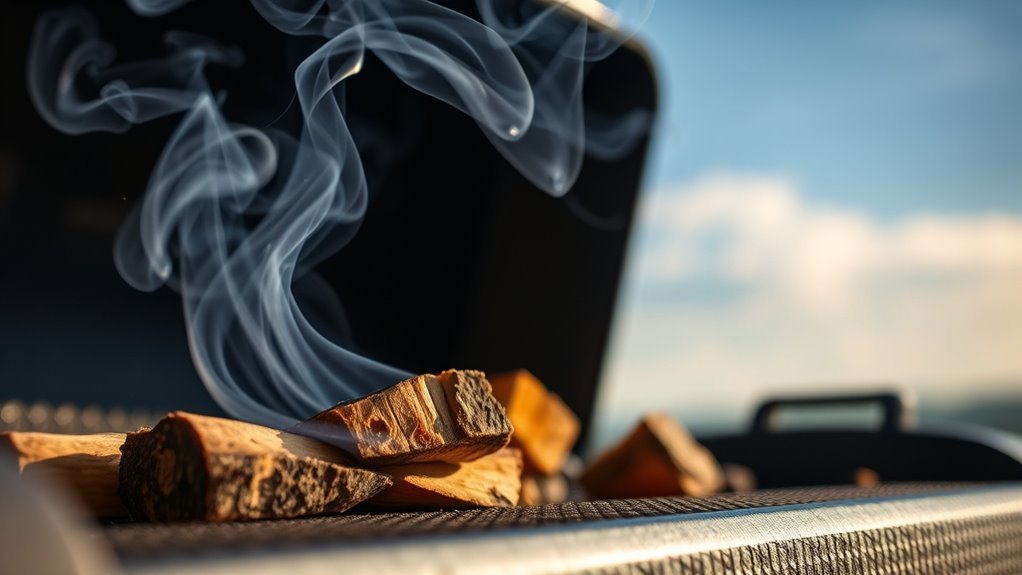
Although achieving clean, thin blue smoke can be challenging, you can master it by managing your fire carefully and using the right materials. Start with hot coals and an ashy gray coal bed before adding dry, seasoned wood.
Master clean blue smoke by starting with hot coals and seasoned wood for the best fire management.
Avoid green or resinous wood because they produce thick, dirty smoke. Maintain proper airflow by keeping vents fully open to support complete combustion and control temperature.
Add small splits or wood chunks gradually so they ignite quickly and burn wood cleanly, producing smooth blue smoke. Regularly clean your smoker to remove soot and ash buildup that can block airflow and cause inconsistent smoke.
Following these techniques guarantees you get clean smoke that enhances smoke flavor without the harshness of dirty smoke. Give it a try—you’ll notice the difference!
Conclusion
Now that you know dirty smoke can ruin your BBQ’s flavor, you’re one step closer to mastering the grill. Did you know that over 60% of backyard pitmasters struggle with managing smoke quality?
By controlling your fire and using dry, well-seasoned wood, you’ll create that clean, thin blue smoke. This kind of smoke brings out the best in your meat and avoids the bitter taste caused by dirty smoke.
Keep practicing these techniques, and soon you’ll impress everyone with perfectly smoked BBQ every time! Remember, understanding what dirty smoke is and how to avoid it is key. Clean smoke means better flavor, and that’s what makes your BBQ truly stand out.