
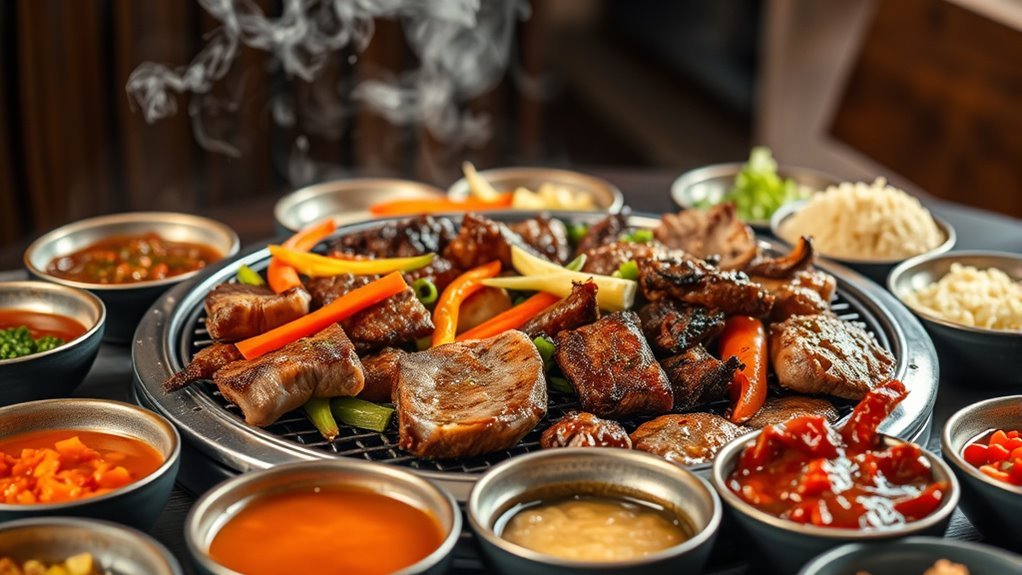
5 Key Facts About How Many Calories Are in Korean BBQ
You’ll typically consume between 700 and 1,100 calories in a Korean BBQ meal, but your choices make a big difference. Lean meats keep calories lower, while fatty cuts and marinades add more.
Don’t forget rice—it’s a major calorie contributor. Banchan sauces and drinks like soju and beer can quickly increase your intake.
Estimating calories is tricky due to grilling methods and shared portions. Keep exploring to uncover how each factor impacts your total calories.
Key Takeaways
- Korean BBQ meals typically range from 700 to 1,100 calories per person depending on meat type and portion size. It really varies based on what you choose to eat.
- Fat loss during grilling and marinade ingredients like sugar add complexity to accurate calorie estimation. So, it’s not always straightforward to know the exact count.
- Pork belly and beef short ribs are high-calorie meats, while lean cuts like chicken breast have fewer calories. If you’re watching your intake, leaner cuts might be a better choice.
- Side dishes like kimchi add minimal calories, but sauces such as ssamjang and sesame oil significantly increase intake. Those little extras can add up more than you think.
- Alcoholic drinks like soju and beer can add 280–420 calories, substantially raising the total meal calorie count. So, if you’re counting calories, keep an eye on your drinks too!
How Many Calories Are in a Typical Korean BBQ Meal?
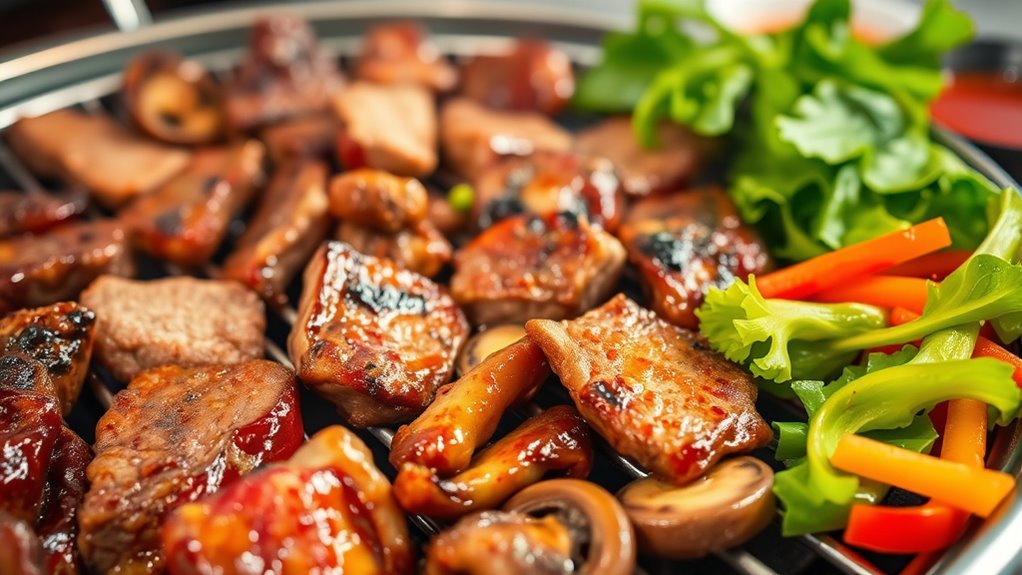
Although the calorie content in Korean BBQ varies widely, a typical meal with two types of meat, rice, and side dishes usually has between 700 and 1,100 calories per person. When you enjoy Korean BBQ, the calories depend heavily on portion size and the types of grilled meats you select.
Lean cuts tend to have fewer calories, while marinated meats can add extra calories due to sauces. Side dishes like kimchi or vegetables add minimal calories, but rice contributes markedly to the total calorie content.
If you opt for a moderate portion size of grilled meats paired with rice and traditional side dishes, you can expect to stay within this calorie range. Being mindful of these elements helps you balance flavor and calorie intake during your Korean BBQ meal.
Why Korean BBQ Calories Are Hard to Estimate
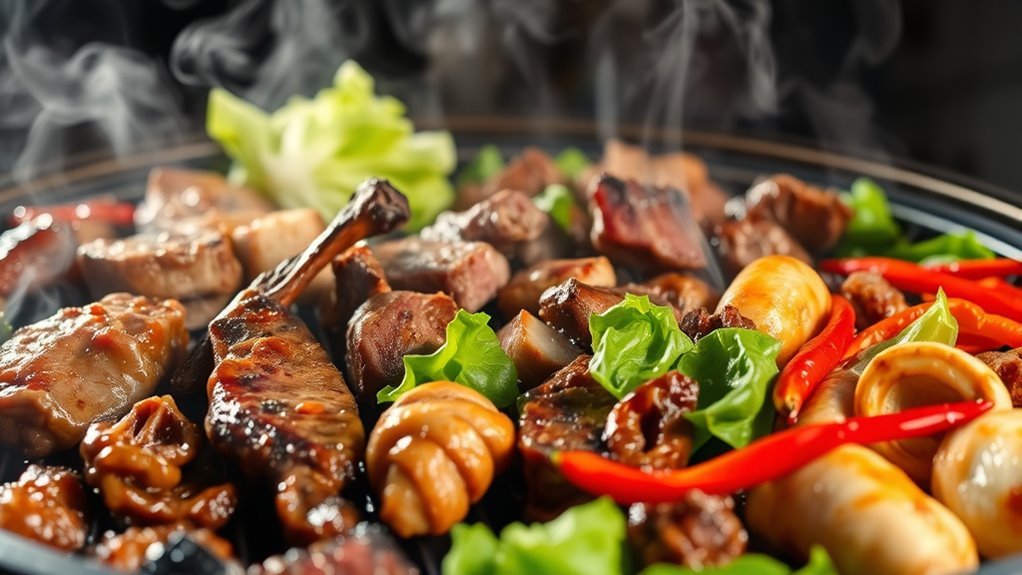
Because fat renders off during grilling, the calorie content of Korean BBQ can be tricky to estimate accurately. You have to take into account grilling fat loss, marinade calories from ingredients like sugar and sesame oil, and the difference between cooked vs raw meat.
Portion sizes are often shared, making calorie tracking even harder. Plus, various grilling methods affect meat rendering and final calorie counts.
Hidden calories in marinades and sauces add complexity, and standard calorie estimation often relies on USDA data that may not match your exact serving.
| Factor | Impact on Calories |
|---|---|
| Grilling Fat | Reduces raw meat calorie count |
| Marinade Ingredients | Add hidden calories |
| Portion Sizes | Make individual tracking tough |
All these variables make precise calorie tracking a challenge.
How Different Meats Affect Korean BBQ Calories
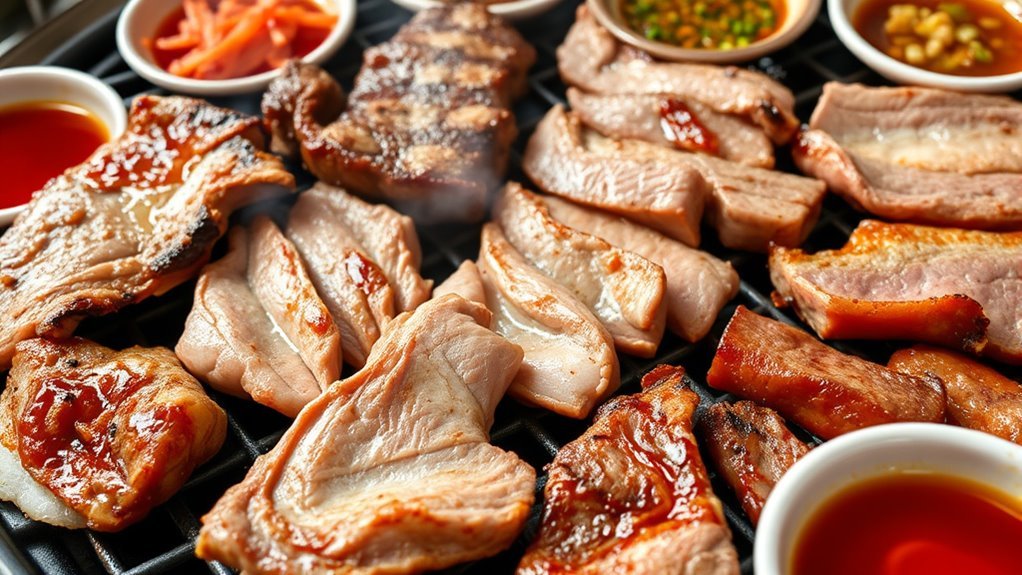
When you choose different meats for Korean BBQ, you directly impact the calorie content on your plate. Korean BBQ meats vary widely in calories, especially between lean cuts and high-calorie cuts like pork belly.
Understanding the calorie comparison helps you make informed choices about your meat portions.
Pork belly calorie content is high, around 290–310 calories per 100 grams, even after some fat rendering during grilling.
Calories in beef short ribs (galbi) can reach 300–350 per 85 grams, boosted by marinated meats and marbling.
Lean cuts like chicken breast or pork tenderloin offer lower calories, roughly 143–165 per 100 grams, ideal for lighter meals.
Grilling methods influence fat rendering but can’t fully offset the high calories in fatty cuts.
How Banchan and Sauces Add Calories
A variety of banchan and sauces accompany Korean BBQ, and they can add more calories than you might expect. While kimchi is a popular low-calorie side dish with about 11 calories per 60 grams, other Korean condiments contribute more considerably to meal calories.
Ssamjang, a thick dipping sauce, contains roughly 30–40 calories per tablespoon, depending on its ingredients. Sesame oil, often drizzled or used as a dipping sauce, provides about 40 calories per teaspoon. So, it can add fat and calories pretty quickly if you use it generously.
Soy-vinegar sauces are lighter, adding around 10 calories per tablespoon. But remember, the calories in sauces can add up because of sugars and oils. To manage your calorie intake, keep an eye on the amount of banchan and dipping sauces you enjoy during your Korean BBQ.
How Drinks and Eating Habits Affect Korean BBQ Calories
Beyond the calories from banchan and sauces, the drinks you choose at Korean BBQ can add a significant number of calories to your meal. Alcohol calories from soju and beer quickly raise your calorie intake. Just 2-3 shots of soju and 1-2 beers add about 280-420 calories.
Sharing a full bottle of soju means roughly 270 calories per person, which impacts your total calorie consumption. Your drinking habits directly influence this calorie impact. So, it’s worth paying attention to what and how much you drink.
To manage intake, try mindful drinking. Include non-alcoholic Korean BBQ drinks like barley tea, which slows alcohol absorption and reduces calories.
- Consuming multiple alcoholic beverages increases alcohol consumption calories rapidly
- Barley tea helps moderate calorie impact and alcohol absorption
- Choosing water or tea supports mindful drinking to control calorie intake
Frequently Asked Questions
Is Korean Barbecue High in Calories?
Yes, Korean barbecue can be high in calories, especially if you eat fatty meats, multiple rounds, and drink alcohol. You can cut calories by choosing lean meats, veggies, and limiting sauces and extras.
How to Count Calories at Korean Barbecue?
You can count calories at Korean BBQ by estimating portion sizes, choosing lean meats, and tracking marinated ingredients. Use nutritional info for each meat type, and balance with low-calorie sides to keep your intake in check.
Is Korean Barbecue Unhealthy?
Korean barbecue isn’t inherently unhealthy, but it can be if you choose fatty meats and overeat. You can keep it balanced by picking lean cuts, enjoying plenty of veggies, and watching portion sizes.
What Is the Lowest Calorie Option on Korean BBQ?
Imagine sizzling shrimp and tender chicken breast on the grill—they’re your lowest calorie picks. Choose these lean proteins and fresh veggies, skipping sugary sauces and fatty cuts, so you can savor Korean BBQ without the calorie overload.
Conclusion
When you immerse yourself in delicious Korean BBQ, don’t dismiss the diverse details driving its calorie count. Between meats, marinades, and mouthwatering sides, the numbers naturally navigate a nuanced range.
Remember, banchan and beverages boost your bite’s bulk, blending flavors with fats. These little extras can add up quicker than you might think.
By balancing bites and beverages wisely, you’ll savor satisfying servings without spiraling into surplus calories. It’s all about enjoying your meal without going overboard.
So, stay savvy, savor smartly, and steer your meal toward a mindful, memorable experience. Paying attention to calories in Korean BBQ helps you indulge while keeping your nutrition goals on track. Just a little mindfulness goes a long way in making your Korean BBQ both tasty and guilt-free.