How to BBQ Ribeye Steak in 10 Easy Steps
Choose a thick, well-marbled ribeye steak and let it come to room temperature before you start. This step helps the steak cook more evenly and stay juicy. Don’t rush it!
Season generously with kosher salt and fresh herbs like rosemary and thyme several hours ahead of time. This gives the flavors a chance to really soak into the meat. Trust me, it makes a huge difference.
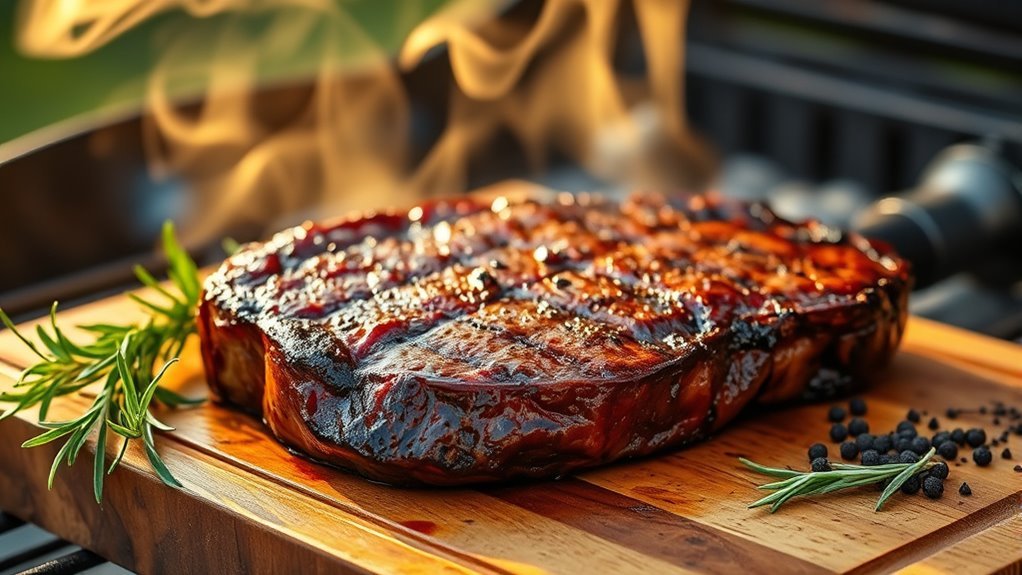
Next, preheat your grill to a high temperature—around 450°F to 500°F. You want it hot to get that perfect sear. Place the steak over direct heat to build a flavorful crust. Flip it just once or twice to keep things juicy and tender.
Once you’ve got that crust going, move the steak to indirect heat to finish cooking. Baste it with garlic herb butter as it cooks to add richness and depth of flavor.
Use a meat thermometer to check for doneness—it’s the best way to nail your preferred temperature. Let the steak rest briefly after grilling; this keeps all those tasty juices locked in.
Finally, slice against the grain for maximum tenderness.
Follow these tips to elevate every step and grill a perfect BBQ ribeye steak every time!
Key Takeaways
- Select a thick, well-marbled ribeye steak and season generously with kosher salt and herbs 4–24 hours before grilling.
- Preheat the grill to 450°F–500°F and set up two-zone cooking with direct and indirect heat areas.
- Sear the steak over high direct heat, flipping once or twice, then move to indirect heat to finish cooking.
- Use herb-infused butter to baste the steak during the final searing stage for enhanced flavor and crust development.
- Rest the steak 5–10 minutes after grilling, then slice across the grain and serve with complementary sides.
Selecting the Perfect Ribeye Steak
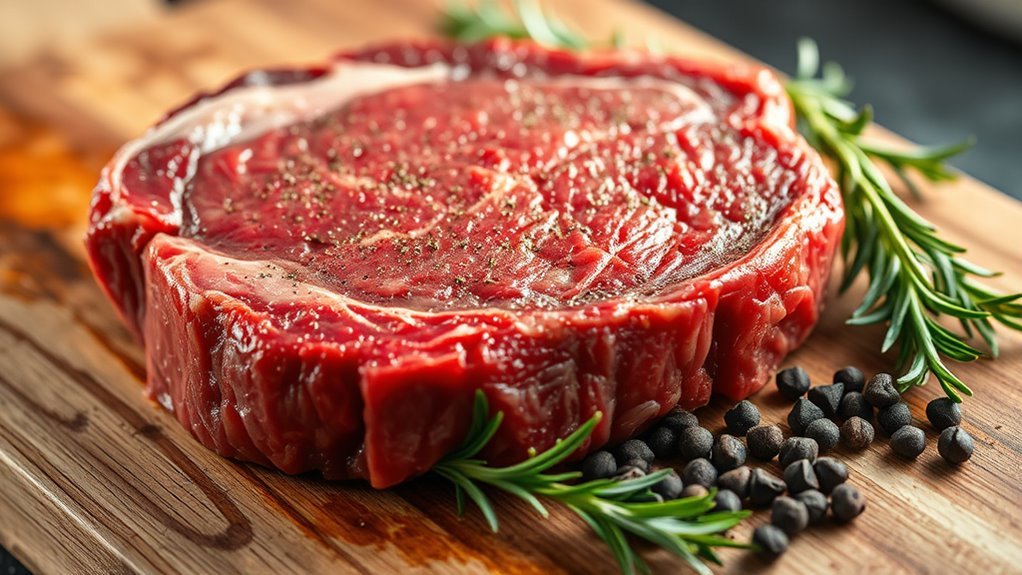
How do you pick the perfect ribeye steak for your BBQ? Start by examining the marbling—the white streaks of fat throughout the meat. Ribeye with abundant marbling guarantees tenderness and rich flavor.
Aim for steaks labeled USDA Prime or Choice since they offer superior quality and better marbling than Select cuts. Don’t forget to choose a thick cut, at least 1 to 1.5 inches, to ensure proper searing and even cooking.
Check the color too; a bright red ribeye signals freshness. If you want to impress, ask your butcher for ribeye steaks with long, thick bones or the tomahawk style.
It adds extra flavor and a striking presentation. Selecting quality ribeye sets the foundation for a mouthwatering BBQ.
Preparing the Steak for Grilling
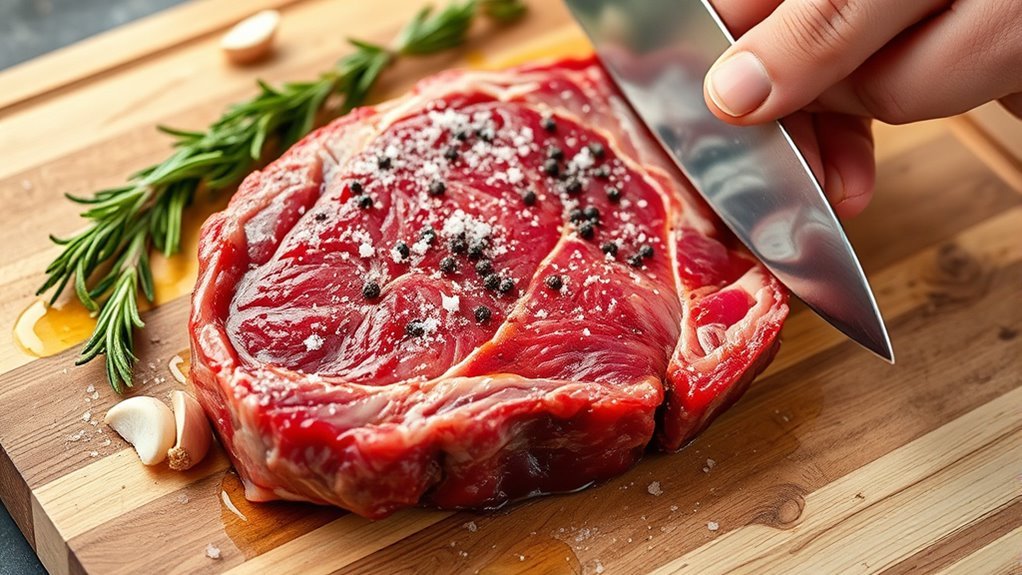
To prepare your ribeye for grilling, start by selecting a high-quality cut with good marbling. Season it generously with kosher salt well in advance to boost flavor and tenderness.
Before you grill, let the steak come to room temperature for even cooking. Also, pat it dry for a perfect sear. This little step makes a big difference!
Choosing Quality Ribeye
Where should you start when choosing the perfect ribeye for grilling? Focus on marbling first—those white streaks of fat throughout the meat add flavor and juiciness.
Look for USDA Prime or Choice grades, as they offer superior tenderness and richer fat content compared to Select. Next, pick a ribeye about 1 to 1½ inches thick; this thickness ensures even cooking and a good sear.
Don’t hesitate to ask your butcher if the steak is aged—dry-aged or wet-aged ribeyes develop deeper flavors and improved tenderness. Finally, aim for a steak weighing between 10 to 16 ounces, balancing manageable size with robust flavor.
Selecting the right ribeye guarantees the foundation for an unforgettable BBQ experience. So, take your time choosing—it’s worth it!
Seasoning and Salting
Once you’ve picked the perfect ribeye, getting the seasoning right sets the stage for a flavorful steak. Start by salting the steak generously with about 1.5 teaspoons of coarse kosher salt per side.
Salting 4 to 48 hours before grilling lets the salt draw out moisture, which then reabsorbs, boosting flavor and tenderness. This process also helps create a dry surface, essential for developing a beautiful crust when you grill.
Apply your seasoning evenly to guarantee every bite tastes great. After salting, let the steak rest at room temperature to allow the salt to work its magic and the steak to come to an even temperature.
Proper seasoning and salting are key to revealing the ribeye’s full flavor and achieving that perfect crust. It’s a simple step that makes a huge difference.
Bringing Steak to Room Temperature
Although it’s tempting to start grilling right away, letting your ribeye sit at room temperature for 30 to 60 minutes guarantees it cooks evenly.
Resting the steak outside the fridge helps the internal temperature rise gradually, preventing overcooked edges and underdone centers, especially with thick cuts.
Before cooking, pat it dry to improve searing and develop a rich crust. Just don’t leave it out longer than two hours to avoid bacterial growth.
| Step | Why it Matters | Result |
|---|---|---|
| Resting time | Ensures even cooking | Juicy, consistent steak |
| Drying steak | Promotes better searing | Flavorful crust |
| Room temperature | Helps heat penetrate thick cuts | Uniform doneness |
| Timing | Limits bacteria risk | Safe eating |
| Preparation | Preps steak for grilling | Perfect BBQ ribeye |
Seasoning Tips for Maximum Flavor
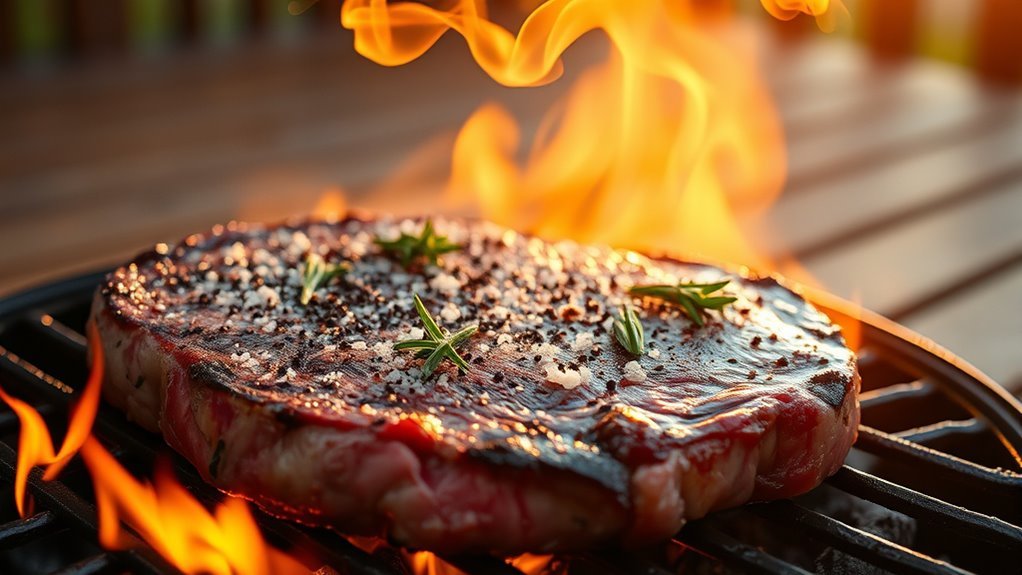
To get the most flavor from your ribeye, start by applying a generous amount of coarse kosher salt and freshly ground black pepper at least 30 minutes before grilling.
Pair your salt with herbs like thyme or rosemary, and consider adding spices such as paprika or cumin for an extra kick.
These simple seasoning techniques will help your steak shine on the grill.
Salt Application Techniques
When you salt your ribeye 4 to 24 hours before cooking, the salt pulls moisture out and then lets it soak back in, boosting both flavor and tenderness. Using kosher salt is key here—it provides even seasoning and dissolves slower than table salt, enhancing flavor penetration deep into the meat.
This salt timing allows the seasoning to work its magic, resulting in a more flavorful crust formation when you cook. If you’re short on time, salting just before grilling can dry the surface slightly, helping you achieve a better sear through caramelization.
Aim for about 1.5 teaspoons of kosher salt per side, adjusting for steak size and taste. Mastering these salt application techniques ensures your ribeye bursts with flavor and has that perfect crust every time.
Herb and Spice Pairings
Salt lays a solid foundation for flavor, but pairing it with the right herbs and spices takes your ribeye to the next level. Use fresh herb pairings like rosemary, thyme, and garlic to enhance the steak’s aroma and depth.
Combine these with spice rubs such as smoked paprika, black pepper, and garlic powder for a bold, savory crust. When seasoning, balance robust spices with delicate herbs to create a harmonious flavor profile that won’t overpower the meat.
Marinating your ribeye in herb-infused oils or butter before grilling helps infuse subtle, aromatic flavors throughout. Remember, salt not only boosts flavor but also tenderizes the steak through osmosis when paired with herbs, ensuring your ribeye is juicy and flavorful every time.
Preheating Your Grill Properly
Although it might be tempting to start cooking right away, you need to preheat your grill properly to achieve the perfect sear on your ribeye steak. Preheating ensures the grill temperature is high enough for searing, locking in juices and flavor.
Here’s how to get it right:
- Preheat your grill to 450°F–500°F for ideal heat. Use a grill thermometer or built-in gauge to monitor temperature accurately.
- For charcoal grills, spread coals evenly and wait until covered with white ash.
- For gas grills, turn all burners to high and close the lid to preheat thoroughly.
- Let the grill reach and maintain the set temperature for 10–15 minutes before cooking.
Proper preheating sets the stage for a beautifully cooked ribeye every time. So, take the time upfront—it really makes a difference!
Searing the Ribeye for a Crusty Exterior
To get that perfect crust, you’ll want to sear your ribeye over high heat, around 500°F. This helps lock in flavor and juices, which is key for a tasty steak.
Brush the steak lightly with a high-smoke-point oil before placing it on the grill or skillet.
As it sears, try basting with butter. This adds richness and helps build a golden, caramelized exterior. Trust me, it makes all the difference!
High Heat Searing
When you heat a cast iron skillet or grill grates to at least 500°F, you set the stage for a perfect sear that locks in flavor and creates a crusty exterior. High heat searing is essential to develop that mouthwatering crust while keeping the steak juicy inside.
To nail this, pat your ribeye dry to promote a better sear. Use a heavy cast iron skillet or preheated grill grates.
Sear each side for 1 to 3 minutes without moving the steak. Press gently for even browning and distinct grill marks.
Don’t forget to monitor the internal temperature to avoid overcooking. This technique guarantees a flavorful crust and beautifully marked ribeye, elevating your BBQ game instantly.
Butter Basting Technique
Since butter melts quickly and carries rich flavors, you can elevate your ribeye’s crust by basting it with melted butter during the final searing stage. Start by adding herb butter—infused with thyme, rosemary, and smashed garlic—to the hot pan.
Tilt the pan or use a spoon to continuously pour the melted butter over your ribeye steak. This butter basting technique promotes a deep, caramelized sear and prevents sticking thanks to butter’s high-fat content.
As you baste, the butter evenly conducts heat, helping lock in moisture so your steak stays juicy and tender. This method not only enhances flavor but also creates a rich, aromatic crust that perfectly complements your cooking.
Butter basting is a simple yet effective way to master a mouthwatering ribeye steak. Give it a try next time you cook one!
Managing Heat for Even Cooking
Although it might seem tricky at first, managing heat properly is key to grilling a ribeye steak that’s perfectly cooked from edge to center. Start by setting up your grill for two-zone cooking: high direct heat (450°F to 700°F) for searing and a cooler indirect heat area to finish.
This method ensures even cooking without burning. Keep the grill temperature steady, flip the steak only once or twice, and monitor internal heat with a meat thermometer.
After grilling, rest the steak 5-10 minutes to let heat distribute evenly.
- Sear over direct heat for a crust
- Move steak to indirect heat to cook through
- Flip sparingly for uniform heat
- Use a meat thermometer to track temperature
- Rest steak before serving for even heat distribution
Checking Doneness With a Meat Thermometer
To check doneness accurately, insert your meat thermometer into the thickest part of the ribeye. Using a digital instant-read meat thermometer gives you a quick, precise internal temperature within seconds.
For medium-rare, aim for 120°F to 125°F; for medium, 130°F to 135°F. Remove the steak from heat when it’s about 5°F below your target, since it continues cooking as it rests.
This technique guarantees perfect doneness without overcooking. Always sanitize your meat thermometer after use to avoid cross-contamination between raw and cooked meat.
Resting the Steak for Juiciness
Once you pull your ribeye off the grill at the right temperature, resist the urge to cut into it immediately. Resting the steak is vital for juiciness and flavor. During resting, the internal temperature rises about 5°F, so remove it slightly below your desired doneness.
Wrap it loosely in foil to keep heat in while letting steam escape, preserving the crust. Aim for a resting time of at least 5 minutes to let juices redistribute evenly. Before slicing, cut across the grain to lock in moisture and tenderness.
- Resting prevents excessive moisture loss
- Internal temperature continues to rise slightly
- Use foil to maintain warmth and crust
- Resting enhances juiciness and tenderness
- Slice after resting for best texture and flavor
Preparing a Garlic Herb Butter for Basting
If you want to elevate your ribeye’s flavor, preparing a garlic herb butter for basting is essential. Start by melting 3-4 tablespoons of salted butter over low heat.
To elevate your ribeye’s flavor, start by melting 3-4 tablespoons of salted butter over low heat.
Add 1 teaspoon garlic powder, ½ teaspoon black pepper, 1 teaspoon chopped fresh thyme, and 1 teaspoon chopped fresh rosemary to create a vibrant herb mixture. Smash and thinly slice 2 garlic cloves, then add them to the butter.
Stir continuously for 1-2 minutes, allowing the herbs and garlic to infuse deeply into the butter, enhancing the flavor infusion. Remove from heat and set aside.
During the final minutes of your steak preparation, spoon or brush this garlic herb butter onto the ribeye. This basting technique locks in moisture and layers your steak with rich, aromatic flavor.
Serving Suggestions and Side Pairings
Basting your ribeye with garlic herb butter brings out rich flavors that deserve equally delicious sides. Choose side dishes that balance and elevate your steak pairings for a complete meal.
Consider mixing comfort foods with lighter options to keep the plate interesting and satisfying. Here are five great steak accompaniments to try:
- Grilled vegetables like asparagus or bell peppers for smoky freshness
- Creamy mashed potatoes infused with garlic for indulgence
- A crisp Caesar or cucumber salad to add brightness
- Loaded baked potatoes topped with cheese and bacon for extra comfort foods
- Buttered corn on the cob to complement the steak’s richness
These side dishes work perfectly with your BBQ ribeye, enhancing every bite while providing variety and balance.
Conclusion
You might think grilling the perfect ribeye is rocket science, but with these simple steps, it’s actually easier than burning toast. By choosing the right cut, seasoning well, and mastering your grill, you’ll impress yourself and anyone lucky enough to dig in.
So next time you fire up the BBQ, remember: creating steakhouse-worthy ribeye doesn’t require a chef’s hat—just a little patience and these easy tips. With the right technique, your BBQ ribeye steak will come out juicy, flavorful, and cooked to perfection every time.
Enjoy the delicious irony of how simple it is to make a mouthwatering ribeye steak on your grill. Follow these 10 easy steps, and you’ll be the star of any BBQ gathering. Happy grilling!