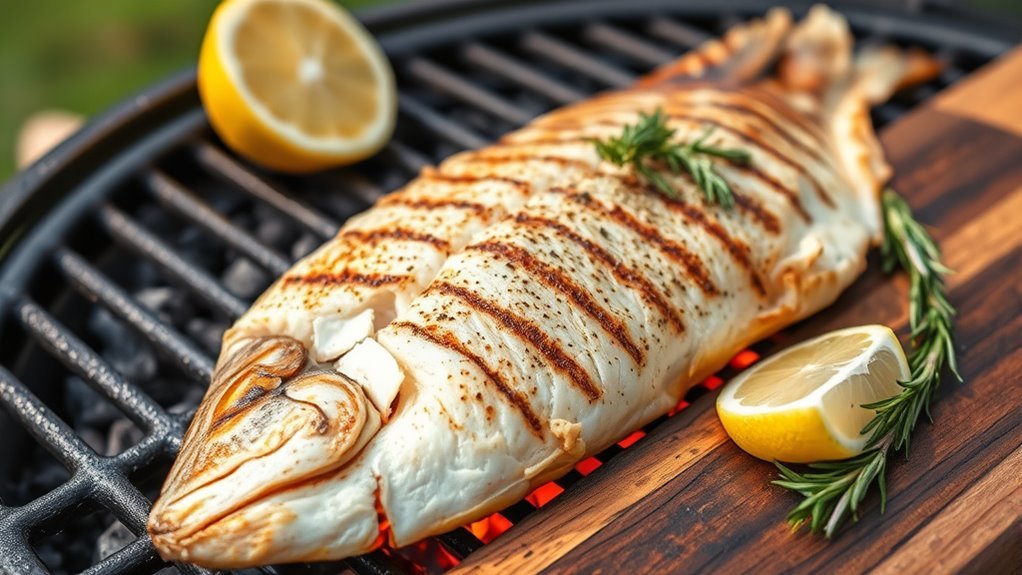
How to Grill Tilapia in 7 Easy Steps
Choose fresh, firm tilapia fillets and rinse them under cold water. Score the fish lightly to help the marinade soak in better.
Next, prepare a flavorful marinade using lemon juice, olive oil, garlic, and your favorite herbs. Marinate the fillets for at least 30 minutes to let those flavors really shine.
While the fish is marinating, preheat your grill to 400-450°F and make sure to oil the grates well to prevent sticking.
When ready, place the fillets on the grill and cook each side for about 4 minutes.
You’ll know the tilapia is done when it flakes easily and reaches an internal temperature of 140°F.
Let it rest for a few minutes before serving.
Keep exploring to master perfect grilling techniques and storage tips so your tilapia always comes out delicious!
Key Takeaways
- Choose fresh tilapia fillets, rinse them well, and pat dry. Lightly score the fillets to help the seasoning soak in better.
- Marinate the fillets for about 30 minutes using lemon juice, olive oil, garlic, and your favorite herbs. This adds great flavor and keeps the fish tender.
- Preheat your grill to 400-450°F. Make sure to clean and oil the grates so the fish doesn’t stick and cooks evenly.
- Grill the fillets for about 4 minutes on each side. You’ll know they’re done when the fish turns opaque and the internal temperature hits 140-145°F.
- Let the grilled tilapia rest for 2-3 minutes before serving. This helps the juices redistribute, giving you the best texture.
Selecting Fresh Tilapia Fillets
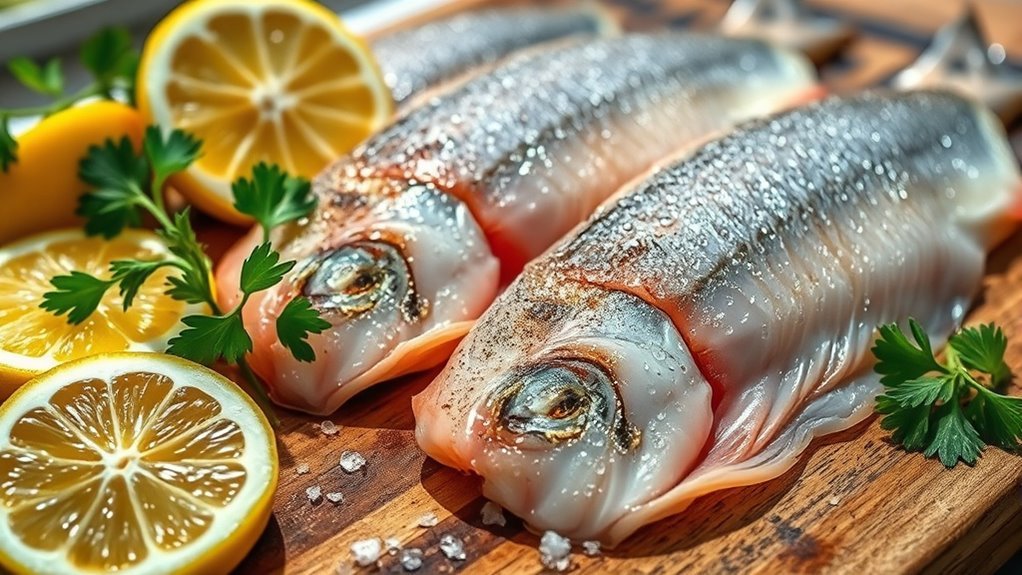
When selecting fresh tilapia fillets, you want to pick ones that are firm and moist with a mild, fresh scent rather than any fishy odor. Focus on fillets with bright, translucent flesh and clear, shiny skin if they’re skin-on.
Avoid any fillets that show brown spots or discoloration, as that indicates they’re not fresh. When selecting fillets, also make sure they have an ocean-like scent—strong or sour smells mean they’re past their prime.
If you’re buying frozen fresh tilapia, check that the fillets are properly thawed and free from ice crystals or freezer burn. Following these tips will help you choose the best quality fillets, setting you up for a delicious grilled tilapia meal every time.
Preparing the Marinade and Seasoning
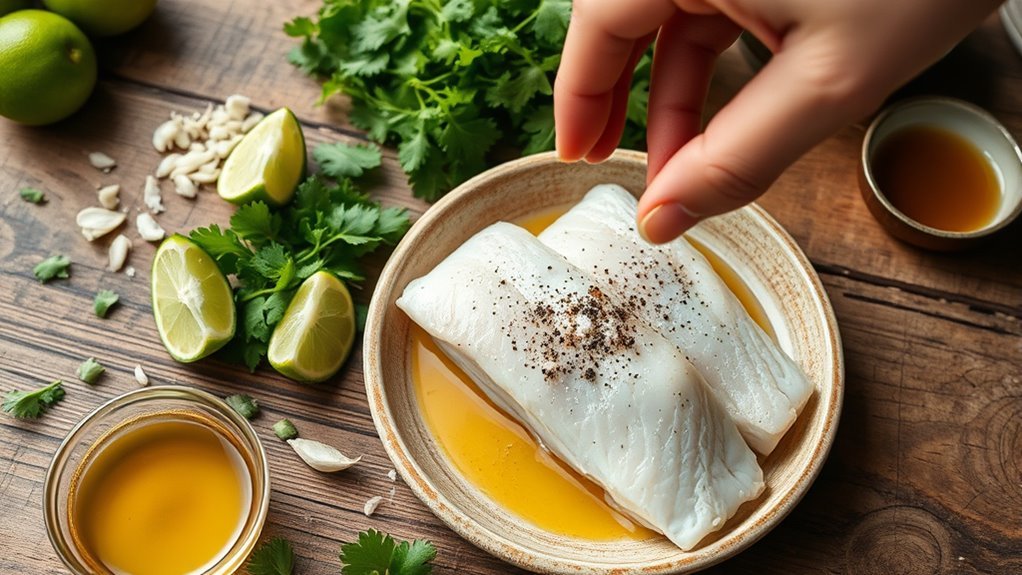
To get your tilapia bursting with flavor, start by blending essential spices like cumin, garlic, and scallions with tomato and water for a balanced marinade. Don’t rush the process—let the fish soak in the mixture for at least three hours or overnight to really let those flavors soak in.
Essential Marinade Ingredients
Although tilapia has a mild flavor on its own, you’ll want to use a marinade with essential ingredients like salt, garlic, lemon juice, olive oil, and black pepper to bring out its best taste. Start by mixing fresh lemon juice with high-quality olive oil to create a balanced base that tenderizes the fish.
Add crushed garlic and a pinch of salt and black pepper for savory notes. You can also enhance depth by sprinkling in cumin or paprika, while fresh herbs like parsley or cilantro brighten the flavor.
Marinate your tilapia for at least 30 minutes—up to 3 hours if you want a more intense taste. Remember to store any leftover marinade in an airtight container in the freezer to avoid waste and keep your flavors consistent.
Balancing Flavors Perfectly
Since tilapia has a mild flavor, you’ll want to balance your marinade carefully to enhance rather than overpower the fish. Start by combining fresh lemon zest and juice to brighten its natural taste without overwhelming it.
Add complementary herbs like parsley or thyme along with garlic to deepen the seasoning profile. Keep things simple with salt, black pepper, and garlic powder to let tilapia’s subtle flavor shine through.
Balancing flavors means mixing acidity from lemon with a touch of olive oil to distribute richness evenly. When you marinate, these elements work together to penetrate the flesh and create a harmonious taste.
This careful preparation ensures your grilled tilapia bursts with well-rounded, fresh flavors every time.
Marination Time Tips
When you marinate tilapia, giving it enough time guarantees the flavors fully soak in and the texture softens just right. Aim for at least 3 hours or overnight marination time for the best results, especially with thicker fillets.
Thinner cuts only need 1-2 hours since they absorb the marinade faster. Use a balanced mix of salt, acids like lemon or vinegar, and spices to assure even penetration.
Always keep your fish refrigerated during marination to maintain fish freshness and prevent bacterial growth. If you have leftover marinade, pour it into an ice cube tray and freeze it for future use.
This way, you preserve the flavor without wasting any of your carefully prepared seasoning.
Cleaning and Scoring the Fish
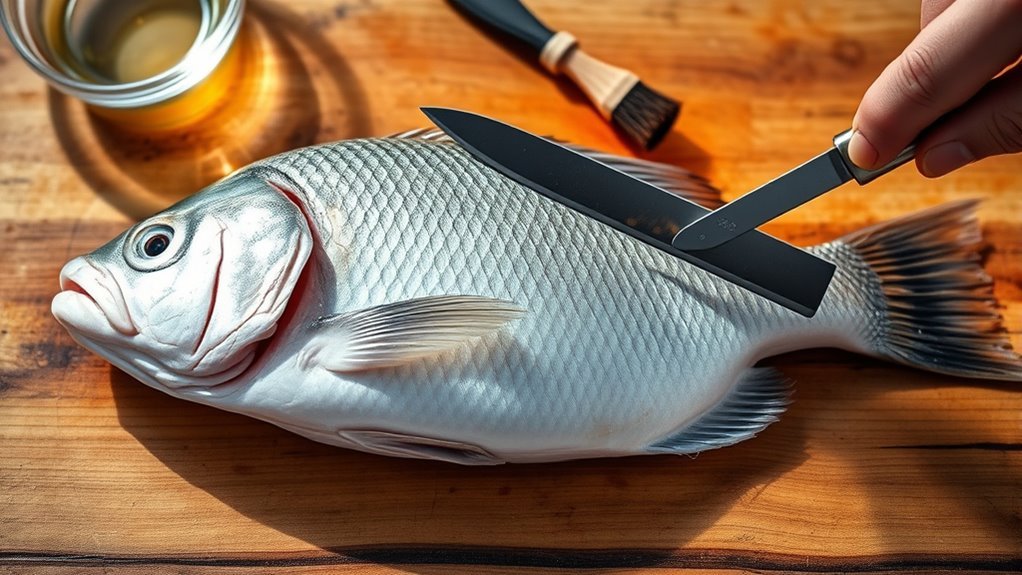
Before you start seasoning your tilapia, rinse the fillets under cold water to remove any surface impurities and pat them dry with paper towels. Proper cleaning ensures a fresh taste.
Next, use a sharp knife to score the fish with shallow, diagonal cuts about 1 inch apart on each side. Scoring helps seasonings penetrate deeply and promotes even cooking.
Remove any scales, bones, or dark bloodlines for a tender fillet, and trim excess skin for a neat presentation. Finally, check for pin bones and remove them with tweezers.
| Step | Purpose |
|---|---|
| Rinse & dry | Remove impurities |
| Remove scales | Ensure smooth texture |
| Score fillets | Enhance seasoning & cooking |
| Trim skin | Improve appearance |
| Remove pin bones | Prevent choking hazards |
Preheating and Oiling the Grill
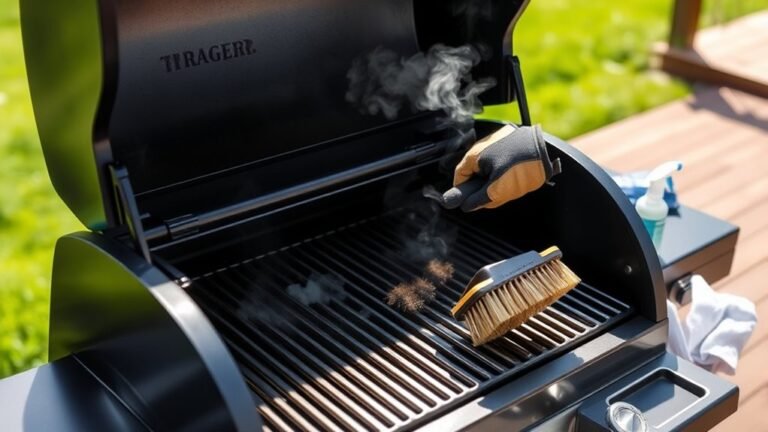
Although prepping your tilapia is essential, getting your grill ready is just as important to achieve a perfect sear. Start by thoroughly cleaning the grill grates with a wire brush to remove any residue or rust.
Then, preheat the grill to 400-450°F (204-232°C); this high heat ensures prime searing. Allow the grill to heat for 10-15 minutes after reaching temperature to make sure the grates are hot enough.
Next, generously oil the grates using a high-heat oil like vegetable or avocado oil. Use a folded paper towel held with tongs to evenly coat the grates—this helps prevent sticking and keeps your tilapia intact while grilling.
Proper preheating and oiling set the stage for flawless grilling. You’ll be glad you took the time to do this right!
Marinating the Tilapia
Once your grill is preheated and oiled, turn your attention to marinating the tilapia to boost its flavor. Mix salt, lemon juice, garlic, and herbs to create a base marinade, then add cumin, scallions, and chili peppers for an extra kick.
Coat the tilapia thoroughly, making sure every part is covered. Place the fish in a sealed container or bag, then refrigerate it at 40°F (4°C) for at least 3 hours, or overnight if possible, to let the flavors fully infuse.
Don’t forget to save any leftover marinade—instead of wasting it, freeze it in an ice cube tray for a quick, flavorful addition later. Marinating your tilapia this way guarantees a deeper, more vibrant flavor when it hits the grill.
Grilling the Fish Properly
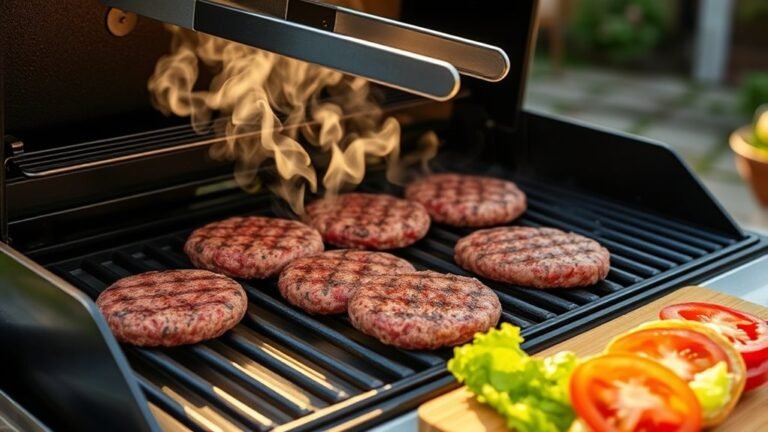
When you preheat your grill to 400-450°F and oil the grates well, you set the stage for perfectly cooked tilapia that won’t stick. Pat the tilapia fillets dry and coat both sides with olive oil to help them sear nicely over the high heat.
Preheat your grill to 400-450°F and oil grates well for perfectly cooked, non-stick tilapia.
Season as you like, then place the fish on the grill. Cook for about 4 minutes per side, flipping gently with a thin spatula once the edges turn opaque.
Use an instant-read thermometer to check that your grilled tilapia reaches an internal temperature of 140-145°F. This guarantees safe and juicy results.
Keep an eye on it so you don’t overcook the fish—that dries it out and makes it stick. Nail these steps, and you’ll get tender, flavorful grilled tilapia every time.
Serving and Storing Grilled Tilapia
After grilling, let your tilapia cool properly before storing it in an airtight container to keep it fresh. This helps lock in the flavors and prevents it from drying out.
When reheating, do it gently to avoid drying out the fish. You want to warm it just enough to enjoy, without making it tough.
These simple steps will help you enjoy your grilled tilapia just as much the next day. Trust me, it tastes great even as leftovers!
Proper Cooling Methods
Although it’s tempting to dive right in, you should let grilled tilapia rest for 2-3 minutes before serving to let the juices redistribute evenly. This brief resting period ensures each bite stays moist and flavorful.
Once cooled slightly, proper cooling is essential if you’re not eating it immediately. Always refrigerate grilled tilapia within two hours of cooking to keep it fresh and safe.
Place the fish in a shallow container to cool faster before sealing and refrigerating. Avoid leaving it out too long as bacteria can grow quickly.
Following these steps helps maintain the quality and safety of your grilled tilapia, so you can enjoy leftovers without worry. Proper cooling sets the stage for safe and tasty storage.
Airtight Storage Tips
Since you want to keep your grilled tilapia fresh and flavorful, storing it airtight is key. After cooling the fish completely, place it in an airtight container to prevent exposure to air and bacteria.
Store the container in the refrigerator, where grilled tilapia will stay good for up to 3 days. If you need to keep it longer, freeze the fish in a sealed airtight container or vacuum-sealed bag for up to 2 months.
Make sure to remove as much air as possible to avoid freezer burn. Proper airtight storage preserves the fish’s moisture and taste, making your leftovers just as enjoyable as when freshly grilled.
Always keep your storage method airtight to maintain quality and safety. It really makes a difference!
Reheating Without Drying
When you want to enjoy your grilled tilapia again, reheating it carefully is essential to keep it moist and flavorful. To reheat without drying, store your fish in an airtight container in the refrigerator. Plan to reheat it within three days to preserve moisture.
If you’re using a microwave, cover the tilapia with a damp paper towel. Heat it at a low power setting (50-70%) for 20-30 seconds, checking often so you don’t overcook it.
Or, you can reheat it gently in a covered skillet over low heat. Add a splash of broth or water to help keep it moist. This method prevents the fish from becoming dry or rubbery.
Conclusion
Grilling tilapia is like mastering a simple dance—each step flows into the next, creating a delicious harmony of flavors. By choosing fresh fillets and seasoning them well, you’re setting the stage for a fantastic meal.
Grill with care, and you’ll turn an everyday dinner into a memorable feast. Just like a trusted recipe passed down through generations, your grilled tilapia will bring warmth and joy to your table.
So fire up the grill and savor the magic you’ve created. With these easy steps, grilling tilapia becomes effortless and rewarding. You’ll enjoy tender, flavorful fish that’s perfect for any occasion. Get ready to impress your family and friends with grilled tilapia that’s both healthy and delicious!